
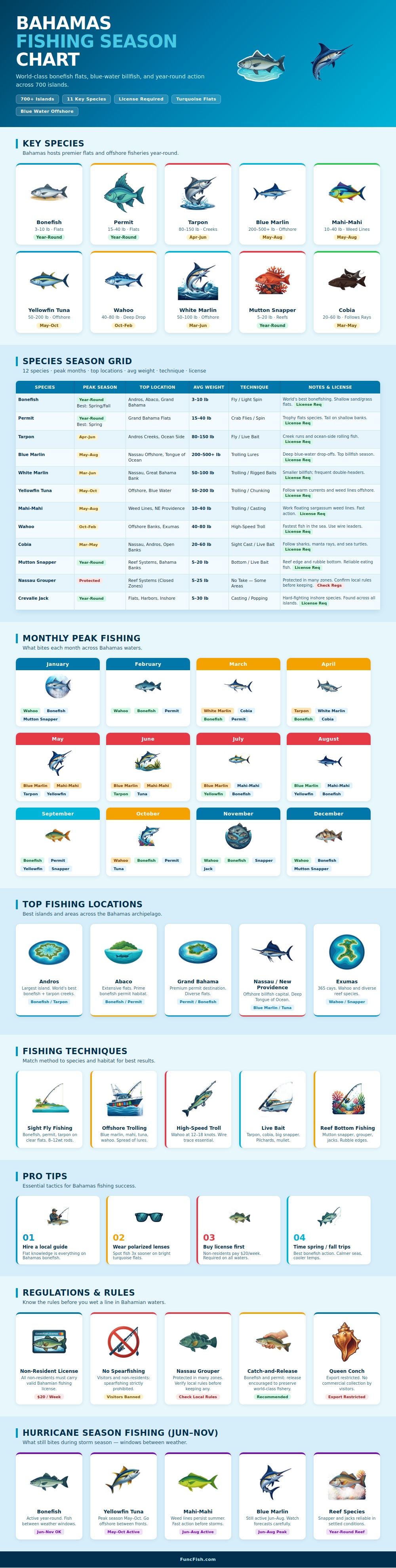
If you go on a fishing trip without consulting the calendar first, odds are you’ll be disappointed. Pack your stuff, buy your flight tickets and then show up to discover the fish is gone, or hiding. Because of its variety of ecosystems, the Bahamas can be complex. Knowing where to go based off the time of year turns a random vacation into a planned mission.
Where do the fish move? When do they become active? There’s a map of those patterns in seven hundred islands, one that shows where the action shifts with changing water temps. Not knowing what’s there won’t help; knowing where to be to throw will.
When to Fish in the Bahamas
While most anglers think of big offshore species, bonefish can be your first step. They wanders the shallow sand bars found in Abaco and Andros all year long. Calm seas in spring and fall make it easier to spot them. That’s what the chart emphasizes: they’re reliable all year round for bonefish, as well as permit and mutton snapper.
But keep in mind, they moves based on the tide. Because you are essentially stalking prey that has eyes everywhere, bonefish fishing is very much mental; wear polarized glasses (the less glare the better). Hire a guide who knows where the current runs quietley. People don’t realize this stuff and try going out on their own after renting gear on the beach; rarely works out.
As we move into the summer, it’s all about the deep stuff. That means offshore fishing for yellowfin tuna, mahi-mahi, and blue marlin is strong now. Billfish is at their best May-August according to the infograph. The tuna stay around until October. For them, it’s all about high speed trolling lures and big tackle.
It’s also about having a boat that can handles rough open swells on the Atlantic. One thing Nassau is famous for is how deep the water is, dropping thousands of feet right off the coast within the Tongue of the Ocean. It’s summer when you gets your shots at these battles but watch the weather.
The prime months for fishing offshore coincide with hurricane season. From June-November, hurricanes can blow in; however, before and between storms, the bite gets red-hot. The bonefish never stop biting… They’re an ideal fallback plan when the sea’s too rough offshore for smaller vessel. It’s a calculated risk.
When the sea flattens, go chase some marlin. But when the wind blows, head back to the flats. Having a variety of targets reduce the impact of poor weather.
Different opportunities exist in the winter months. Especially with cobia and wahoo. Wahoo are known as fastest fish in the sea. To handle their razor-sharp teeth, they needs a high-speed troll with wire leaders. From October through February is prime time for catching them on the Exumas banks.
The other creature that follows sharks and rays, which are easier to spot if you know what to look for… Is the cobia. These guys like colder water temps. As it heat up during the summer, they dissapears. Catching these guys means planning your trip around when they migrate into the areas so you can cast where the fish are.
Rules matter, and they will greatly impact your experience. All non-resident angler must have a current fishing license. It’s just a small weekly charge. If you violate this, you’re setting yourself up for legal issues.
Many areas also protect certain fish such as the Nassau Grouper. For guests, spearfishing isn’t allowed. When it comes to keeping any of your catch, research local regulations first. These fisheries remains world class because of sustainable practices that will ensure them for generations to come.
But the fact is that it’s not so much one big event as a constantly changing calendar of events; success is all about lining up your time with mother nature’s time. Whether you’re trolling for wahoo or sight-casting for permit, that’s the key. You should of known when to look and the fish will be there.