
It’s deceptive how heavy those hybrid stripers realy are. They are not as big as they seem yet they have the girth to make them bust lighter tackle. You stick it to ’em and then what? The line goes slack, your tackle isn’t up to the task of holding this fish that’s bigger than expected.
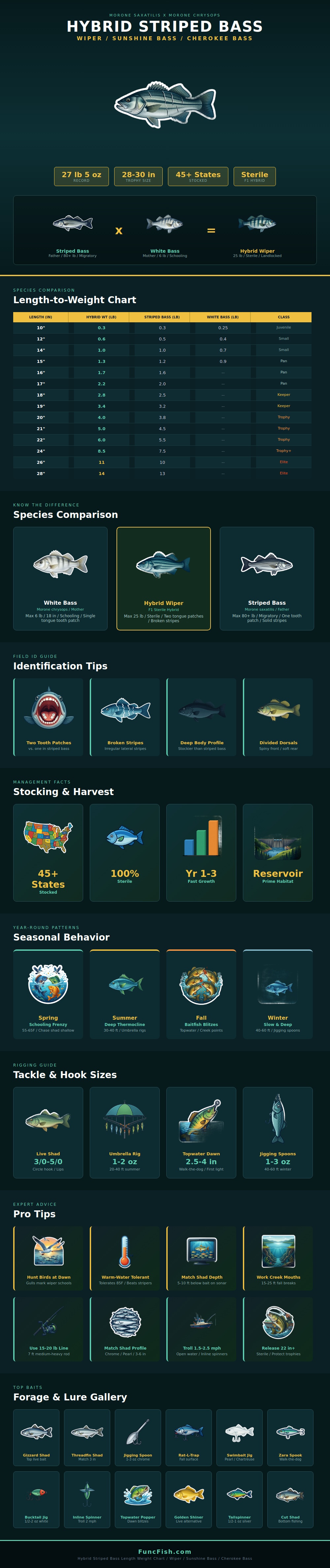
Knowing something about length-weight relationship of sunshine bass or hybrid striped bass is important not only for the catch rate but also for keeping rods intact. As the graph indicates, those sunshine hybrids is mid-ranged when comparing bulkiness to purebred whites and stripers. They have more body depth like mom (white bass) yet are denser than dad (striped). That DNA combination affects both choice of tackle as well as expectations of battle time.
How Heavy Are Hybrid Striper Fish?
Where many anglers becomes confused is with size and strength when talking about the jump to trophy status from pan fish. A sixteen-inch fish can seem significant but once a fish hits twenty inches in length, weight gain takes off quickly. For instance a twenty two inch hybrid will weigh in at six pounds which are solid keeper country. As you start moving up the size ladder the numbers become more like serious sport fishing.
A twenty eight inch fish will weigh in at a whopping fourteen pounds and is one that demand respect for your equipment. Run this caliber of fish on ten pound test line and say goodbye to broken tips and hello to lost trophies. To bring these deep water dwellers home safely require a fifteen to twenty-pound braid or fluorocarbon leader setup.
By their nature, they’re schooling fish so when you find one you’re going to have a whole bunch of action. They runs shallow chasing shad in the spring when the water temps are from fifty five to sixty-five degrees. During that time, they’ll eat topwater lures in the mornings and it’s worth getting up early just to see a wiper blow up on a popper.
When summer comes those fish pull back into the thermocline which is around thirty to forty feet in depth. Instead of casting to get a bite, you’re fishing with jigging spoons and umbrella rigs. You are working vertical columns of water now and that totally changes the game.
Knowing what type of fish you caught doesn’t necessarily alter your approach to fighting them but it certainly increases your enjoyment. If you knew you had a hybrid versus a pure striped bass, you’d know where to expect it from (generally in cooler waters) and how big it should of been. You’ll also notice that most of the time hybrids don’t have solid horizontal lines like pure stripers; the striping is more broken. The tongue will also show two tooth patches where pure striper only have one. It makes fishing a learning experience in fish science without any additional work.
Because they’re sterile, they’re stocked by most states as a way to limit invasive species and offer some great angling opportunities too. They’re tough customers for summer anglers as well and do very well in warmer waters where pure striper may suffers.
Whether you’re after an elite twenty-eight-inch monster or a twenty-inch keeper, matching your tackle to the potential of the fish is the goal. Before the fight ever happens you have to be prepared. Respect the depth charts. Tie secure knots. Use heavy enough line so you don’t lose a big one. Preparation beats reaction every time.
They’ll put your gear to the test and they’ll reward you with one of the most intense fights available on any freshwater system. And it all comes back to that first connection, so make sure you know you’re ready for whatever size lies waiting on the other side of the line.