
It happens. You’ve got a hooked bass thrashing on the end of your line and your shaky hands cause hesitation. Every second matter as the fish plummets toward cover before it starts fighting back hard. This isn’t about convenience; its about survival for the fish and keeping your cool.
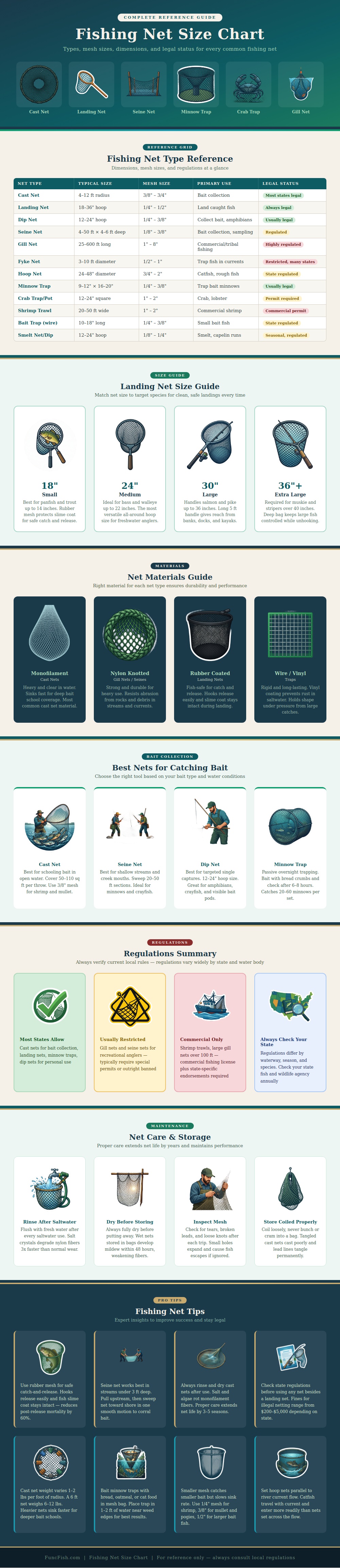
Until it’s too late, most anglers don’t think twice about what type of net is inside their tackle box, not its hoop size nor its mesh size. A slight mismatch here can result in a lost opportunity or even worse, harming a fish you intend to release; that’s where folks goes wrong. The visual guide above breaks down exactly how different net types matches specific fishing scenarios so you stop guessing and start landing with confidence.
How to Choose and Care for Your Fishing Net
Because cast nets aren’t thrown like traditional fishing lures, they require slightly more skill when it comes to distribution of weight instead of hand dexterity. Your net should of been heavy enough to fall quickly enough to grab your bait before they disperse, yet light enough to avoid getting bogged down in bottom mud. In these instances, monofilament is your go-to material as it will also stay virtually invisible in dirty water while the lead weights close the net on school fish like mullet and shad.
As noted in the chart, mesh sizing has a direct connection to the type of bait targeted; this is extremely important when targeting largemouth who would rather eat big crappie then tiny minnows. If you’re going after shrimp, a 1/4 inch mesh will hold ‘em tight but it’ll slow your sinking speed enough to scare off skittish baitfish in clear waters. The balance of stealth vs. Retention will determine whether you get bites or not on any particular day.
The material is often an afterthought until something goes wrong. For nets used on rushing streams with gill nets or seine nets that could get hung up on rocks and other debris, nylon tends to hold up well to abrasions. But when it comes to catch-and-release fishing, the gold standard these days is rubber coated mesh that keeps the delicate slime coat covering all fish intact. If your fish doesn’t have this protection, even if you unhook them quickly, they’re open to stress and infection. And rubber coated mesh results in a sixty percent reduction in post-release mortality? That’s the kind of stat that makes you realize you need to keep more healthy fish in the water so everyone can enjoy them later. That’s one reason why the ethical shift has made many anglers think differently about what they buy today.
Keeping gear dry is essential, but even more important is keeping it well maintained… Salt will eat away at any nylon or mono that’s stored wet in a bag. It’ll weaken fibers much quicker than regular abrasions, so you must rinse them in freshwater between trips if you hope to use ’em next year. Moisture leads to mildew that’ll form in as little as 48 hours from storage and damage the structural integrity, not to mention stink like a dead fish (there’s no washing this smell out). Make sure you check the mesh following every excursion; small tears becomes big holes quickly when they’re pulled on, too. Lastly, proper coiling avoids those annoying tangles that mess up cast rhythm and cause beginners trouble when trying to simply throw and reel back in cleanly.
It’s important to note that each state has very different regulations; always research your local laws regarding any fishing equipment outside a simple landing net. There is absolutely no excuse for not knowing the rules because getting caught illegally netting can result in thousands of dollars in fines. Certain states completely ban seine nets while others require special permission or seasonal use. Following the rules helps you save money and keeps our fisheries healthy for everyone to catch and release responsibly for years to come.
When the bite is hot, don’t waste time digging through a jumbled mess of wet tackle looking for your equipment; keep everything dry and tidy so you’re prepared to go at a moment’s notice. Nothing beats bringing home a nice limit, but being back on the water first thing the next day means even more. Actualy, when fishing is moddern and fast paced, keeping gear in good shape is key for any angler who wants to avoid extra cost or inconvenince.