
Now you’re on the dock with a rod in one hand and staring down into some hydrilla that looks like a green carpet. Bass is lurking right in the middle of it, so naturaly, you’d like to drop your bait in the middle of the mat. But if you choose the incorrect weight, you’ll hang up. The choice of weight can be the difference between catching dinner and getting hung up.
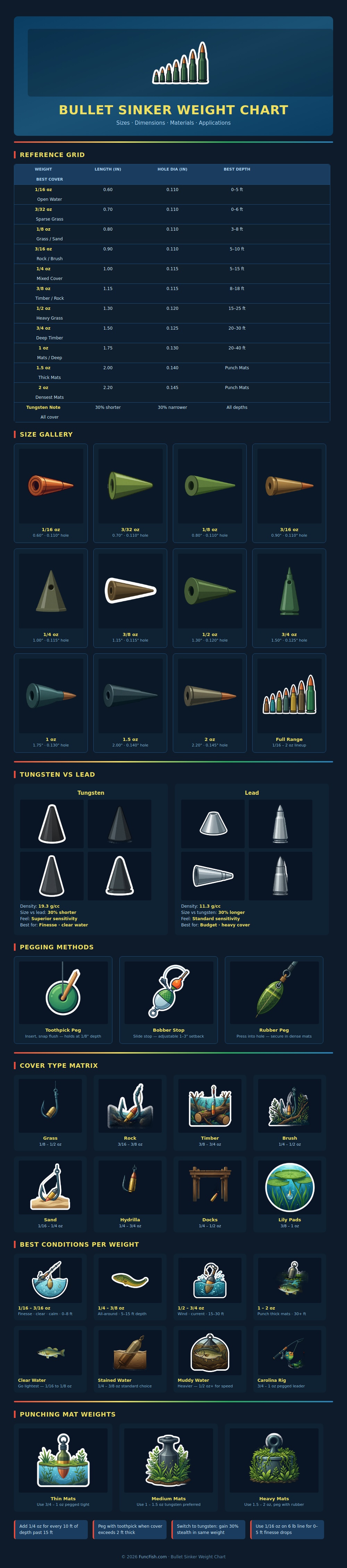
A lot of us just pick up whatever weight we think is “heavy” by feel in our hands, that’s costing you fish. By knowing what weight to throw based off the cover type and depth you’re fishing, it saves you from a bunch of trial and error when going to a new place. So instead of wondering whether a quarter ounce is going to go through sparse grass or are you going to have to punch your way through with half an ounce? It has those relations laid out for you on the reference grid so you can see how it’s going to set up before tying the knot.
How to Choose the Right Weight for Fishing
For instance, contrast fishing heavy cover with open water. Lightness isn’t a problem; it is actualy an advantage in clear, shallow water. Because you’re adding a small weight, the bait will descend slowly. This triggers wary fish that are easy to spook with a sudden splash. For waters up to five-feet deep, the chart show a preference for very light weights for finesse. You need to be subtle to maintain a natural presentation.
Some believe heavier is better; because it makes them feel more secure, but heavier weight also sink too fast. They pass through the window when the fish decides to bite, skipping over the opportunity.
If you get out deeper, or into heavier cover, like thick cover, then physics are totally different. Now you want something with some heft to give you power to plow through stems of grass without catching on each one. For that type of application, you’ll go up to three-quarter-ounce, even as much as two ounces. For those situation you really want something with a lot of vertical punch.
That’s where tungsten comes into play again. Because it’s denser than lead, you can gets away with a lighter sinker while still having all the weight of lead. When you’re dragging the bottom with your bait, that leads to better sensitivity. A smaller profile also mean less water resistance. It’s pricier but you feel the difference in your hands and will be able to pick up on those faint bites due to its slim profile.
The other part of this equation is how you attach that weight. Your method of attachment dictates how effective your setup is. For instance, just pegging your weight in the middle keep your weight on your line. It also governs what length of leader is exposed once your bait hits cover. Keeping the sinker locked in place with a rubber peg or toothpick keeps your sinker from sliding down through the vegetation and catching immediately.
Fishing with a bobber stop allow you to adjust your depth but provides less security in heavy weeds. And the chart shows that using one approach over another depends more than just the hardware itself; technique matter too. So think about weight as more for control over sensitivity and speed then pure added weight.
I’ll often use a little heavier weight in dirty water where I want to get my bait down fast then lose visibility. I’ll dial it back with clear water and calmer conditions so that my bait can float a little bit and drift on its own. These two techniques blend together well when you have the proper range in your tackle box. Don’t feel like you need all the sizes here but with a range from light finesse weights to heavy punching weights, you’re covered for most scenarios.
To conclude. It’s always about getting your bait down where those fish are located while avoiding obstacles from the surroundings. Whether you’re casting a plastic worm into matted grass or dropping a jig into rocky cover, it’s important to realize that weight at the end of your line will either cause your bait to hang up on the top of the cover or keep your bait in the sweet spot long enough for them to bite. Make sure you select an appropriate weight and secure it well to ensure your sinker can do its thing. When you are standing on that dock, the action starts when your rod tip touches the bottom, and that makes all the difference. You should of selected the right one from the start.