Live Bait Quantity Per Angler Calculator
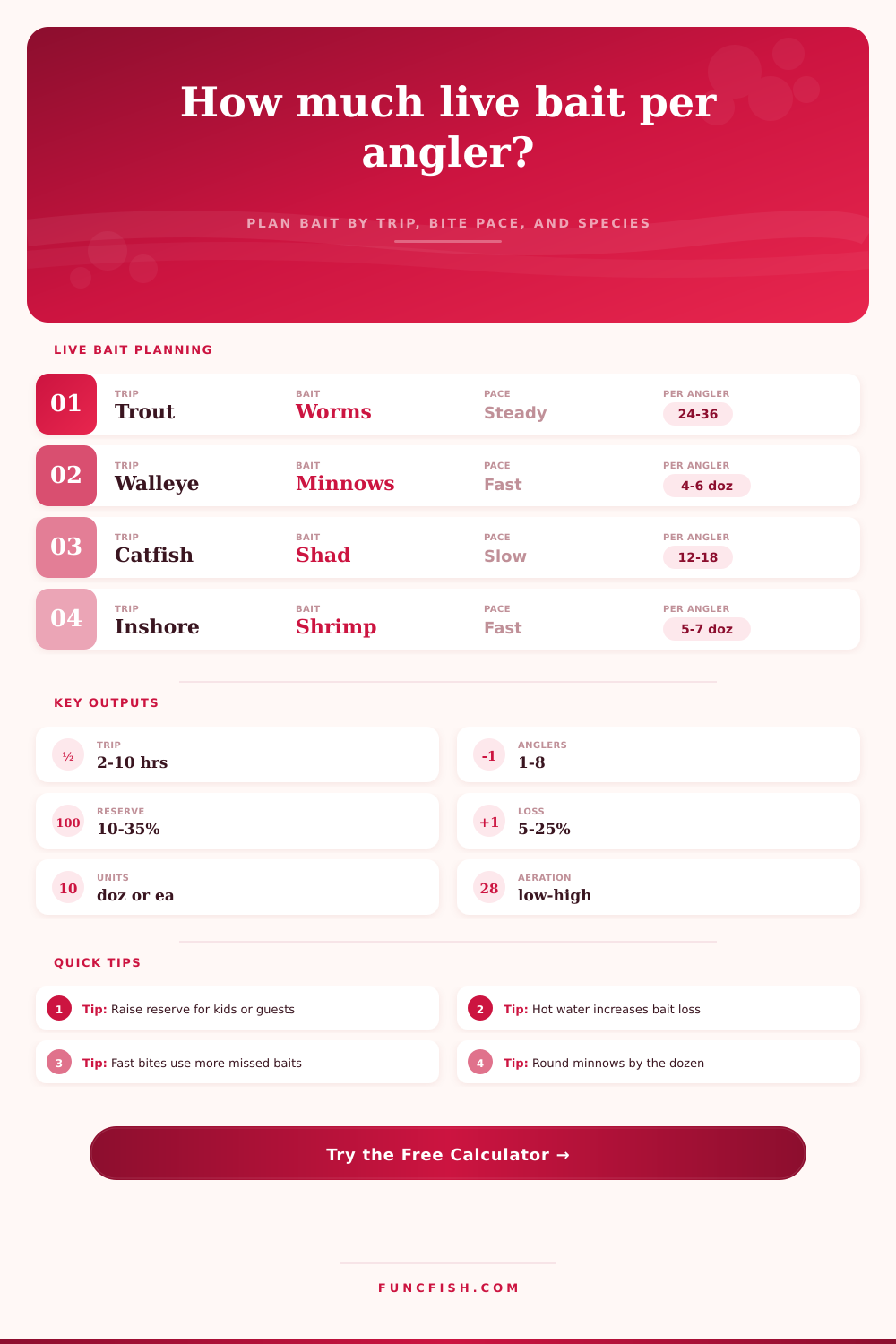
Estimate live bait by angler count, trip duration, target species, bait style, bite pace, water stress, and reserve so the cooler or baitwell starts with a sensible count.
📌Scenario presets
⚙Bait planning inputs
Live bait quantity forecast
Formula breakdown
📋Bait type planning grid
Worms
Minnows
Shrimp
Shad
Crickets
Mullet
Maggots
Herring
📘Reference tables
| Bait type | Normal count unit | Typical use per rod-hour | Container guidance |
|---|---|---|---|
| Nightcrawlers / red worms | 12 per dozen | 4-8 pieces | Cool bedding cup or small cooler |
| Fathead minnows | 12 per dozen | 6-10 minnows | Aerated bucket, avoid crowding |
| Golden shiners | 12 per dozen | 3-7 shiners | Wide bucket or baitwell |
| Live shrimp | 12 per dozen | 8-14 shrimp | Saltwater aeration and cool shade |
| Crickets | 12 per dozen | 10-18 crickets | Dry cricket tube, out of sun |
| Shad | Counted individually | 2-5 baits | High oxygen bait tank preferred |
| Finger mullet | Counted individually | 3-6 baits | Aerated saltwater bucket |
| Maggots / spikes | Scoop or tub | 14-22 baits | Small cool container |
| Live herring | Counted individually | 2-4 baits | Large round tank if possible |
| Species group | Common live bait | Expected use pattern | Reserve habit |
|---|---|---|---|
| Trout | Worms, maggots, minnows | Short baits, frequent steals | Add extra for small bites |
| Walleye | Minnows, leeches, crawlers | Steady drift use | Round up by dozen |
| Bass | Shiners, worms, crawfish | Moderate use, larger baits | Add backup for missed hooksets |
| Catfish | Shad, minnows, worms | Fewer bait changes | Add more for soft bait loss |
| Panfish | Crickets, worms, maggots | High count, small baits | Carry a larger small-bait margin |
| Inshore mixed fish | Shrimp, mullet, mud minnows | Fast rebaits with bait stealers | Plan a high reserve |
| Surf targets | Mullet, shrimp, sand fleas | Losses from surf and pickers | Add for wash-off losses |
| Striped bass | Herring, shad, eels | Low count, high care | Protect bait health first |
| Bite pace | Multiplier | Best use case | Planning note |
|---|---|---|---|
| Slow pick | 0.65x | Cold front, tough bite | Reserve matters less than bait health |
| Steady bites | 1.00x | Normal bite window | Use the bait type baseline |
| Fast action | 1.35x | Active school or tide | Round up before leaving the dock |
| Wide-open bite | 1.75x | Kids, panfish, bait stealers | Use a larger reserve and fast rebait plan |
| Care setup | Loss adjustment | Capacity effect | Best bait match |
|---|---|---|---|
| Basic bucket | +8% | Needs more water volume | Worms, crickets, short minnow trips |
| Aerated bucket | +2% | Normal volume | Minnows, shrimp, finger mullet |
| Circulating baitwell | -4% | Can hold denser bait | Shiners, herring, shad |
| Cooler and fresh water | -2% | Good thermal buffer | Worms, minnows, maggots |
💡Quantity planning tips
Reserve tip: Use a larger reserve when beginners, kids, bait stealers, or rough current are part of the trip because those conditions raise rebait frequency.
Care tip: Large lively bait often fails from oxygen and crowding before it runs out by count, so the capacity card matters as much as the total bait number.
With a cooler in hand and a hazy idea of what you need, you go to the counter. “How many,” the shopkeeper says. “Minnows or worms?” “Trip length.” “Species.” “Hmmm, let’s see, I think it was 20 years ago. OK, how about…” Uh oh.
Big mistake. That will cause you to spend money on dead bait, or worse yet, no bait when fish is biting. Buying bait isn’t as simple as counting animals; it’s also dealing with oxygen and decay.
How to Buy the Right Amount of Fishing Bait
It takes the guess work out of it with the calculator. It factors the condition of the care, how fast it’s biting and how long trip is. Most anglers just add up number of fish they wish to catch. They don’t account for the bait lost from being stolen or dying in bucket.
If you have a constant bite, maybe you need a worm per hour. If it’s hot, however, that worm might be dead by the time you pick up rod. These variables are included in tool.
It depends on your type of bait storage, such as an aerated tank or a basic bucket. Poorer conditions cause bait health to deteriorate more quicker than usual. Compare this to inshore fishing and trout fishing. Night crawlers is durable for trout fishing. You can keep them alive in plain cup; just change the water every now and then and you will lose very few.
Shrimp. You gotta have good aeration, proper temperature and saltwater. If you put shrimp in a bucket without an aerator, they’ll be dead in an hour. Shrimp are harder to care for than worms.
When you go on a trip for shrimp, you’ll need more of supply because they’re harder to care for. You can’t just buy more shrimp to compensate for bad care, because dead shrimp smell like old pond water and repel the very fish you are trying to attract. And dead shrimp stink and turn off fishs.
Another factor is the pace of the bite. Bait lasts longer if it’s a slow bite on a cold front. The fish are finicky and require healthy bait. If it’s a fast bite on panfish, a dozen minnows might go through in twenty minutes. These situations force you to round up number with a multiplier that adjusts for this scenario.
It is annoying at the register, but useful when the fish come. The number of baits is only one half of equation. How much space do they have? They purchased fifty minnows. They are cramped in a small bucket. Oxygen plummets. Ammonia climbs. Stressed bait move more slowly.
Density determines appropriate container size. The tool calculate it for you. There is only so much space. Overcrowding the bucket are deadly to the bait. Replacing with fresh purchases doesn’t help.
Live bait is a perishible investment. It’s a living organism with metabolic needs. So your bucket should of be a healthy ecosystem.
Match the amount to the planned activity and how you’ll take care of it. That way, you’ll be just as productive fishing in the first hour as you are in the last.
You’re leaving with a clear plan. It is better than just hoping.