
The coastline of California measure longer than 800 miles, and the state is home to one of the most diverse population of sharks in the world. The shark populations exist in various environments along the California coastline, from the cold waters off of Crescent City to the warmer bays near San Diego. The waters of California exhibit a variety of shark species, from the gentle giants that care for the plankton populations to the sleek predator that keep watch over the kelp forest ecosystems.
If you know the identity of the shark species that inhabit these waters, your view of the coastline and the ocean activities you enjoy will change. Furthermore, the knowledge of these species demonstrate the fine balance within the ecosystem of California’s coastline. The variety of shark species that dwell within the California coastline is often surprising to the general public, as most people assume that the presence of sharks in the area is limited to the great white shark species.
However, there are a variety of these species that call the California coastline home. The species that live in the area perform a variety of important task for the marine ecosystem, whether they are the sharks that clean the ocean floor or those that keep the fish populations in check. Knowing the differences between these shark species will allow people to remove fear of these animals and to replace it with respect for their presence in the ocean.
Common Shark Species Found In California
1. Great White Shark
The great white shark can be found in the waters along the Farallon Islands and around Año Nuevo. These impressive predators has a preference for hunting the seal and sea lion populations rather than the human swimmers who visit these locations. Great white sharks have a torpedo-shaped body with dark gray backs that allow them to blend into the deep waters above the ocean floor.
It is for this reason that surfers often do not spot these sharks as they are approaching the shoreline. Great white sharks do not show a predilection for attacking humans; the bites that do occur are typically the result of mistaken identity when a seal is on a surfboard. Oceanographers and researchers who place tags on the sharks to track their whereabouts have studied the migration patterns of the great white shark.
Great white sharks head to the northern region of the state during the winter months and return to the central portion of the coastline between May and September when the elephant seal pups are pupping along the coastline. These sharks are also a component of the cage diving tourism industry in the state. The bite force of a great white shark is greater than 4,000 pounds per square inch, which is why scientists refer to the great white shark as a hunting machine that nature has perfectly engineered.
2. Sevengill Shark
The next species of shark to discuss is the sevengill shark, which is a bottom-dwelling species that many people overlook when they visit the California coastline. The sevengill shark earns its name from the seven gill slit that define its side. These sharks prefer the sheltered waters of areas like San Francisco Bay and Humboldt Bay.
Sevengill sharks prefer to hunt in relatively shallow areas. Instead of a pointed snout like the great white shark, the sevengill shark has a blunt snout and a body that features a series of small white spots across its body that give it the appearance of a leopard. These species grow to about seven feet in length and have a preference for feeding upon rays, crustaceans, and other species of sharks.
The lineage of the sevengill shark species is among the oldest in the region. Its body has changed very little over the last 200 million years, making any spotted sevengill shark a living fossil. Anglers often encounter these species when they are trying to catch halibut.
The fight that the sevengill shark makes when being pulled out of the water often surprises the anglers who set out to catch these fish. Though not considered dangerous to humans, the seven-footers do warrant some caution around humans if spotted in the shallower areas of the coastline. However, since these sharks prefer to dwell in the murky waters of estuaries, divers exploring the coastline rarely spot them.
3. Shortfin Mako Shark
The third species of shark to describe includes the blue shark. These species glide through the waters of the coastline with elegance. Their slender bodies and long pectoral fins allow them to cruise the oceans with minimal effort.
Blue sharks range from Baja California to Oregon. The color of the shark is a vibrant indigo along its back with a white belly that contrasts with the rest of its body when it breaches the ocean’s waters. These species has a tendency to follow fishing boats, presumably looking for an easy meal of the discarded bait or the bycatch of the fishing boats.
Though not often seen in the coastlines and do not bother swimmers, blue sharks have been known to claim a fair number of hooked fish that the predator snatches up. The blue shark gives birth to litters of fifty or more pups. These large litters ensure that the numbers of these sharks are maintained despite the heavy pressure that they face from international longline fisheries.
Watching a blue shark circle a boat at sunset is one of the more mesmerizing sight along the California coast. These sharks have a curious nature and often approach divers. However, they usually maintain a respectful distance from humans once they recognize that humans are not food.
The curiosity of the blue shark and its striking color make it a favorite subject of underwater photographers. Few other shark species generate as much excitement among anglers as the shortfin mako shark. The body of the shortfin mako is perfect for racing as it has a streamlined body with a crescent-shaped tail.
The tail allows the shortfin mako to reach speeds that exceed forty miles per hour. Shortfin makos visit California’s waters during the warmer months of the year and chase after schools of tuna or mackerel that live near the continental shelf. The shark’s metallic blue sheen and pointed snout give it a look that matches its reputation as the fastest shark in the ocean.
Shortfin makos exhibit spectacular fights with sport fishermen as they can jump clear out of the water while racing forward at their characteristic speed. Shortfin mako meat is considered to be excellent when cooked for a table setting. However, shortfin makos have a warm-blooded nature, which sets them apart from all other shark species.
Due to their warm-blooded nature, these sharks can live in colder waters than other shark species. Their natural adaptation to different temperatures in the ocean makes them perfectly suited to the waters off the central coast of California. However, the shortfin mako’s speed comes at the cost of their survival when they are caught in commercial fishing nets.
4. Leopard Shark
Since they require constant forward movement to breathe, they can barely survive for a long time when they are first caught in these commercial nets. The leopard shark species cruises the sandy and rocky reefs from Monterey Bay to the Mexican border. The leopard shark has a striking color pattern of dark spots against a bronze background, which makes it one of the most beautiful shark species in the waters of California.
While the species rarely grows to a length of six feet, numerous leopard sharks live in large groups during the summer months. These sharks give birth to their young in these areas and are also where they perform their mating rituals. The leopard shark has a pair of small mouths with blunt teeth that allow them to eat crustaceans, clams, and other sea creature.
As a species, leopard sharks are harmless to humans, which is why they are among the most popular shark species for snorkelers along the California coast. Due to the predictable journeys of these sharks, scientists are able to closely study these sharks and single individual over long periods of time. Additionally, the leopard shark species avoids polluted waters, making it an indicator of the health of California’s coastal oceans.
Seeing these sharks glide past the sandy ocean floor during high tide offers a quiet moment in the ocean, but also a reminder of the importance of preserving these habitats. Swell sharks have earned their name through a unique defense mechanism. When threatened, swell sharks swallow water or air to inflate their stomachs to twice their normal size, making them difficult for their predators to swallow.
5. Swell Shark
These sharks rarely grow larger than three feet in length. They live in rocky areas and hidden crevices along the southern coast of California. Its mottled brown and yellow coloration allows the swell shark to blend into its surroundings of kelp and coral reef.
At night, swell sharks come out of their hiding spots to hunt for food. Using their powerful jaws, they can crush the shells of mollusks. The eggs of swell sharks are laid in unique cases that are referred to as mermaid’s purses.
These egg cases eventually come ashore. The docile nature of the species and its small size make it an ideal candidate for inclusion in marine aquarium displays. The Pacific angel shark appears more like a ray than a shark species.
6. Pacific Angel Shark
The Pacific angel shark lies on the ocean floor along the coast from central California to the Mexican border. The angel shark lies motionless on the sand while it waits for its prey to pass overhead. When an unlucky fish or squid ventures too close to the angel shark, it quickly explodes upward to its mouth to consume the meal.
This hunting behavior causes divers to be startled by the sudden appearance of an angel shark. Despite their menacing appearance, angel sharks pose little threat to humans. However, their sharp teeth can deliver a nasty bite to a human if provoked.
Several commercial fishing fleets have targeted angel sharks for their meat. However, thanks to strict regulations on angel shark populations, the numbers of these sharks have recovered in recent decades. The unique body shape of angel sharks represents an evolutionary bridge between sharks and rays.
This makes these animals of special interest to marine biologists. The thresher shark brings an entirely different hunting style to the waters of California. The upper lobe of the thresher shark’s tail is enormously long, stretching to lengths equal to the rest of the shark’s body.
7. Thresher Shark
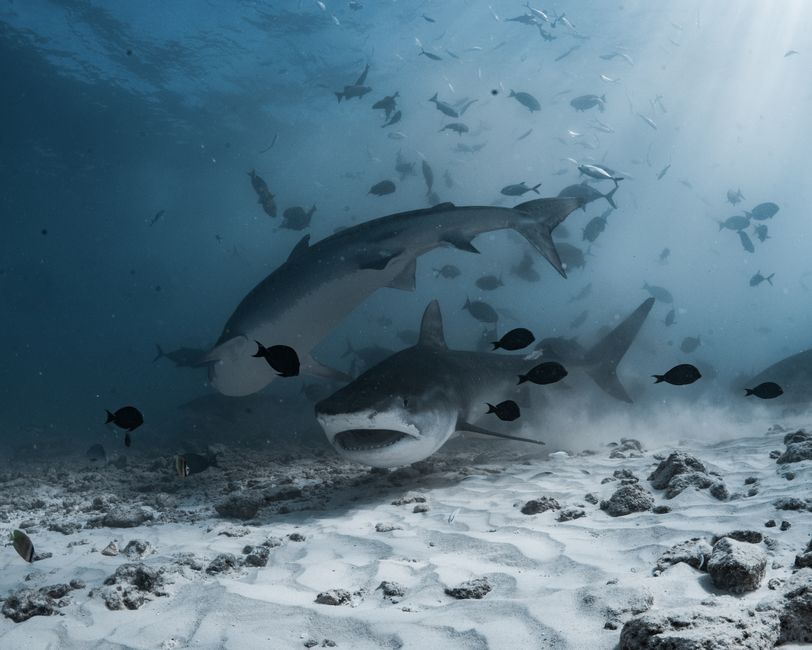
Instead of using its teeth to catch prey, the thresher shark uses its tail to stun schools of fish before turning to feed upon them. Thresher sharks are often spotted breaching out of the water as they use their tails to hunt for food. As thresher sharks prefer the offshore waters, most encounter with these sharks occur from boats rather than beaches.
Thresher sharks have large eyes adapted for vision in low light conditions, indicating that these sharks feed most often at dusk and dawn. Thresher sharks have slender bodies with small dorsal fins giving them a seemingly delicate appearance. However, this body structure allows them to execute the hunting technique that they use to hunt for prey.
These highly migratory sharks follow the warm ocean currents along the California coast, making it hard for fishermen to accurately predict the location of these sharks throughout the year. Regardless of the size of the shark, each plays a vital role in the marine web of California, from the largest great white sharks to the unassuming swell shark. Each species of shark demonstrates the complexity of the oceans and the relationship among the species that live in these environments.
The next time you find yourself stand at the edge of the water, consider the possibility of the creatures swimming just beyond the break of the waves. This special qualities of the California coast is due to the remarkable animals that call these waters home. Ensuring the protection of these species ensures that the wonder that these oceans provide to visitors will be passed along to future generations.