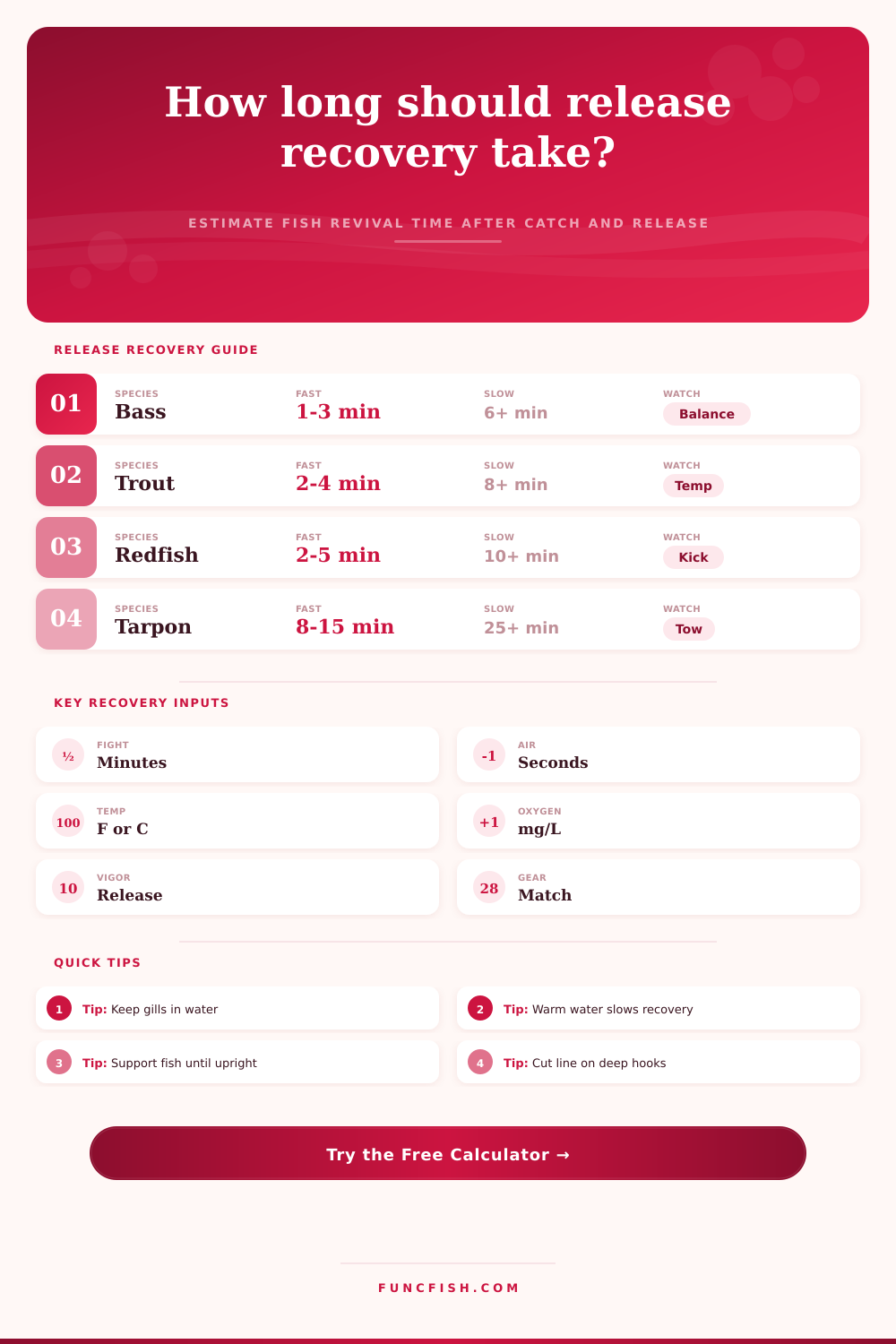
Recovery Time After Release Calculator
Reel them in, slide the hook free, and push them back into the water. You got your picture and you saved the fish. Victory! But … Read more

 Lucas
Lucas
Reel them in, slide the hook free, and push them back into the water. You got your picture and you saved the fish. Victory! But … Read more
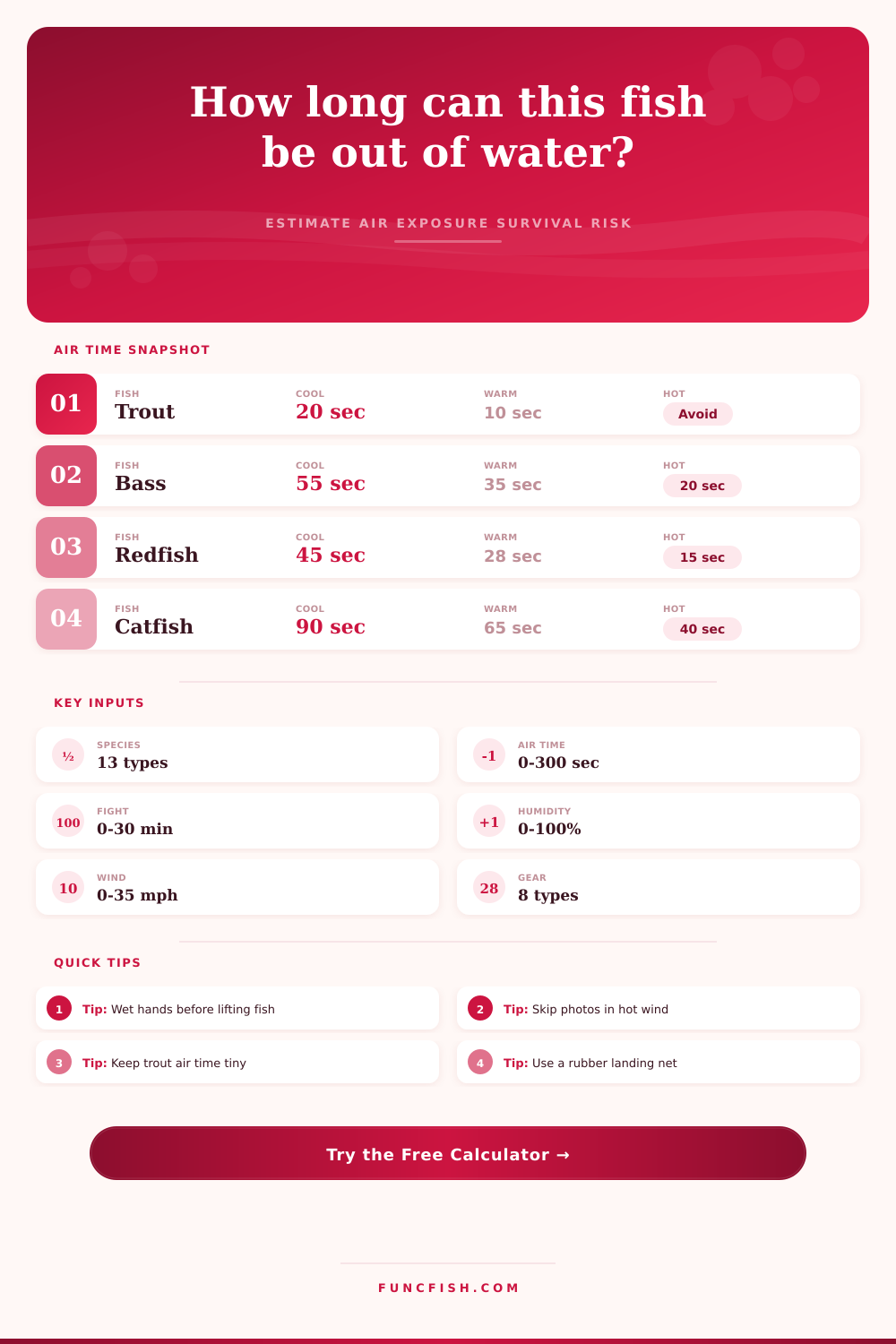
Gill function depends upon moisture (water) so fish will die rapidly when exposed to air. Handling a fish momentarily seems harmless, yet gill collapse and … Read more
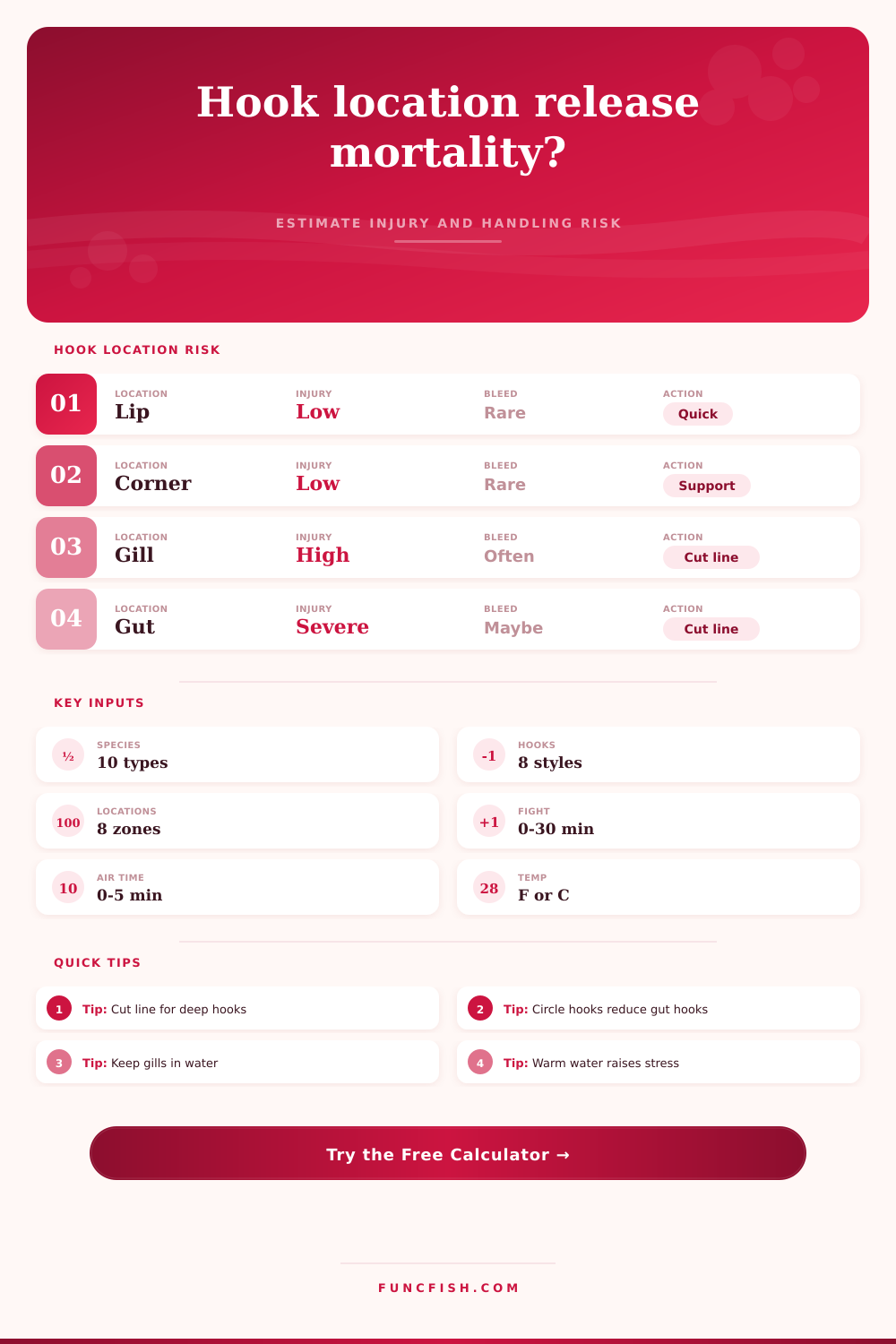
It’s all about the hookset. Is it going to bite your line on the lip? Most likely you have a clean release. Does it slide … Read more
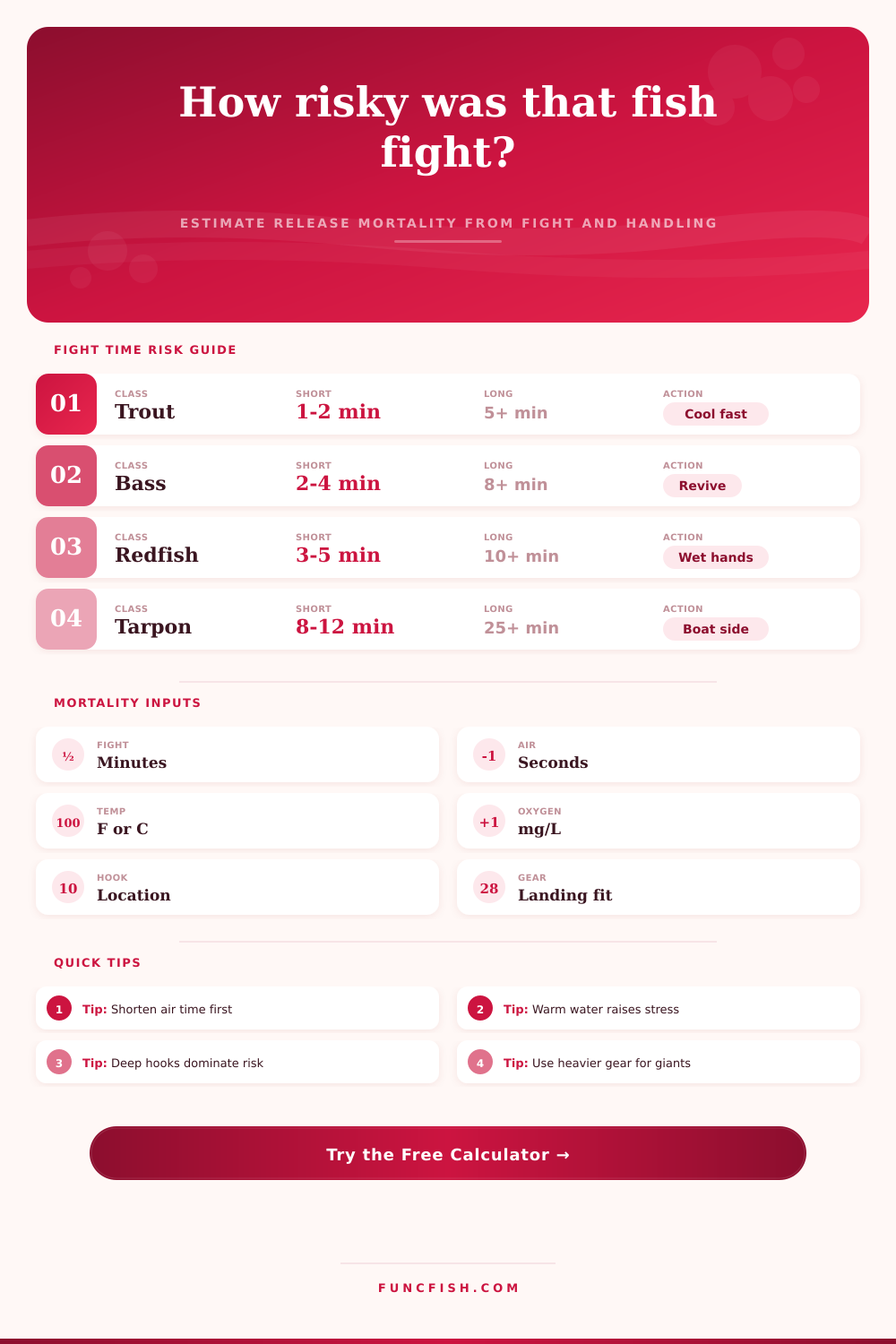
A huge bass eats your bait, you reel him in, the battle is long and tiring but exciting as hell. Then you land the brute, … Read more
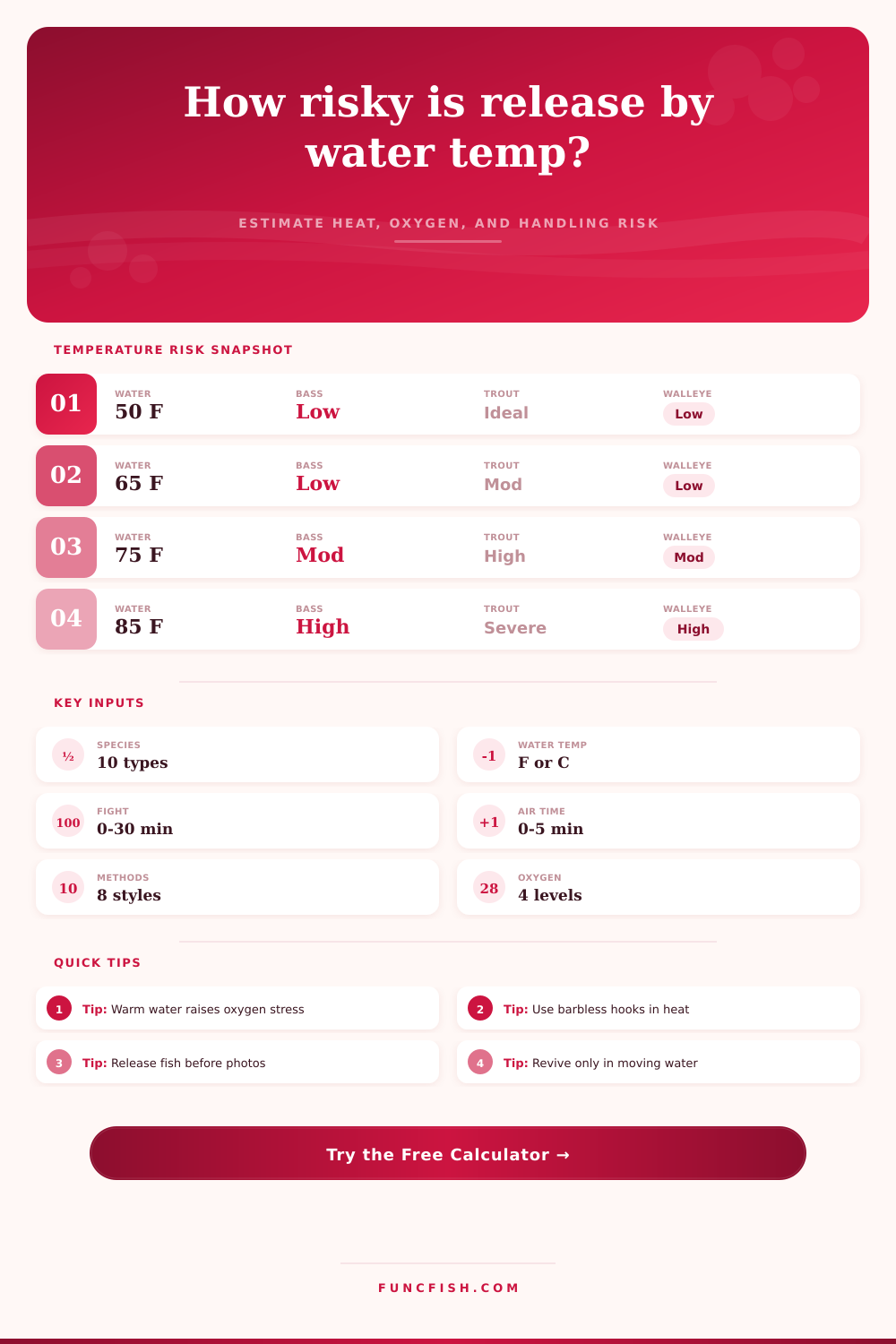
Anglers love catching fish. And they’re excited about landing them. Few consider possibility of surviving after being caught. Survival isn’t a threat posed by the … Read more
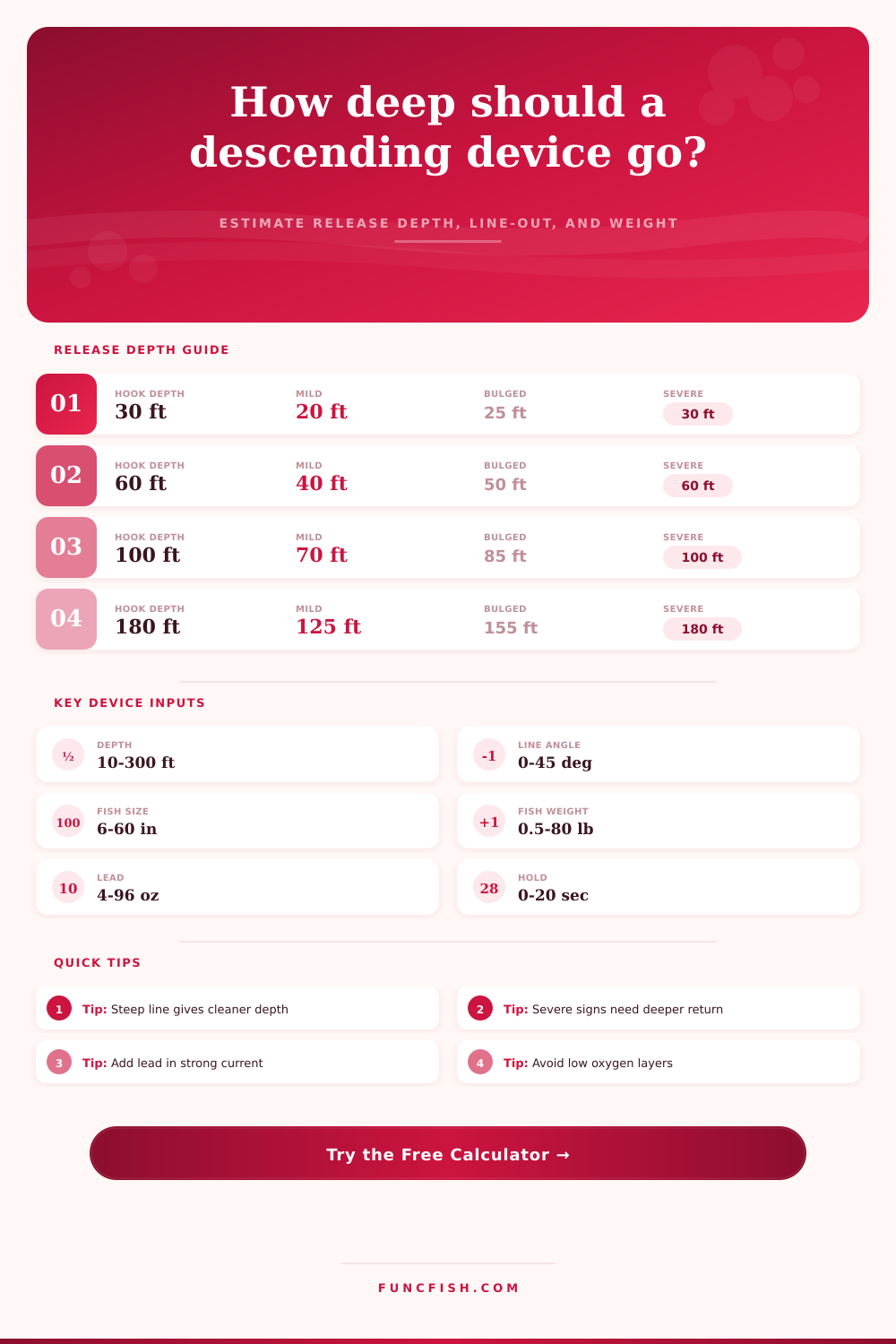
You hook the fish deep. And then you are fighting it up carefuly to get it into boat. As you lift the rod the water … Read more
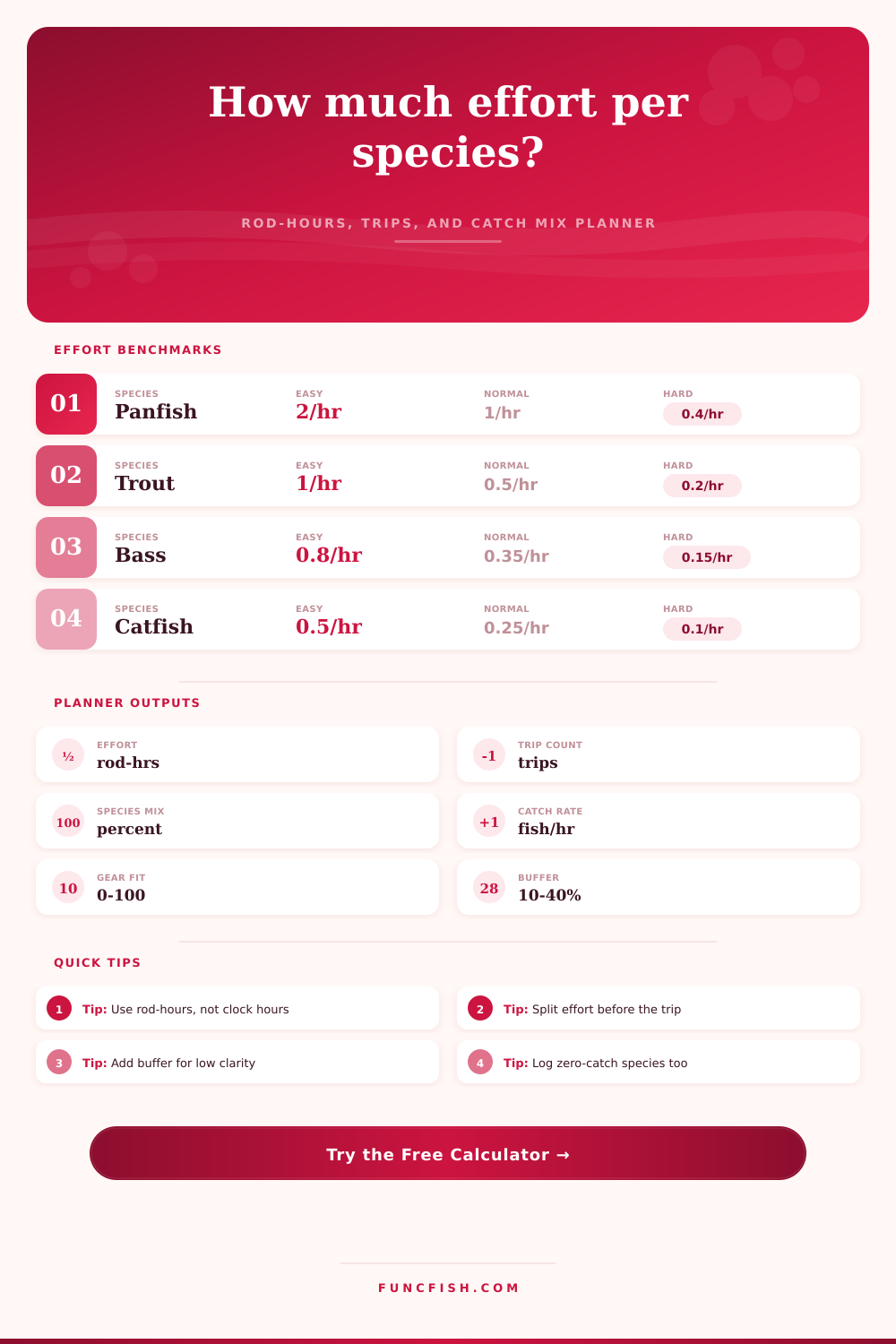
If we’re being honest, most of us make our fishing plans by time. We wake up when the sun rises, putz around loading truck and … Read more
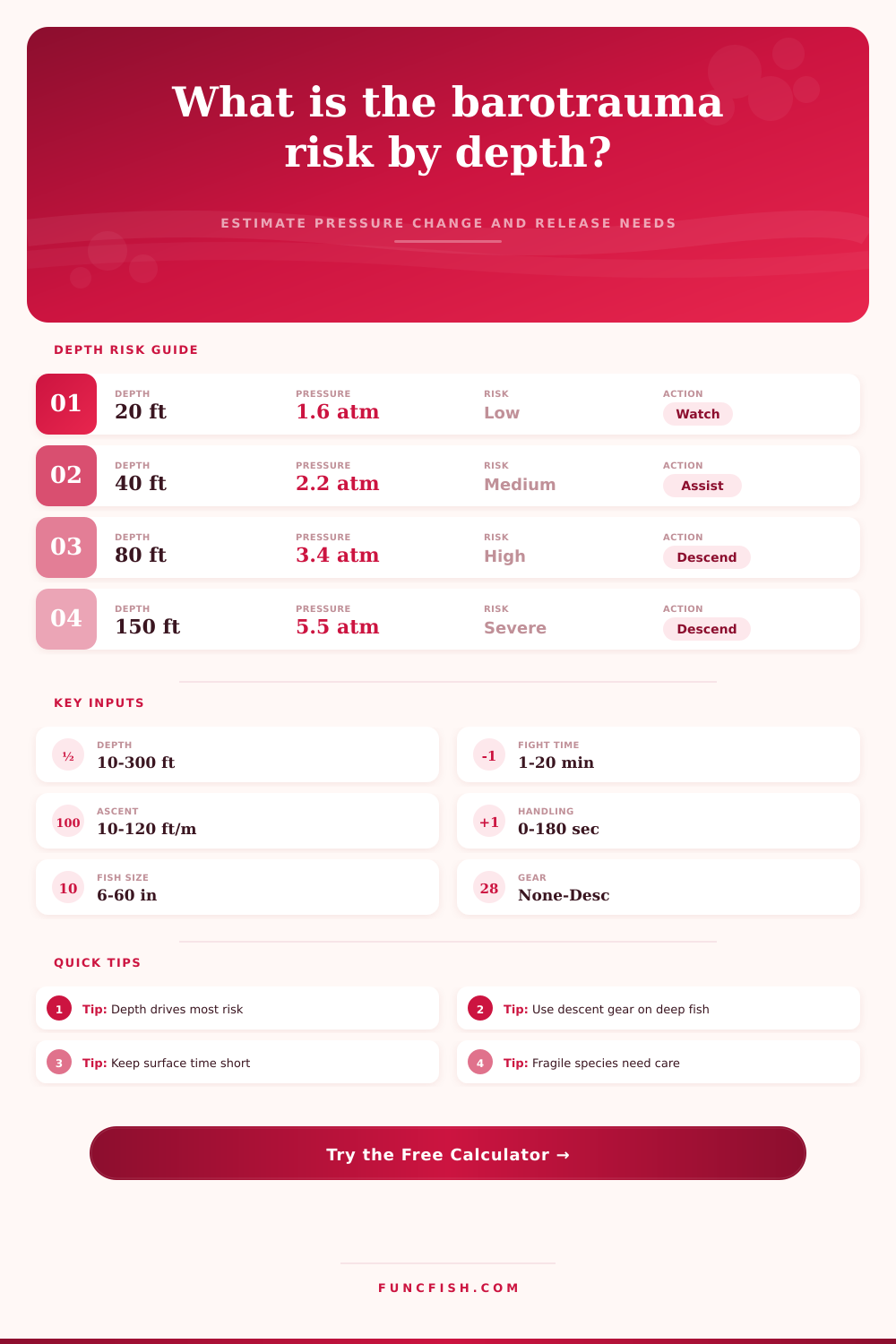
Barotrauma happen when you pull up a trophy walleye from forty feet deep and, when you get her to the surface, she has bulging eyes … Read more
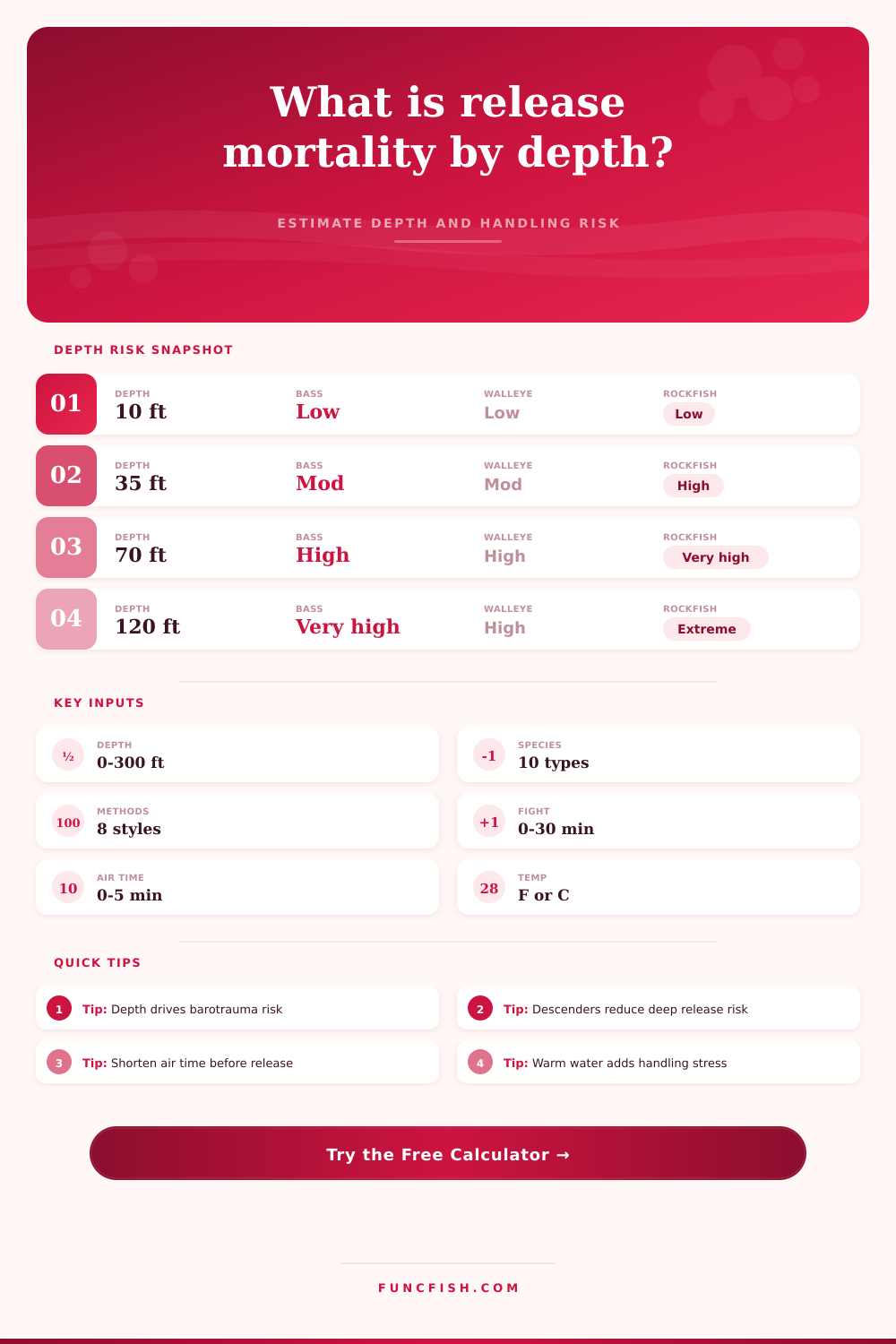
You wrestle a smallmouth up from forty feet of water. When she’s on the deck, she’s twitching and bloated. Your instinct say to throw her … Read more
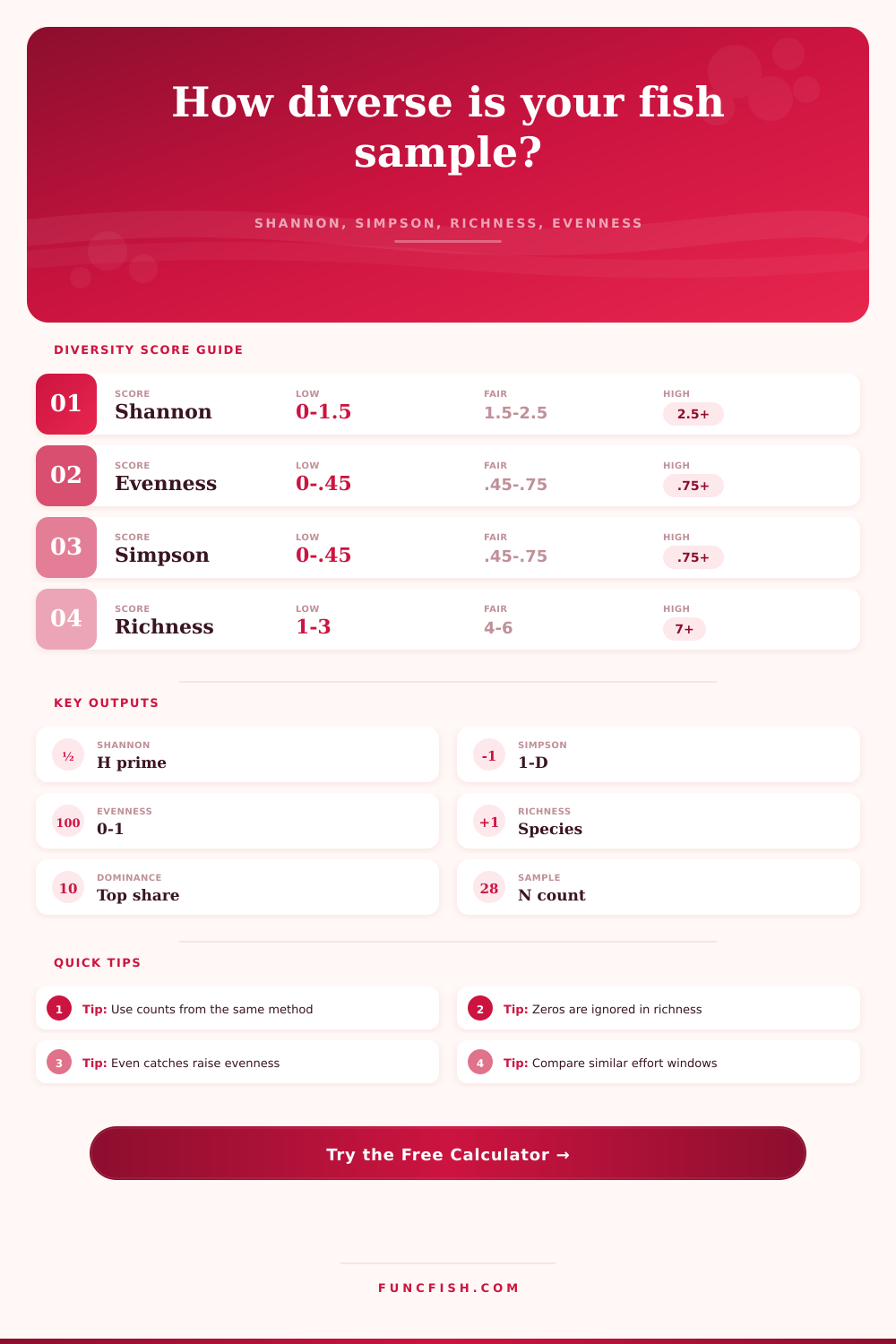
Take a pond. You go out there, pull up a bucketful of fish. What are you going to find? You will find forty largemouth bass … Read more
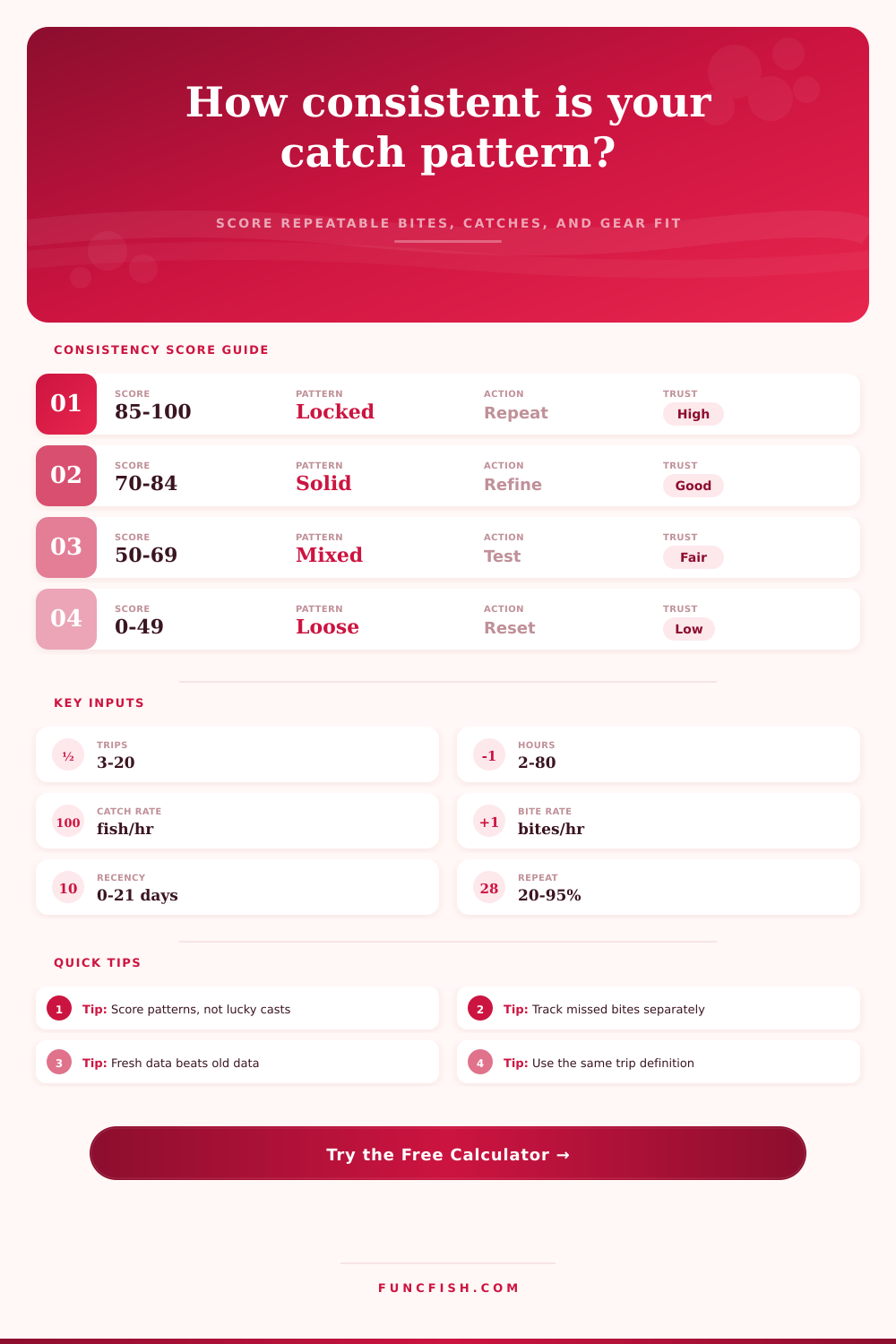
It is a simple formula. So how do you determine if your latest hot hand is repeatable or simply a statistical oddity? While most anglers … Read more