
Standing on the dock in Cabo San Lucas as your charter boat pulls away, there’s a moment where you wonder: Did I time this right? Do I really want to go out and try to catch marlin or am I not sure if the fish is here? Do I want to fish close to shore or will it be too hot for them?
Relax; this is one of those places where you don’t need to worry because here, there are two separate thermal engines churning along side-by-side. On the east side, Sea of Cortez warms rapidly and stays calm, creating a warm area that draw other species such as striped marlin and sailfish in cooler months. However, the opposite is true on the west (Pacific) side. It remain cooler and much choppier due to its deep water. Cold currents provides a superhighway for those seeking wahoo and black marlin.
When to Go Fishing in Cabo San Lucas
Knowing this geographical divide is far more important then knowing which day to come. That’s because no matter what time of year it is, they’re going to be there. In either location. This seasonality also explains why there’s never a “wrong” time to come here; it just depends on what you want to catch.
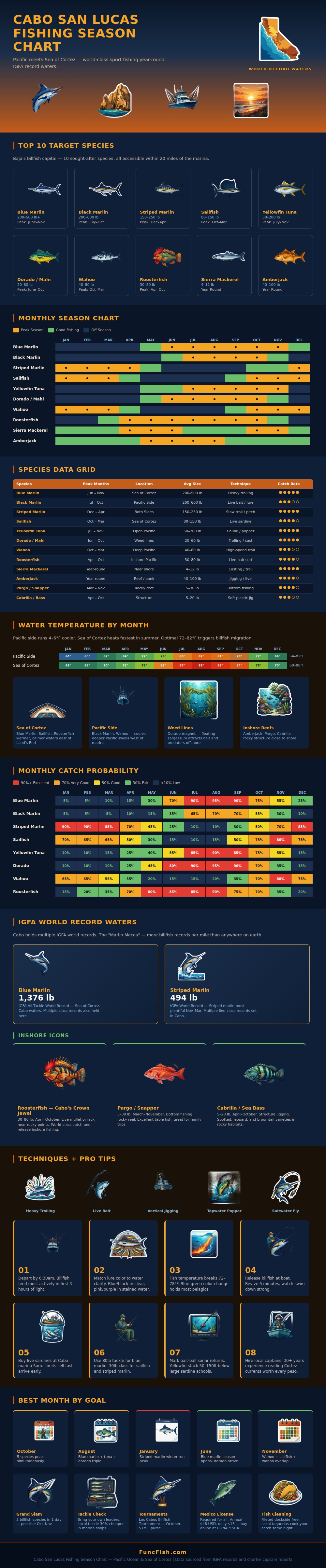
Come in August? You’ll hit the sweet spot for summer-loving yellowfin tuna and blue marlin. Show up in January for those same biggies? You should of prepared to switch your focus to the striped marlin that prefers colder water, or you might go home empty-handed. That constant flip-flop of seasons keeps locals’ heads bobbing all year long and helps keep visitors from ever leaving disappointed.
The graph above illustrate this by showing exactly when each species peaks, so you know what to expect and can adjust your expectations to match. So we know what’s down there now let’s talk about what moves them. It’s not necessarily who’s down there, but rather when they move. A key to understanding this is that the best range of temperature for Sea of Cortez is between 72-82 degrees Fahrenheit. That’s right, that magic number is a temperature.
The sun warms our bodies and the waters as well. It will act more like a dinner bell for billfish when those temps hits that perfect range. Warmth nears the surface and the bait fish near the top and that draws the predators up from the deep. It’s a chain reaction starting with heat from the sun and ending with you holding a bent rod tip.
You don’t need to be an oceanographer; simply observe the color of the water and read your own thermometer. When the water changes color, it usually indicates a change in temperature. That is where you’ll find a predator ambush zone known as a break. And that is where things get hot and heavy.
Inexperienced travelers tend to get stuck on either side of Cape San Lucas since most hotels are located on just one side of the beach, unnecessarily limiting your options. Savvy fishermen view the whole bay as a fun playground. They bounce from inshore reef systems targeting morning pargo and amberjack, then run offshore in the afternoon for marlin. Hiring a seasoned captain, who reads water like a map and will identify small clues others completely overlook, is worth every cent you spend on a charter. He or she know where the current is pushing the bait ball around during each hour of the day.
Beyond biology there’s also the issue of timing. You want to leave at six-thirty so you get the first three hours of daylight when billfish are feeding most aggressively. If you wait till noon it gets hot, the fish pull back into the deeper shadows and fishing can be painful. This is an easy tip that seems like common sense but travelers often hit the snooze button just one more time.
Always purchase your live sardines early in the day since they sells out. Local shops will charge a fortune for last minute gear so bring your own leaders if possible. These little logistics tips translates to a better trip and are simply common sense.
“It’s not necessarily a matter of luck when fishing here; it’s a matter of putting yourself in position as the water conditions matches up with what the fish need biologically. Whether you are catching a record blue marlin or just filling your cooler for dinner, paying attention to the temperature changes and the seasons will go a long way. The water remembers everything, from how the current moves to how hot the sun beats down. If you can learn to read those clues, the water will pay you back.