
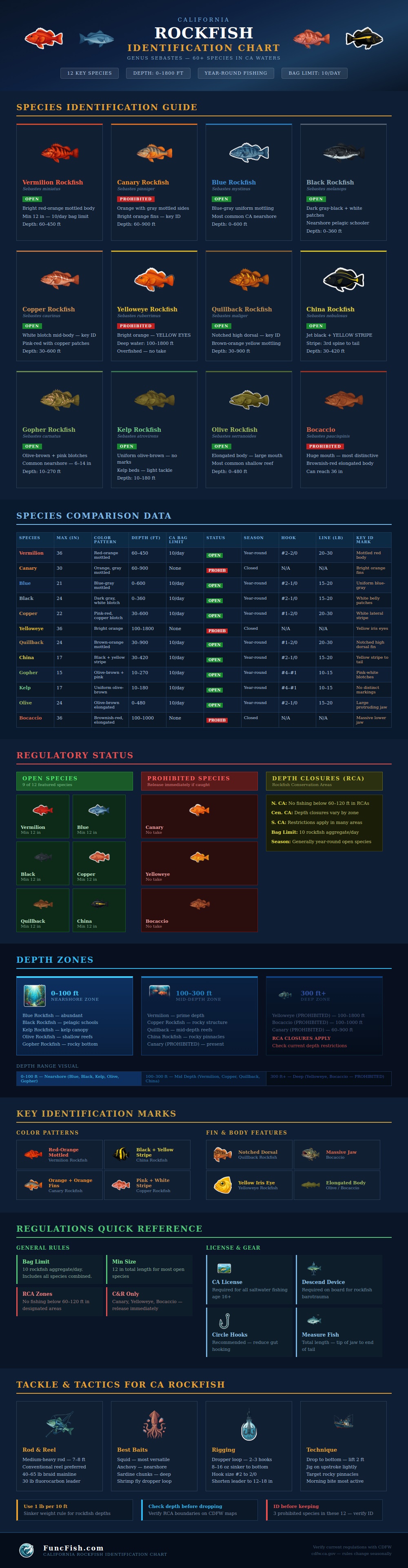
Catching a rockfish on the California coast? Is it legal to keep or not? Anglers with years of experience under there belts get this question all the time.
There is lots of Sebastes species in the ocean, all of which appear somewhat alike, but are regulated very differently. You might be allowed to keep one species, while you must throw another back immediately or face a fine for keeping it. So knowing what it is makes all the difference; much more different than what lure, tackle or bait was used.
How to Tell Different Rockfish Apart
Know what you’ve got before you bring it onto the boat deck. There are twelve critical species. The chart (above) calls out 12 important local species by name, illustrating what they’re supposed to look like and how to tell if they are allowed or prohibited. Prohibited fish with definitive lines.
Vermilion rockfish, which is a favorite keeper among these species due to their vibrant, mottled, red-orange body, are an obvious exception when legal-size restrictions apply. Canary rockfish appear similarly hued, but flash yellow-orange fins (indicating no go). That’s where things get tricky; the color of those fins means the fish goes back overboard instead than into the livewell. An oversight many novice boaters make, mastering fin hues is a must know.
What are the fish, where are they, and how do I catch them? Fish: Black, blue, copper, gopher, olive and rockfish is all in shallow near shore areas zero. One hundred feet deep, hanging out on kelp forests and along rocky reefs during daylight hours. Because these fish is generally smaller, they’re often caught on lighter tackle with smaller hooks. Because the water’s clear, you need to consider your shadows when dropping down your bait.
As you move into the mid-depth zone between one hundred and three hundred feet, the fish species changes. Copper and vermilion rockfish dominate this area. They stay throughout the water column around kelp patches and on pinnacles. With more pressure, it becomes important to have a way to release prohibited and undersize fish safely. A descent device is critical for that.
There are three species of rockfish that must be released: Bocaccio, Yelloweye, and Canary Rockfish. Yelloweyes reach depths of as much as eighteen hundred feet and are known to venture into more shallow water at times. They get their common name from their extremely bright yellow eye-iris. The bocaccio have a distinctive large lower jaw compared to other species, reproduce late, and grow slowly, so populations will take decades to recover once overfished. By following the rules and keeping the fishery viable for all anglers now and in the future, immediate release and minimizing catch stress are paramount.
Keeping it simple typically wins the day. You need a heavy power, medium-heavy rod teamed up with a conventional reel to handle weight of the sinkers and the struggle of fighting fish off structure. Squid continues as the go-to bait for its ability to stick onto the hook and its pungent aroma in cold currents. Using dropper loop rigs with two or even three hooks let you fish multiple depths at the same time. This is always a good way to increase your odds of locating some active fish.
The key here is more mental than anything else. You need to believe that if the line settles near the bottom, a bite will come sooner or later. Do not force it by fighting the current erratically. Just like any fishing, catching rockfish involves some combination of skill, knowledge and patience.
Knowing how to catch them is one thing, but knowing which species to target will help increase your efficiency and keep you within the bounds of state law. That’s why the visual guide comes in handy. It gives you a reference point, but it doesn’t necessarily make you good at using it. It does take practice. Practice means bringing a tape measure, learning the fins, and checking the latest bag limit. You’ll do better if you’re prepared properly.
Before you see it break the surface, the ID process has already begun. It all begins by knowing the rules and following them by respecting the habitat. Be prepared, use minimal equipment, be on the lookout, and do it right when releasing fish. There’s plenty of life in that reef and getting to know it give you a great advantage. You should of practiced before going out.