Carolina Rig Leader Length Calculator
Estimate finished leader length, leader strength, sinker match, bead clearance, and bottom-contact score for Carolina rigs using depth, cover, line, bait profile, and water clarity.
📌Carolina rig presets
⚙Rig and water settings
Use the depth where the sinker spends most of the retrieve, not the deepest cast path.
Carolina rig recommendation
Calculation breakdown
🧵Leader material grid
10 lb Fluoro
12-15 lb Fluoro
17-20 lb Fluoro
14 lb Mono
📏Leader length reference
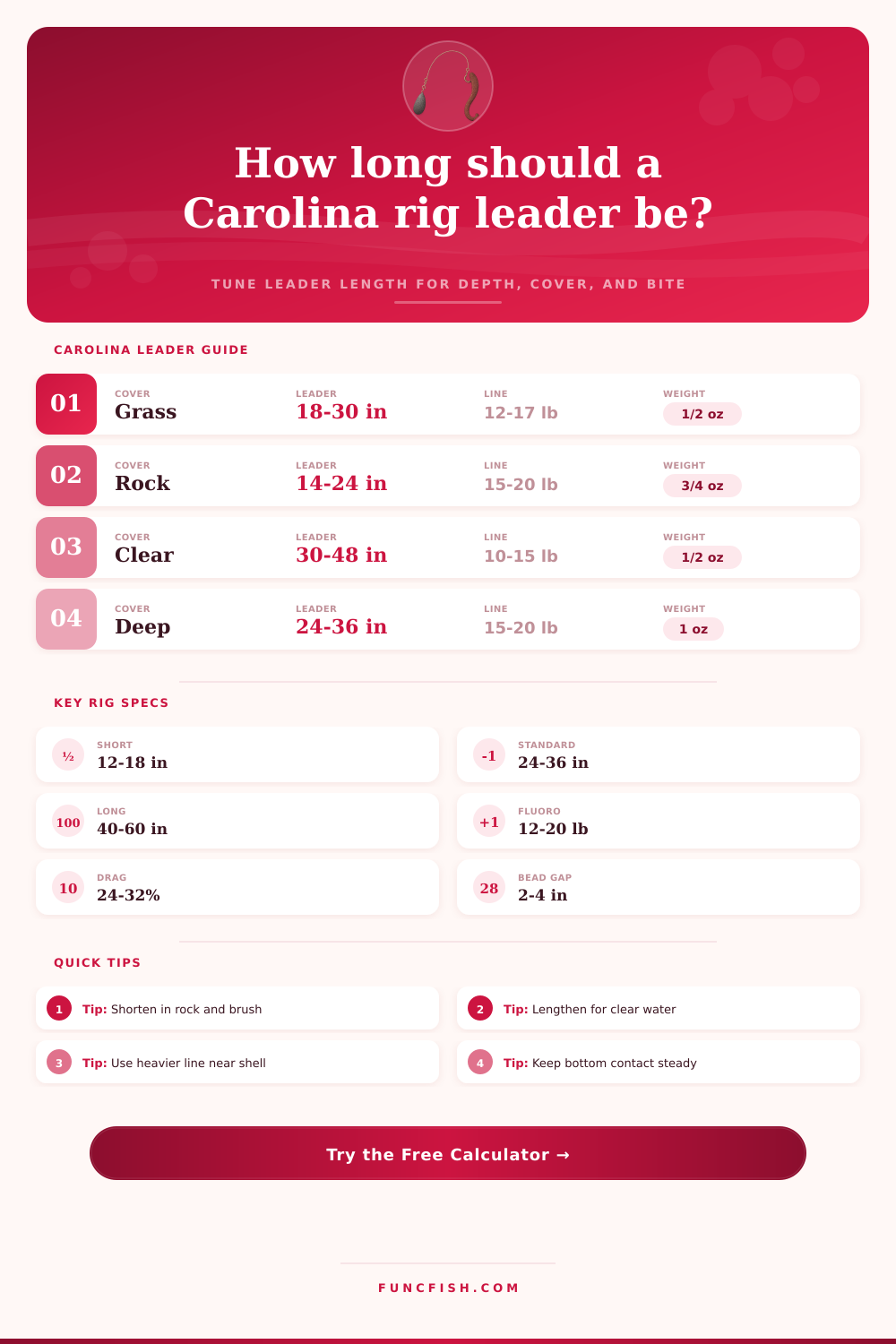
| Situation | Leader range | Metric range | Why it works |
|---|---|---|---|
| Thick brush, stumps, dock cables | 12-20 in | 30-51 cm | Short leader turns the fish faster and reduces wrap-ups around cover. |
| Rock, riprap, shell beds | 16-28 in | 41-71 cm | Moderate length keeps the bait free while protecting against abrasion. |
| Standard points and flats | 24-36 in | 61-91 cm | Balanced drag path with enough separation from the sinker and bead. |
| Clear water or pressured fish | 36-54 in | 91-137 cm | Long separation gives the bait more glide and less sinker noise. |
| Deep ledge, slow drag | 28-42 in | 71-107 cm | Extra length helps the bait trail naturally behind a heavier sinker. |
| Wind, current, or long casts | 18-30 in | 46-76 cm | Shorter length improves feel and lowers tangles during hard sweeps. |
⚖Sinker and line matching table
| Depth and drag | Common sinker | Main line | Leader strength |
|---|---|---|---|
| 0-8 ft, light bank fishing | 1/8-1/4 oz | 10-12 lb mono or fluoro | 8-12 lb finesse fluoro |
| 8-18 ft, standard flats | 3/8-1/2 oz | 12-17 lb fluoro | 12-15 lb fluoro |
| 18-30 ft, offshore points | 1/2-3/4 oz | 15-17 lb fluoro | 15-17 lb fluoro |
| 30+ ft, ledges or current | 3/4-1 oz | 17-20 lb fluoro or braid | 17-20 lb abrasion leader |
| Grass and soft bottom | 3/8-5/8 oz cylinder | 30 lb braid or 15 lb fluoro | 12-17 lb fluoro or mono |
| Rock, shell, and brush | 1/2-1 oz tungsten | 17-40 lb main line | 17-20 lb hard fluoro |
🐟Species and presentation reference
| Target | Leader cue | Bait profile | Hook and line note |
|---|---|---|---|
| Largemouth, neutral bite | 24-36 in | Lizard, fry bait, creature | 3/0 to 4/0 EWG with 12-17 lb fluoro. |
| Pressured largemouth | 36-54 in | Finesse worm or centipede | Light-wire hook, 10-12 lb clear leader. |
| Smallmouth on gravel | 30-48 in | Tube, goby bait, small craw | Use abrasion checks after dragging shell or zebra mussels. |
| Spotted bass on points | 28-42 in | Small worm or floating fry | Keep leader thin enough for long casts and bottom feel. |
| Night bass or stained water | 18-30 in | Bulky craw or big worm | Shorter leader keeps contact direct around unseen cover. |
🔍Carolina rig comparison grid
| Rig version | Leader length | Best use | Tradeoff |
|---|---|---|---|
| Short power Carolina rig | 12-20 in | Brush, timber, rock, close targets | Excellent control, less bait glide. |
| Standard Carolina rig | 24-36 in | Points, flats, shell beds, grass edges | Balanced feel, average tangle risk. |
| Long finesse Carolina rig | 40-60 in | Clear water, slow drag, pressured fish | Natural bait path, harder hookset angle. |
| Heavy ledge Carolina rig | 24-42 in | Deep structure, wind, long casts | Strong contact, needs tougher leader. |
| Split-shot finesse Carolina rig | 18-36 in | Ponds, shallow flats, light bites | Subtle fall, less depth control. |
💡Calculation tips
Leader tuning tip: Measure the finished distance from the swivel knot to the hook eye. If you tie a long loop knot or snell, add that allowance before trimming so the final leader still matches the calculator.
Bottom-contact tip: If the sinker feels mushy or the bait fouls grass, shorten the leader before increasing weight. If bites are faint in clear water, lengthen in 4 inch or 10 cm steps.
When you drag a Carolina rig over a drop off, your sinker collides with some shell or rock on bottom and the bite indicator dissapears. Now your gut says a fish just took the bait but the leader was way more long for the fish to feel the weight of the hook as it loads up. That’s frustrating in bass fishing because error is invisible from the boat deck.
How far should your lure be from the weight? And can you really hear if it’s dragging well or getting muddied up somewhere in sixties of braid? That’s where this calculator comes in. It help you size that gap before you’ve ever thrown a single cast.
How to Choose the Right Leader Length for Carolina Rig Fishing
Why does the Carolina rig leader length matter? It’s not arbitrary. In fact, it’s a double-duty element. A communication line and a shock absorber all-in-one. So, when you’re fishing near thick cover (i.e. Fallen timber, grass mats), keep the leader shorter. It’ll keep your bait tight to the bottom and decrease chance of wrapping on something with a hard hookset.
This calculator considers balance between needing a little more skill versus the increased abrasion risk and runs the numbers based off what’s best for whatever situation you find yourself in. Sure, maybe you have a short twelve-inch leader inside heavy brush where it’s the only way you can hope to turn the fish before it dives back to safety. But a thirty-six-inch leader there is nothing but tangled lines and lost bait.
On the other hand, in clearer water, he need distance. Gin-clear bass are spooky and won’t attack the heavy weight when it’s hanging over their head above their food source. With a longer leader, the weight sink out farther away. It reduces visual disturbance and provides the soft plastic with more room to look naturaly. That is the balance of the rig strategy; the constant compromise between bait acceptance and hook-setting power.
The tool’s reference table spells out this relationship clearly. It shows that as cover gets denser, your line strength has to go up. However, you may have to trim back your leader a bit so you do not get broken off on hard structure. We often fail to consider water clarity when we tie our knots.
Regardless of whether we’re fishing crystal-clear mountain lakes or stained creek channels, many folks use that same ole’ trusty 24 inches. That’s a guaranteed weak link. As visibility decreases, fish start relying more on proximity and vibration different than sight alone. Because they don’t require as much of that buffer zone between the bait and weight, it’s okay to safely shorten your leader.
Entering your clarity into the calculator will adjust the recommended length so you can snug ‘em down in conditions that permit but still avoid spooking fish in high-visibility situations. It’ll also consider your sinker weight to ensure your drag settings match the depth you are fishing.
The other mistake I see a lot is equating hookset leverage with line diameter. You can hold a thick twenty-pound fluorocarbon leader in your hand and swear it feels substantial, but you’ll lose sensitivity over that distance when someone bites. But then remember that’s three feet of water column where you are losing all that sensitivity. Conversely, you can take that same ten-pound fluorocarbon and tell yourself it won’t have enough backbone for setting a big fish because it seems so flimsy. Yet, it gives you such a clearer feel for those vibrations of the bite through three feet of water. So think about what’s on the bottom and let that lead you to the proper line strength.
Gravel beds require slightly heavier lines than sandy flats, but not necessarily longer leaders. But not always heavier means longer. Using the right amount of gravel actualy lets it roll with weight without catching as much debris. So in short, tuning a carolina rig is just a matter of dealing with uncertainty. You never know what the fish are going to do after a front moves through or exactly where they’re hiding.
You shouldn’t of have any control over those variables, but you CAN have control over the mechanical link between your rod tip and that soft plastic bait. You can take all the different line types, covers, and depth out of the equation by letting the tool handle it. Instead of hoping your old tricks still apply to new water, you begin each day with a setup that’s built to succeed.
That consistency helps turn frustrating dry spells into productive days where you feel every little bump before the hookset. The sinker settles into place, the bait dances around and you’re connected to whatever swims beneath.