Chicken Rig Dropper Length Calculator
Estimate finished dropper branch length, loop cut length, hook spacing, bottom clearance, total leader height, and tangle risk for high-low chicken rigs used in bottom fishing.
📌Bottom rig presets
⚙Chicken rig settings
Use the longest clam tongue, squid strip, worm section, cut bait, or crab chunk that can swing from the hook.
Enter the vertical distance between dropper loop knots. The calculator can show if it is too tight for the bait swing.
Add line consumed by the dropper loop knot, twisted loop, surgeon loop, or snell connection.
Chicken rig dropper forecast
Calculation breakdown
🧵Leader material comparison grid
30 lb mono
40 lb fluoro
80 lb hard mono
Soft braid
📊Species and bait spacing table
| Target | Typical bait | Finished dropper | Hook spacing | Bottom clearance |
|---|---|---|---|---|
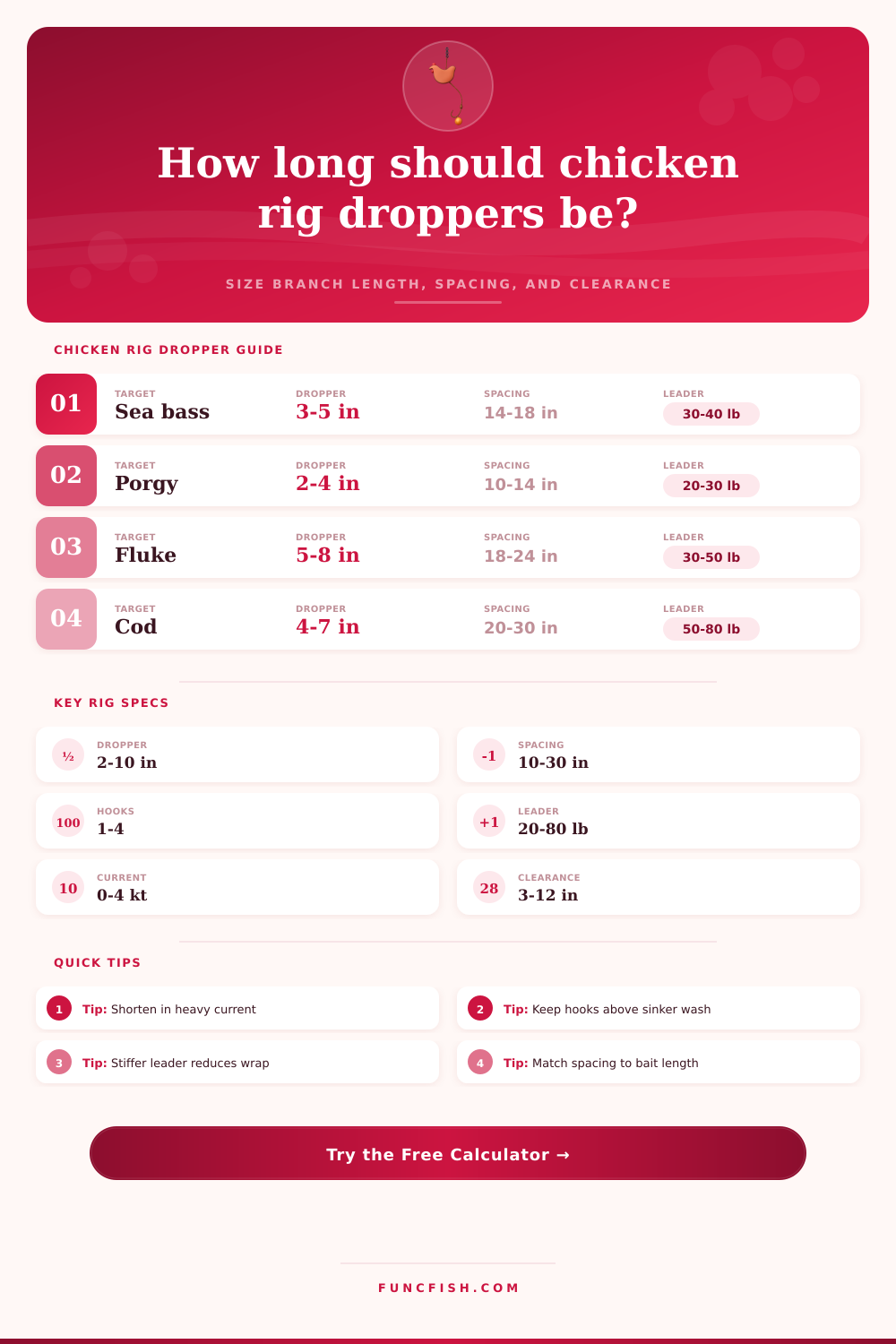
| Black sea bass | Clam strip, squid, gulp-style bait | 3-5 in / 8-13 cm | 14-18 in / 36-46 cm | 6-10 in / 15-25 cm |
| Porgy and scup | Small clam strip, squid bead strip | 2-4 in / 5-10 cm | 10-14 in / 25-36 cm | 5-8 in / 13-20 cm |
| Fluke and flounder | Squid strip, spearing, minnow | 5-8 in / 13-20 cm | 18-24 in / 46-61 cm | 8-14 in / 20-36 cm |
| Cod and haddock | Clam, squid, cut bait | 4-7 in / 10-18 cm | 20-30 in / 51-76 cm | 10-16 in / 25-41 cm |
| Snapper and reef fish | Squid, cut bait, shrimp | 3-6 in / 8-15 cm | 14-22 in / 36-56 cm | 6-12 in / 15-30 cm |
| Grouper near structure | Chunk bait, squid head, live bait | 4-7 in / 10-18 cm | 18-26 in / 46-66 cm | 8-14 in / 20-36 cm |
| Surf kingfish and whiting | Bloodworm, fishbite strip, shrimp | 2-5 in / 5-13 cm | 12-18 in / 30-46 cm | 4-8 in / 10-20 cm |
| Tilefish deep water | Squid strip, bonito strip | 6-10 in / 15-25 cm | 24-36 in / 61-91 cm | 12-20 in / 30-51 cm |
🌊Current and bottom adjustment table
| Condition | Current speed | Dropper adjustment | Spacing adjustment | Preferred material |
|---|---|---|---|---|
| Slack drift | 0-0.5 knot | Add 0.5-1.5 in for bait motion | Normal spacing | Mono or fluoro |
| Light tide | 0.5-1 knot | Baseline calculation | Normal spacing | 30-50 lb mono |
| Moderate tide | 1-2 knots | Shorten 10-18% | Add 1-3 in | Fluoro or hard mono |
| Strong tide | 2-3 knots | Shorten 20-30% | Add 3-5 in | Stiff fluoro |
| Wreck edge | variable | Shorten 1-2 in | Keep hooks separated | Hard mono or fluoro |
| Surf sweep | wave-driven | Shorten 15-25% | Add upper-hook clearance | Mono with stiff loop |
🎣Hook and bait clearance reference
| Hook size | Gap reference | Best bait length | Minimum dropper | Spacing note |
|---|---|---|---|---|
| Size 6 baitholder | 7 mm / 0.28 in | 0.8-1.8 in | 2 in / 5 cm | Use close spacing for tiny baits |
| Size 2 bait hook | 10 mm / 0.39 in | 1.2-2.5 in | 2.5 in / 6 cm | Good small bottom rig size |
| 1/0 octopus | 14 mm / 0.55 in | 1.5-3.5 in | 3 in / 8 cm | Common sea bass and snapper hook |
| 3/0 bait hook | 19 mm / 0.75 in | 2.5-5 in | 4 in / 10 cm | Needs more swing clearance |
| 5/0 circle | 26 mm / 1.02 in | 3-6 in | 5 in / 13 cm | Leave room for bait strips |
| 7/0 circle | 33 mm / 1.30 in | 4-8 in | 6 in / 15 cm | Use longer spacing on cod rigs |
| 9/0 heavy circle | 41 mm / 1.61 in | 5-10 in | 7 in / 18 cm | Deep bait rigs need tall leaders |
⚖Gear and species comparison grid
| Rig purpose | Leader strength | Hook count | Branch behavior | When to shorten |
|---|---|---|---|---|
| Party boat sea bass | 30-40 lb mono or fluoro | 2 hooks | Short, stiff, easy to rebait | Dogfish, tangles, or wreck snags |
| Light porgy rig | 20-30 lb mono | 2-3 hooks | Very short bait presentation | When small fish twist the rig |
| Fluke drift rig | 30-50 lb fluoro | 1-2 hooks | Longer strip-bait sweep | When bucktail or sinker fouls |
| Cod deep drop | 50-80 lb hard mono | 2 hooks | Stout branch with wide spacing | When current bows the whole rig |
| Reef snapper rig | 40-60 lb fluoro | 2 hooks | Moderate length for cut bait | Near coral, rock, or high relief |
| Surf bait rig | 20-40 lb mono | 2 hooks | Short branches above pyramid sinker | During sweep or weed pressure |
💡Rigging calculation tips
Dropper length check: A finished branch should clear the leader body when the bait swings, but it should not reach the dropper knot above or the sinker clip below. For chicken rigs, stiffness often matters as much as raw length.
Spacing check: If the calculated spacing is greater than your manual spacing, keep the droppers shorter or rebuild with more vertical room. Long baits, soft braid, and strong tide all need extra separation.
There’s nothing fancy about a chicken rig. It’s just piece of gear designed to help you work a bait along the bottom. A weighted line in the center and two hook on the same leader make it easy. It doesn’t take much more then dropping your bait in the water and waiting for the bite.
But there are still variables to consider. In reality, getting the variables right means making sure that the hooks don’t hang up on one another or drag in the muck; they has to stay out of each others’ way and still give the bait enough mobility to be seen by the fish.
How to Fix Your Chicken Rig
The first thing to consider is the behavior of whatever fish you’re targeting; where does it sit in relation to the hook? Does it look up for falling bait? Is it looking up? Do they likes a bait that falls to them? Do they scrape along the bottom picking at crevices and crustaceans? Do they lay flat on the bottom of a sandy area? Do they want something dragging long enough to make them react, but not something that buries itself?
With those variables considered, the calculator will do the rest of the math based off whatever species you select. You don’t have to know if you should use a 3 inch or a 5 inch branch, it’ll tell you. It also takes into account the type of bite. If your water has a lot of silt, it won’t let the hooks bury. If you’re fishing clear water, it won’t float all the way out and over the heads of skittish fish.
The biggest variable that’s been overlooked when rigging is length of the bait. If you hook a six-inch piece of squid onto a two-inch dropper, right away it’ll foul the sinker line and make the bait wrap around the leader. Physics doesn’t give a hoot about tradition; that’s why the tool asked how long your bait was. You want the bait to have some space to swing freely without fouling the rest of the rig.
In strong current, a stiffer fluorocarbon leader will hold its shape better which helps prevent the knot from colliding as it swings. Nylon monofilament is softer and goes along with flow of the water, so you may require additional space between droppers to keep ’em separated. Water movement changes everything. Without lateral pressure from a current, you can go a little longer between your hooks. The current won’t force them together during slack tide. However, throw it out into a two knot cross current, and that same rig becomes an accordion, folding over on itself.
As water speed increases, the increased separation distance is shown on the table on the page. Greater flow strength require greater separation between the hooks to avoid one (the top hook) getting shoved downward into the other (bottom hook’s) line of fire. This is why many party boats targeting heavy wrecks fish short, stiff branch rigs with wide vertical separation.
And then there’s the knot itself. Even before you cast, you are adding line length by using a double uni knot or a surgeon’s loop knot. It’s more than just math; it’s a practical reality: adding an inch or half-inch per loop. If you cut your branch to the exact finished length, it will not be long enough once tied. With the tool, this allowance is added automatically so that you can measure out your line accuratey before tying.
Compare clean sand to a snaggy bottom. Shorter droppers are less likely to catch your hook when setting the bottom on heavy rock or bridge piling. However, if it is too short, the bait sits right in their face on the coral they feel safe around but won’t come out for. It’s a balance between presentation appeal and keeping the bait away from snags.
The biggest error people make in rigging is setting up one rig to do everything for a whole day on the water. Build multiple setups each day, adjusting your branches and spacing based on what you see at the surface and hear about from other boats. Take these numbers as a starting place, tie your lines, dip em in the water and go from there.
You can have the prettiest looking line rigged but if the current comes across it sideways, it will still get tangled. Rigging is all about function at depth, not perfect in the shed. Make the bait move, keep the hooks separated and let the fish do the work.