
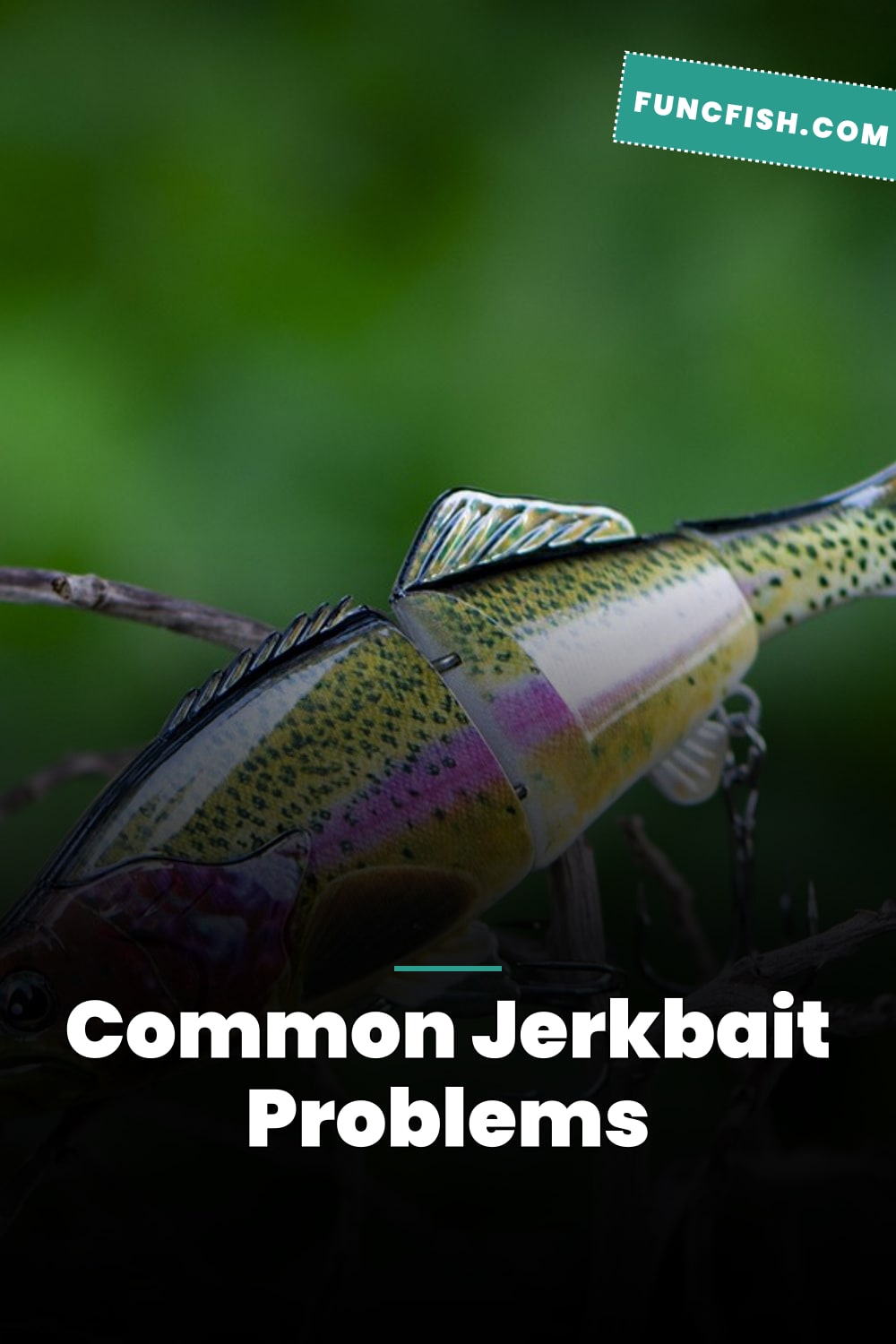
If you’re an angler who has a jerkbait and just can’t ever seem to catch anybody on it, then there’s a certain type of frustration for that. You pull that skinny little plastic bait out, throw it out there, reel it back, see your line twitch in your hand and nobody bites. On paper it should be right; when worked properly, it swims like a wounded baitfish.
But all too often it’s just a bunch of sore casts and empty lines. Typicaly, the issue is due to not understanding the true action of the lure in the water. A jerkbait is all about suspending, vibrating, and sudden bursts of speed.
When any of those things are missed in the retrieve, it’s dead out there. Anglers get caught up in “retrieval pattern” rather than the details that make it tick. Here’s the most common mistakes when using jerkbaits that kill your catch rate, and what you need to adjust to start getting more bites.
Common Mistakes To Fix When Using Jerkbaits
1. Overcasting and losing control
These mechanical errors can be corrected so you close the gap between casting and catching. Most folks overcast the bait. Not only does it require distance to cover water, but you also don’t want to throw too hard and lose control.
That soft tip absorbs the shock on the strike while also helping with a better presentation. If you throw too hard, your lure will either skip all crazy or land with a splash that spooks those wary fish. Try for a smooth arc where the bait falls softly next to the cover without making too much noise.
That keeps fish interested without scaring them away when something comes crashing down around their heads.
2. Failing to pause the retrieve
Not pausing your retrieve is likely the biggest mistake in jerkbait fishing. A jerkbait’s purpose is to hover and suspend at the end of every twitch.
Most of the time the fish will strike during the pause. They hone in on the abrupt stop, thinking they’ve found an injured or dead meal. Constantly moving the lure remove this trigger all together.
After every jerk, allow the bait to hover for a couple of seconds without movement. The fish will often follow the bait, then blow up as it begins moving again during the next twitch. Success depends on your ability to be patient throughout the hover period.
3. Using the wrong line type
Using the wrong line will really hurt your results. Braid is great for sensing the bite but has no give when the bass smashes it. You’ll often miss them and get your hooks pulled out because braid doesn’t absorb the violent blow.
Fluorocarbon or mono gives you some cushion so you allow the fish to do most of the work in setting its jaws. Also, thinner line cut cleaner through the water, so the lure has less drag during long casts. Think about tying into a combination of braid as your main line with a fluorocarbon leader.
That way you can still feel those light bites down there with the braid and have the shock absorbing properties on the terminal end.
4. Ignoring depth and buoyancy
You miss opportunities in the water column if you don’t account for changes in depth. Because of shape and buoyancy, all jerkbaits dive differently.
A suspending minnow will suspend wherever you put it; a sinking one will drop steadily with each twitch. Fish that hold higher up will not have access to a lure fished too deep for the situation. Match the bait to the structure and water temperature.
Run slower diving baits in colder water to spend more time in the strike zone.
5. Inconsistent or weak jerking
Lack of jerk consistency disrupts the rhythm. Subtle little twitches don’t displace water or vibrate enough to draw attention from a distance.
It requires hard, deliberate pulls that force the bait to dart out to one side then return back to center. This gives it a natural appearance and mimics a panicked minnow rapidly changing directions. When you’re jerking too small, the bait never really moves much to the side and doesn’t trigger the predatory response in the bass.
6. Retrieving too fast
The action of the bait are overwhelmed if you fish it too fast. The jerkbait needs time to respond to every move you make at the end of your rod. It also take away the subtle flash and wobble that has made these such effective lures.
Your retrieve should be much slower. Allow the lure to finish its movement before initiating the next one. That gives the fish a little more time to process it and makes them more likely to commit.
There are times when you may need to go faster, like on hot days when the fish are really active and looking to eat. But slow fishing will keep the bait in the strike window longer and would of typically outproduce fast retrieves in most conditions.
7. Choosing the wrong rod
When fishing this way, it’s easy to ignore the importance of rod action.
Your goal is to get a fast taper rod with heavy to medium-heavy power so it can load on every jerk. Any type of whippy tip won’t efficiently store energy or transfer it well to the line. Each pull needs to snap back quickly to allow for the quick acceleration that causes the bait to dart naturaly.
If you’re having trouble getting the lure to come off the hook crispily, take another look at what you have tied on. It might not be your technique (it could be your equipment).
8. Mismatching water clarity and color
Failing to account for water clarity can impact visibility and strike rates.
The darker and higher contrast your profile is in stained water, the better it will show up and draw strikes. On the other hand, clear water needs more natural colors such as shad or perch type patterns that won’t spook wary fish. Think about the water column content.
Matching the size and color of the forage present give you a better shot at fooling the selective fish which certainly have their pick of the litter.
9. Overthinking the technique
You can’t connect to the lure if you’re overthinking it. A lot of us are worried about “thwacking” the lure just right, but instead we need to be keeping the line tight and feeling for when it goes slack or tightens up slightly.
Go off instinct and rely less on formula. If you learn what the lure does in various scenarios, then make your retrieve dynamic according to the response you get out of the water.
10. Giving up too early
Last but certainly not least, don’t quit after one cast.
Lots of times the bass will come from behind a jerkbait and follow it several feet before committing to biting. So if you make a cast and don’t get bit immediately then reel in, chances are you just missed your opportunity as they were at their most interested point. Commit to making it all the way down there on every cast.
Even if you don’t get a bite on that initial twitch, continue to twitch away. A lot of bites happen very late in the retrieve, when the fish has closed the gap and decides it’s time to eat.