Crimp Sleeve Length Calculator
Estimate sleeve length, bore size, press count, end clearance, tag allowance, and grip margin for crimped fishing leaders, bite traces, wind-on loops, and terminal hardware.
📌Crimp Rig Presets
⚙Leader, Sleeve, and Press Inputs
Crimp Sleeve Sizing Result
Calculation Breakdown
📊Gear and Species Comparison Grid
Inshore Fluoro Bite
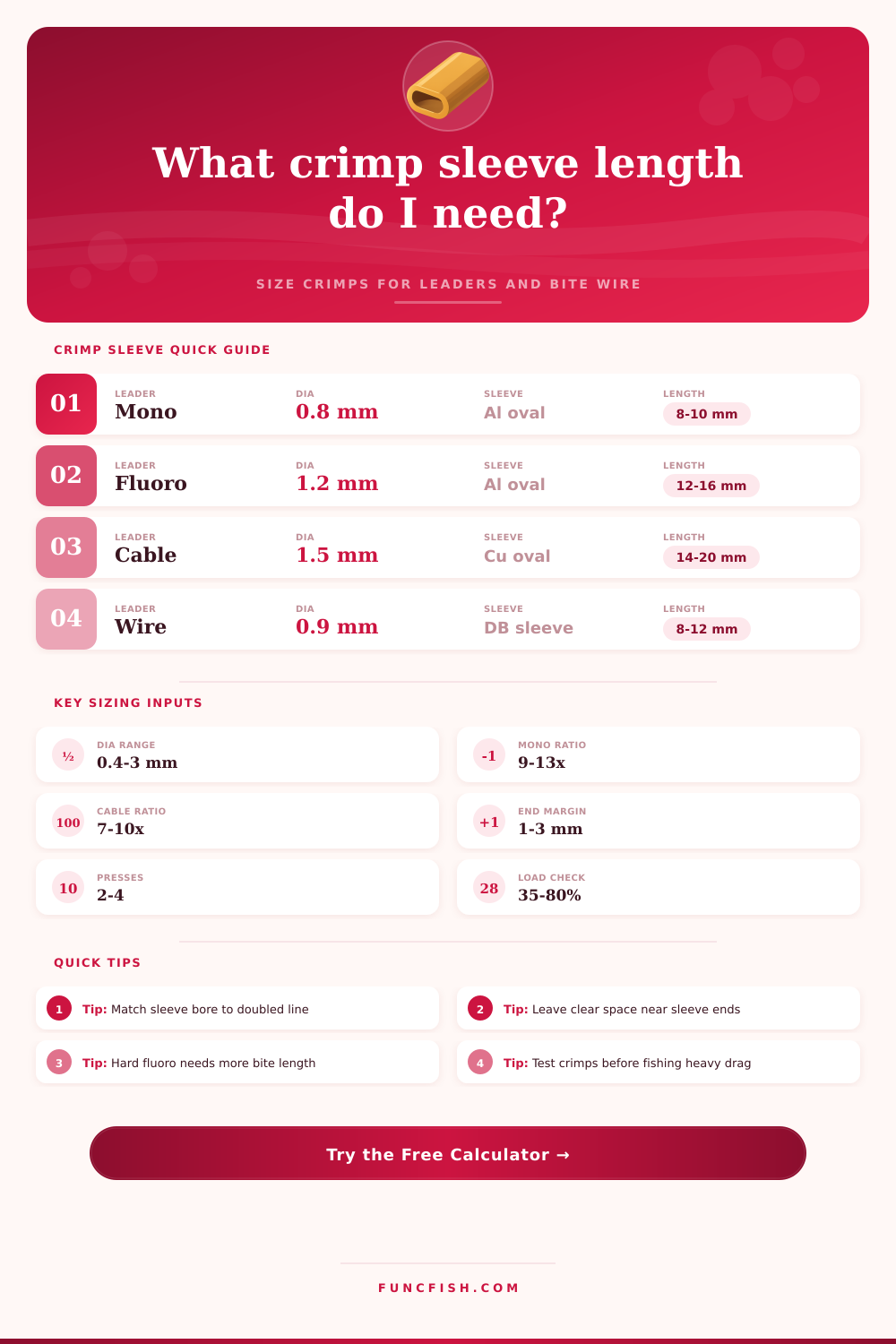
10-16 mmCommon for 0.9-1.4 mm fluorocarbon leaders targeting pike, snook, tarpon, and big jacks around hard mouths or leader rub.
Offshore Mono Lure
18-28 mmHeavy mono leaders for billfish, tuna, mahi, and wahoo lures usually need longer oval sleeves and clean center compression.
7x7 Cable Trace
8-20 mmCable grips sooner than hard fluoro, but sleeve alloy, jacket thickness, and corrosion exposure strongly affect final choice.
Jig Assist Loop
6-14 mmCompact cable or wire assist loops need a sleeve long enough to hold without crowding the solid ring or hook eye.
🔧Sleeve Profile Reference
Aluminum Oval
Copper Oval
Double Barrel
Chafe Guard Loop
📋Leader Material Bite Ratios
| Leader material | Typical crimp sleeve | Planning bite length | Retained strength range | Notes for sleeve length |
|---|---|---|---|---|
| Nylon monofilament | Aluminum oval | 9-11x leader diameter | 75-90% | Needs clean compression without cutting or flattening the mono into sharp edges. |
| Hard mono leader | Aluminum oval or double | 10-12x leader diameter | 70-88% | Stiffer leader benefits from a little extra bed length and a larger loop radius. |
| Fluorocarbon leader | Aluminum oval | 11-14x leader diameter | 65-85% | Hard fluoro can crack or creep if the sleeve is too short or over-compressed. |
| Nylon-coated cable | Copper or brass sleeve | 7-9x cable diameter | 75-92% | Include coating thickness in diameter, and avoid melting or shaving the jacket. |
| Bare 7x7 stainless cable | Copper oval or double | 6.5-8.5x cable diameter | 80-95% | Cable grips well, but corrosion and strand damage call for smooth sleeve ends. |
| Single-strand wire | Double-barrel sleeve | 7-10x wire diameter | 65-85% | Often twist connections are preferred; use crimping only with a sleeve made for wire. |
| Titanium bite wire | Matching double sleeve | 8-11x wire diameter | 60-82% | Springy wire needs alignment and cannot tolerate a crushed, sharp sleeve exit. |
| Hollow braid over mono | Aluminum oval over core | 12-16x core diameter | 60-80% | Use only where the crimp bears on the inserted core, not loose braid alone. |
🎯Scenario Sizing Table
| Fishing scenario | Leader example | Sleeve profile | Length driver | Extra check |
|---|---|---|---|---|
| Offshore wind-on loop | 130-200 lb mono | Long aluminum oval | Hard pull plus large loop eye | Confirm loop bend radius and pull test both loops. |
| Billfish lure leader | 200-400 lb mono | Large aluminum oval | Heavy mono diameter | Leave sleeve ends round enough to avoid chafe near the lure head. |
| Shark bite trace | 275-480 lb 7x7 cable | Copper oval or double | Cable diameter and corrosion | Inspect cut strands and sleeve discoloration after every fish. |
| Pike fluorocarbon leader | 60-100 lb fluoro | Small aluminum oval | Fluoro stiffness | Use a generous loop so the leader does not hinge at the sleeve. |
| Surf shock leader clip | 60-100 lb mono | Compact aluminum oval | Casting shock and sand abrasion | Keep the crimp away from guides and casting finger load paths. |
| Jig assist cable loop | 150-300 lb cable | Short copper double | Solid ring clearance | Do not crowd the ring; leave enough flex for the hook to swing. |
| Heavy bottom rig | 150-300 lb mono | Aluminum oval | Drag spike and structure rub | Increase sleeve length if locked drag or rough bottom is expected. |
| Wahoo wire stinger | 90-175 lb wire/cable | Double-barrel sleeve | Wire alignment | Check that lure vibration does not fatigue the wire at the sleeve end. |
⚒Press Pattern Reference
| Press pattern | Best use | End clearance | Press spacing | Common warning sign |
|---|---|---|---|---|
| Center-only oval press | Mono and fluoro loops | 1.0-2.5 mm each end | Even bites in the sleeve middle | Pressed sleeve ends can cut leader under load. |
| Three short bites | Medium sleeves and hand tools | 1.5-3.0 mm each end | Small equal gaps between bites | Overlapping bites may create a sharp hinge. |
| Full-bed bench swage | Large mono wind-ons | As specified by die maker | One or two controlled press beds | Wrong die size can flatten instead of swage. |
| Double-barrel alternate | Cable, wire, assist loops | Keep barrel ends slightly rounded | One bite per barrel zone | Misaligned barrels twist the loop and weaken strands. |
| Two sleeves in series | Very heavy drag or cable | Gap between sleeves | Shorter bite per sleeve | Stacked sleeves can stiffen the trace near the hook. |
| Compact micro crimp | Light wire and small lures | Minimal, but not crushed | One clean center bite | Too much pressure shears small wire. |
🧪Sleeve Bore and Clearance Table
| Pass style | Bore sizing rule | Use case | Length effect | Fit check |
|---|---|---|---|---|
| Two-pass loop | About 2.10x line diameter | Most mono and fluoro loops | Normal length | Both legs slide through without shaving or forcing. |
| Three-pass loop | About 2.75x line diameter | Flemish-style heavy loops | Add 10-18% | Third pass must not oval the sleeve before crimping. |
| Single-pass stop | About 1.25x line diameter | Cable stop or short tag lock | Shorter possible | Use only where the design is meant for one line leg. |
| Double-barrel sleeve | About 1.15x each leg diameter | Wire and cable alignment | Depends on barrel length | Each barrel holds one leg without crossing strands. |
| With thimble guard | Two-pass rule plus loop bend | Wind-ons and swivels | Add 8-15% | Sleeve should sit clear of the thimble shoulders. |
| With chafe spring | Two-pass rule plus spring clearance | Bluewater lures | Add 10-20% | Spring end must not jam into the sleeve mouth. |
💡Crimp Length Notes
Pull-test the actual combination: Sleeve brands, die shapes, line coatings, and hand pressure vary. Use this calculator to pick the starting sleeve length, then test a sample with the exact leader and tool.
Avoid crushed sleeve ends: The length calculation reserves end clearance because a flattened sleeve mouth can become the sharpest point in the connection, especially on fluorocarbon and hard mono.
This calculator is a rigging planner, not a certification test. Replace any crimp that slips, cracks, cuts leader, kinks wire, or shows corrosion after fishing.
You’re getting your big tuna to bite, but leader tears off and they get away. You look at your knot and you think maybe it’s because of line or how well you tied it. But many times it comes down to what size crimp sleeve you used. Did you have plenty of surface area for the metal crimp sleeve to bite onto the leader? Did it cinch tight? Or did it just look like that to you? Correct sizing can turn a missed opportunity into a great catch.
So the above calculator does that math for you. Based off variables like line’s stiffness and size, it spits out recommended sleeve length. If we remove the guessing game from offshore fishing, you just plug in your leader specs and choose your fishing type. Then, it tells you what length to shoot for. This ensures the mechanical connection can handles the weight without the line slipping or shearing off under load. And getting the right combination is understanding how your materials are going to react when they’re compressed down.
How to Choose the Right Crimp Sleeve Size
The problem is using fluorocarbon leaders as though they were monofilament. Fluoro is more brittle and harder than nylon. So it won’t give around the sleeve forgivingly. Use a too-short sleeve? When the line pulls too hard, your leader snaps off where it leaves the sleeve. Based on the hardness of material being used, this tool adjust for the suggested length so that there is enough bite length to spread out the stress evenly. Harder fluoro requires a bit more room within the crimp to avoid any possibility of micro-fractures under pressure.
The other part of the equation is sleeve profile. How long it is? Well that also depends on diameter of the sleeve used. For light monoloops, aluminum oval works fine. They’re pliable but not harsh on those finer line diameters. But when you get into heavier wire traces you want a sleeve with more substance. Brass or copper sleeves grips larger wires and cables better. They also hold their shape better when pulled as hard as possible. Mixing your sleeve alloys with the wrong line type will cause early failure. This table matches each line type to its correct sleeve so you don’t mix abrasive stainless steel cable with softer aluminum.
Many anglers think one good hard squeeze is all that’s necessary and they neglect their pressing techniques. Truth be told, your squeezing pressure matter more in regards to whether it cuts your leader or grips it. A little rounding on the end of the sleeve will keep the sharp metal from cutting into line fibers as you compress down the middle. Better yet are multiple little nips on the bed compared to one giant crunch. The even pressure along the contact area makes equal friction along its surface, when the drag snaps to eighty pounds in an instant your connection will hold true.
Another aspect of longevity that isn’t talked about much, yet is critical, is environment. Aluminum sleeves are not bulletproof and can be eaten away by saltwater over time. Even with a perfect crimp initially, saltwater will eventually weaken its grip on the line. If you’re fishing in aggressive saltwater environments or brackish water, going a little longer with your sleeve gives you small margin of safety. It is better to have a sleeve that is a bit long and stays gripped tight than one that is short and snug which might fail because of internal corrosion you couldn’t see.
Again though, no number can replace real-world testing prior to launching on the water. These are just starting points for you. When you get there, take your specific setup and test it in a controlled environment. A good crimp is solid and secure. One that is adjustable or loose isn’t going to cut it. Failure rates goes down when you pair up the right material, length and pressing technique. And you walk away with the fish. Not some story about how close you came.