🧊 Ice Shelter Size Calculator
Find the perfect ice fishing shelter dimensions for your group, gear, and conditions
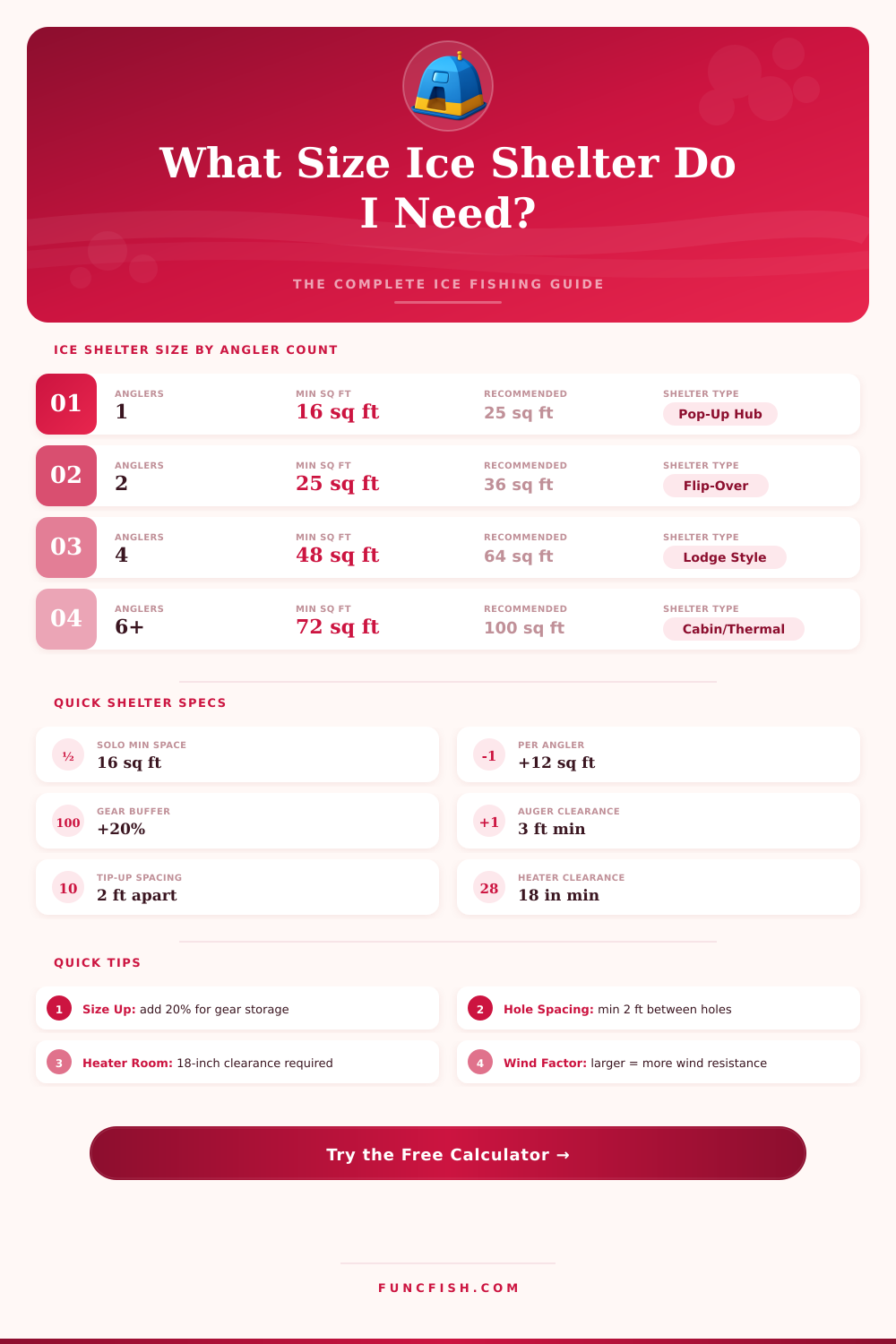
| Anglers | Min Area (sq ft) | Recommended (sq ft) | Min Area (m²) | Shelter Size (ft) |
|---|---|---|---|---|
| 1 | 16 | 25 | 1.5 | 4x4 or 5x5 |
| 2 | 24 | 36 | 2.2 | 5x5 or 6x6 |
| 3 | 36 | 50 | 3.3 | 6x8 |
| 4 | 48 | 64 | 4.5 | 8x8 |
| 5 | 60 | 80 | 5.6 | 8x10 |
| 6 | 72 | 96 | 6.7 | 8x12 |
| 8 | 96 | 128 | 8.9 | 10x12 or 12x12 |
| 10+ | 120 | 160 | 11.1 | 12x14 or 14x16 |
| Target Species | Hole Diameter | Space / Angler | Notes |
|---|---|---|---|
| Perch / Bluegill | 6–8 in (15–20 cm) | 12 sq ft (1.1 m²) | Multiple small holes ok |
| Walleye | 8–10 in (20–25 cm) | 14 sq ft (1.3 m²) | Longer rods — add space |
| Northern Pike | 10–12 in (25–30 cm) | 16 sq ft (1.5 m²) | Fighting room needed |
| Lake Trout | 10–12 in (25–30 cm) | 18 sq ft (1.7 m²) | Deep water, longer sets |
| Crappie | 6–8 in (15–20 cm) | 12 sq ft (1.1 m²) | Light tackle, tight ok |
| Bass (Ice) | 8–10 in (20–25 cm) | 14 sq ft (1.3 m²) | Active jigging space |
| Brook Trout | 8 in (20 cm) | 13 sq ft (1.2 m²) | Tip-ups preferred |
| Heater Type | BTU Range | Min Clearance | Min Shelter Area |
|---|---|---|---|
| Small Propane | Under 9,000 | 18 in (46 cm) | 20 sq ft (1.9 m²) |
| Medium Propane | 9,000–18,000 | 24 in (61 cm) | 36 sq ft (3.3 m²) |
| Large Propane | 18,000+ | 36 in (91 cm) | 64 sq ft (5.9 m²) |
| Electric Heater | 1,500–5,000 W | 12 in (30 cm) | 16 sq ft (1.5 m²) |
| Gear Level | Typical Items | Extra Area Needed | Added Factor |
|---|---|---|---|
| Light | Rod, tackle box, bucket | +4–6 sq ft | +10% |
| Moderate | + Fish finder, heater, auger | +8–12 sq ft | +20% |
| Heavy | + Generator, sled, extra gear | +15–25 sq ft | +35% |
Selecting a correct size for an ice shelter is important for a few different reasons. The size of the ice shelter will determine how much room you have for gear and your bodies. If the ice shelter is too small, you may feel too cramped within the shelter; you will have limited movement with your rods or heaters within such a small shelter.
In contrast, if the shelter are too large, you will have to transport the shelter more often because it will be difficult to transport and the shelter will be heavy to pull behind your vehicle on the ice. An angler require a specific amount of space for themselves within an ice shelter. One person may need around sixteen square feet of space to fish comfortly without hitting their electronics.
How to Choose the Right Size Ice Shelter
However, if there is more than one person who is going to be using the ice shelter, they will require more space than the one person calculations. For example, if there are three people who is fishing, they may need thirty square feet for their fishing setup to accommodate each persons fishing gear and coat. The amount of gear will require space within the shelter.
As an example, gear such as buckets, auger, or the fishing electronics will all require space within the shelter. Furthermore, the fishing electronics such as the graph or batteries will require more space than other gear. The requirement for heaters will change the amount of space required within the shelter.
The propane heater will require space to prevent the heater from scorching the fabric of the shelter. A wood stove will require more space than a propane heater, meaning there will be limitations in choosing the size of the ice shelter. Additionally, if there will be exposure to the wind, the ice shelter will require extra height and width to create a buffer to protect against the wind.
If there will be snow and wind exposure, choose an ice shelter that also provide extra height and width to prevent the snow from burying the individual. Another factor to consider is the transport of the shelter. If you will transport the ice shelter on a sled, the size of the shelter will have to be limited to the sleds dimensions.
If you will transport the shelter on a backpack, it will limit the size of the shelter to a much smaller size. Therefore, people dont usually use backpacks for large ice shelters or sleeping cots. Most ice shelters will need to be longer than they are wide to allow for an aisle between each fishing seat.
Additionally, if transporting the shelter on an ATV or truck, you must also consider the dimensions of the rack or truck bed to determine how large of an ice shelter can be transported. Many people make the mistake of only considering the total square footage for the size of the ice shelter rather than the shape of the shelter. A square ice shelter may have more space than a shelter that is narrow in shape but has the same amount of total square footage.
Additionally, the type of shelter that you will use will change the size considerations. For instance, a thermal shell will provide individuals with more warmth than a standard shell but will take up more space within the shelter during transport. Hard-sided shelters may provide individuals with a rigid aisle for their movement within the shelter but will require more effort to transport the shelter compared to a soft-sided shelter.
To determine the size of the ice shelter needed, many anglers will test their reach within the shelter when wearing their winter layers. Each individual will require six inches of space within the shelter for their fishing rods. Additionally, you should consider the placement of the holes on the shelter to allow for proper movement within the shelter.
Additionally, people should always test the size of the shelter prior to purchasing it as the specifications printed on the manufacturer’s website may not accurately reflect the way the individual will feel within the shelter. If the heat mats or sleeping cots feel too tight within the shelter, you should of chose a larger class of ice shelter so that there are no issues with the sleeping or heat accommodations during the fishing trip.