
Caridina shrimp hatching is a magical process, I can’t help feeling that for a second or two, I’ve created life from leaves and water by viewing those tiny, transparent dots scurrying across the mossy floor. However, just feeling that first-time awe isnt enough; it takes knowledge about genetics, chemistry, and above all, time. Most beginners fail not because they lack care, but because they misunderstands the invisible boundaries their new pet require. Rather, they don’t realize the slight limitations their new fish/animals place on them. Following these boundaries exactly is what determines whether your tank remains peaceful or teeming with shrimp.
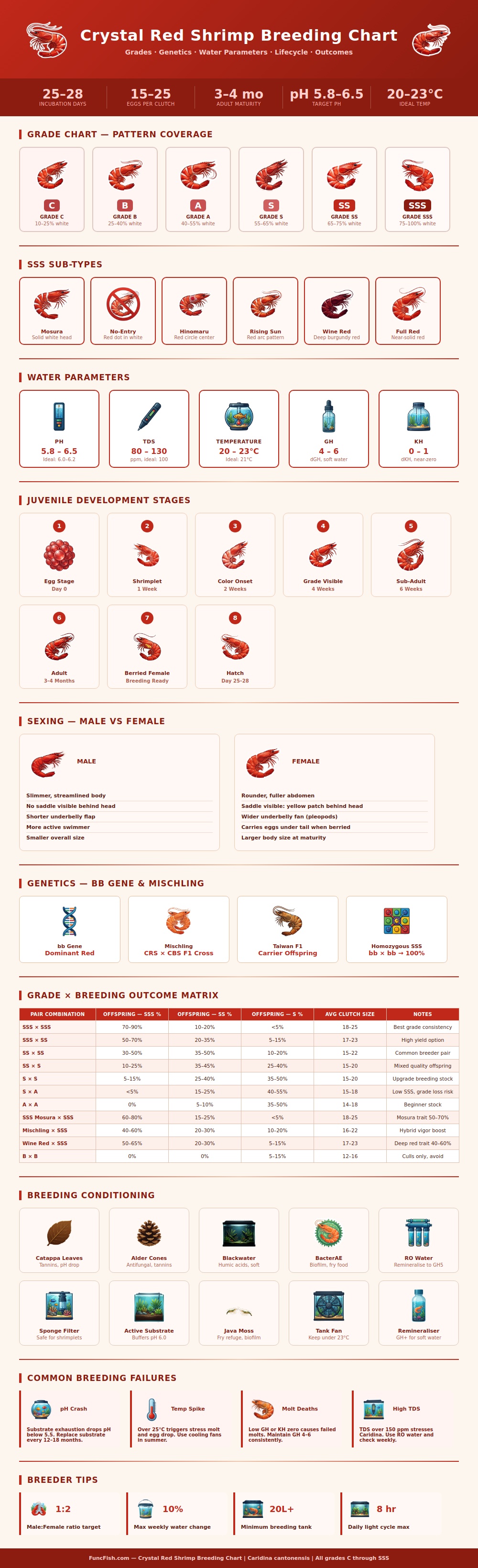
Most folks trip over the water chemistry. These guys has evolved in an acidic, soft environment. Your tap water is probably to alkaline and hard for them to be healthy long term. Try to maintain a pH of roughly six and keep general hardness low. This isn’t a matter of personal taste, it’s physiological. The mineral composition need to be right or their exoskeletons won’t form correctly. They won’t molt if the water is too harsh, essentially a death sentence. Remineralize reverse osmosis water and you can build ideal environment from the ground up. It is a little more work at first, but it saves countless lives down the road.
How to Keep Caridina Shrimp Alive
Genetics are the name of the game once the water stabilizes. The grading system above explains how a shrimp is given its value and look. Letters from C to SSS represent the % of white patterns found on the red body of the shrimp. So, a C graded shrimp will have little to no white on its body whereas an SSS graded shrimp will be almost completely white with some very deep red accents. This breakdown in the chart gives you insight into the order of these shrimps so you can have reasonable expectations when breeding them. It also keeps you from overspending on shrimps you think will give you top-of-the-line babies but won’t (since their genes aren’t there). Shrimp colors don’t come randomly; they inherit color and you’ll know what to expect based off the parents’ grades.
There’s one other thing that makes a difference between novice and experienced shrimp keepers: sexing them. In general, the female shrimp are bigger than the males, and rounder as well. If you look at the back of her head, she has what’s called a saddle where she carries eggs as they develop. The males is typically thinner and more active, especially when compared to females who spend much of their time resting and eating. Knowing which is which is important if you’re looking to have more males or females in the tank (as it can influence the population). Two female per male is typically a good ratio. This keeps the males from competing for females but still allows for plenty of breeding. Too many, however, and not only do you risk having too many shrimp in your tank, but you also don’t want to lose out on any genetic diversity.
It’s a longer process then anyone thinks it will be. It’ll take several months from egg to adult. For example, it won’t be till the shrimp reach a couple of weeks old that you know what color they’re going to get. That means waiting and waiting. And waiting some more. Your patience is tested here. You could spend big bucks on those high-grade breeders and wait for weeks wondering if the cross didn’t work out. Then boom, colors shows up at last. That’s just the incubation process, it’s almost a month, when the female is guarding her eggs like a mother bear. Touching her then can mean she eats them or drops them, killing off an entire clutch in seconds.
Trying to get high-tech, but forgetting the fundamentals usually gets you into trouble. High temps (above 23C) will stress the shrimps and cause eggs to fall off. Letting the substrate degrade can result in a pH crash that kills your colony in silence. Frequent small water changes help stabilize the environment. This avoids shocking it with huge swings from infrequent big water changes. Consistency win over perfection.
So all things considered, keeping these shrimp has been a study in patience and observation. Before it’s too late, you start reading the small cues that indicate good health. Before it’s too late, you start reading the small cues that indicate good health. And you realize that not every clutch will be an A+. Some are average, some are great. Yet when you get your first batch of vivid high grade shrimp swimming around in sparkling tanks tinted a beautiful blackwater color, it’s worth all the hours of tank upkeep. It’s a labor of love, but that’s why it’s so satisfying to watch those little specks evolve into bright streaks of white and red.