
Patience is needed when observing discus fry hatch. At first it looks like a transparent dot clinging to one of its parents. For almost two weeks this tiny fry live on its parent’s mucous secretions. It doesn’t even look much like a fish yet.
That is where the hobby becomes so difficult. These fish are delicate. They need careful attention. You also has to be willing to monitor your water chemistry.
How to Care for Growing Discus Fish
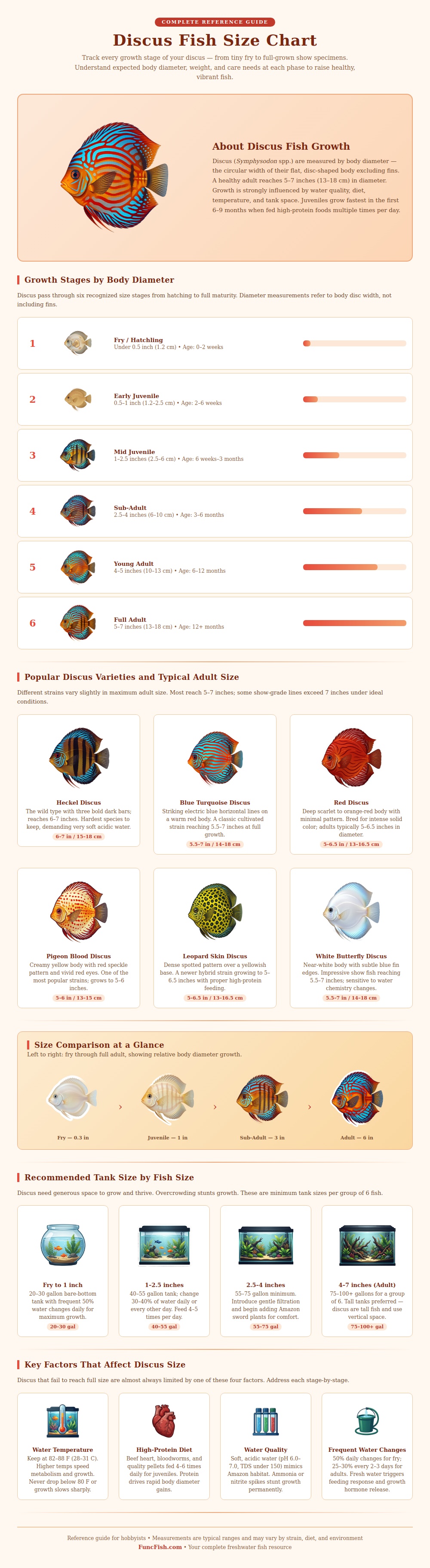
Here is an infographic showing the growth stages in visual format. You can see how the small dots turns into colorful full grown adults. And that is only half the challenge. The second part involve creating and maintaining an environment where the fish can reach each milestone without being slowed by illness or stunting.
The early juvenile stage is the first big challenge for many keepers. Within just two weeks, the fry are swimming freely and eating greedily. They require several feedings per day with a diet heavy in protein. During this time frame, the fish grow rapidly, including bones. Feed them less and you’ll notice it eventualy in their form. A well fed juvenile will develop its typical rounded profile early, one that’s not fed enough may be thin or even elongated. This is important to the overall aesthetic outcome.
Early juveniles are about ½”… 1″ in diameter. This is where they stop relying on parents and must fend for themselves. The Mid-Juveniles (six weeks to three months) is where your fish start to set their color patterns. This is when they develop true colors of their strain. The blue discus starts showing off its electric horizontal stripes over a nice warm red body. The bold vertical bars on a Heckel discus comes alive. It’s night and day visually, but the care stays the same.
Water needs to be clean. Because the gills are delicate, a discus is notorious for sensitivity to both nitrite and ammonia spikes. Its immune system depend on stability. So if you miss that water change or fail to have a clear tank, it will stall out growth. Result? Permanently smaller adult regardless of how large an adult tank you put them in.
As they approach sub-adult status (three to six months), another important consideration is tank size. Unfortunately, many new hobbyists fail to accommodate juvenile discus with adequate space because they believe “they’ll get bigger.” The truth is discus are a tall fish species and aggressively uses vertical space. Limiting a brood of maturing discus to cramped quarters will stunt their growth and development. Additionally, crowding them in small tank makes them more aggressive toward each other.
According to the visual guide, move them into increasingly larger volumes once they surpass the two-and-a-half inch mark. Four inches requires no less than 55 gallons. If you’re maintaining a proper-sized school of six or more, plan on even more. Crowding reduces how big they can become. It takes an additional half-year to a year after that for them to reach full adulthood.
The adult fish are generally five to seven inches across. That means big tanks for these guys. To really be happy, they prefer tank at least 75 gallons in size. Their final size is determined both by their genes and their environment. While Leopard Skin or Pigeon Blood type individuals tend to remain somewhat smaller than the wild-type Heckel’s, it’s also true that poor water conditions will stunt any strain independent of their genetic potential.
For optimal growth, the water should of be soft and acidic, with a temp in the range of 82-88 deg F. Discus are creatures of the slow flowing Amazon tributaries. They don’t belong to some hastily put together community tank with parameters that constanty change. If you give them what they deserve (clean water, enough space, and consistently good food), they will give back by being calmly moving individuals. The tiny little fry you started out with grows into a grand centerpiece that more than justifies all your efforts.