Fish Harvest Quota Calculator
Estimate keeper count, whole weight, dressed yield, storage load, and conservative buffer for a fishing harvest plan.
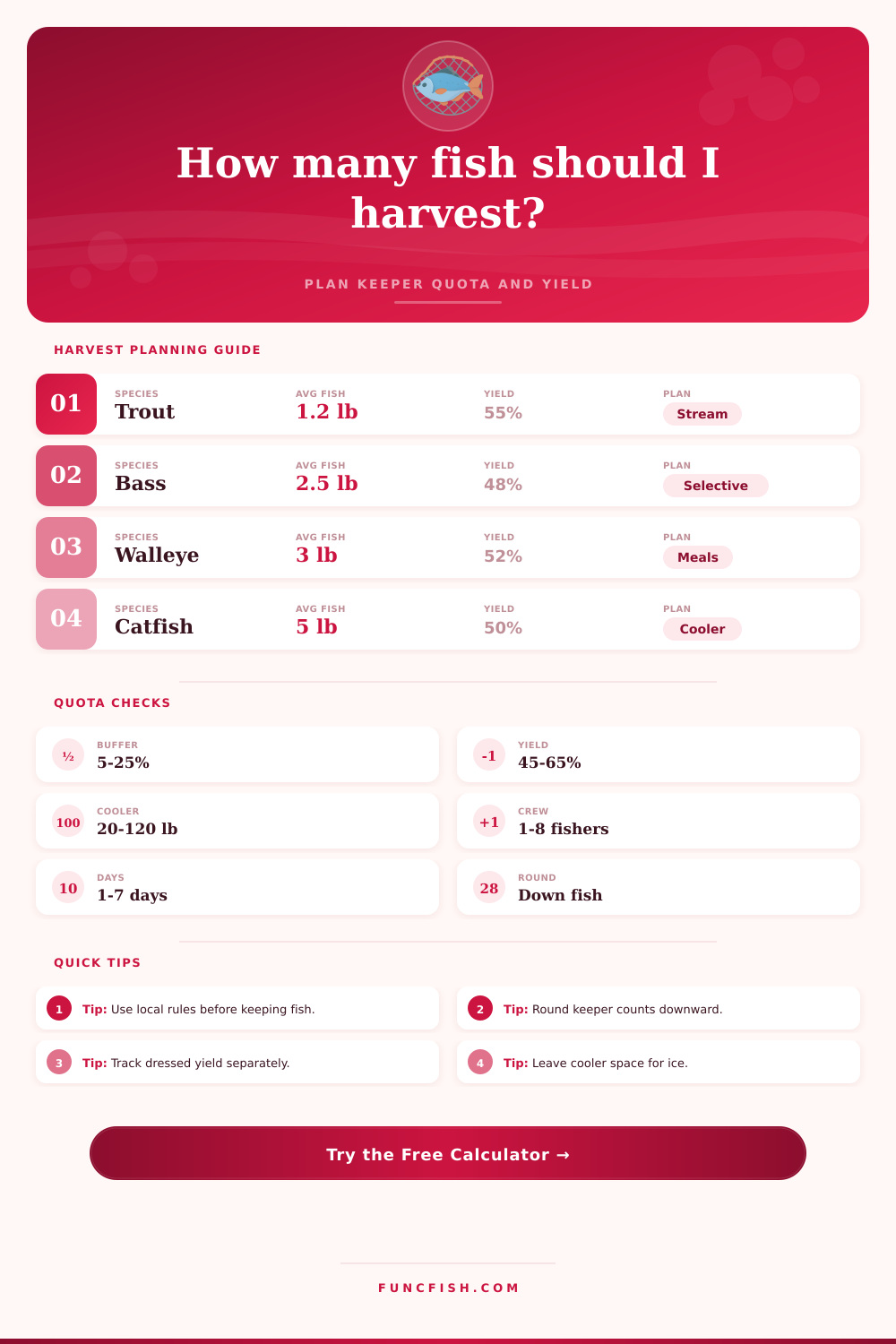
| Species Profile | Typical Keeper Weight | Processing Yield | Best Quota Use |
|---|---|---|---|
| Stocked Trout | 0.8-1.8 lb (0.36-0.82 kg) | 50-58% | Meal count, stream crew, small cooler planning |
| Largemouth Bass | 1.5-4 lb (0.68-1.81 kg) | 44-52% | Selective harvest, pond balance, mixed size sorting |
| Walleye | 2-5 lb (0.91-2.27 kg) | 48-56% | Weekend trips where fillet yield matters |
| Channel Catfish | 3-8 lb (1.36-3.63 kg) | 46-54% | Cooler weight and processing tub planning |
| Bluegill or Crappie | 0.25-1 lb (0.11-0.45 kg) | 32-42% | High-count family meals and batch sorting |
| Reef Snapper | 4-10 lb (1.81-4.54 kg) | 42-50% | Boat box planning with heavy ice allowance |
| Salmon | 8-20 lb (3.63-9.07 kg) | 58-68% | Smoking, freezing, and shared processing batches |
| Storage Setup | Usable Whole Fish Load | Ice Space Bias | Quota Planning Note |
|---|---|---|---|
| Bank Stringer | 8-20 lb (3.6-9.1 kg) | Low | Best for short sessions and small fish |
| Kayak Fish Bag | 15-35 lb (6.8-15.9 kg) | Medium | Keep count conservative as travel time grows |
| Small Cooler | 20-40 lb (9.1-18.1 kg) | Medium | Works well for trout, panfish, and bass meals |
| Boat Livewell | 30-70 lb (13.6-31.8 kg) | Water | Use for sorting before final harvest decisions |
| Large Marine Cooler | 60-120 lb (27.2-54.4 kg) | High | Good for catfish, salmon, or shared boat plans |
| Processing Tub | 40-100 lb (18.1-45.4 kg) | Low | Use after landing when cleaning pace is known |
| Condition | Catch Rate Multiplier | Buffer Bias | When to Use |
|---|---|---|---|
| Slow Bite or Warm Water | 0.75x | +4% | Heat, tough handling, low oxygen, or long holds |
| Steady Normal Conditions | 1.00x | +0% | Default planning for repeatable trips |
| Strong Bite Window | 1.18x | +2% | Good activity where sorting discipline matters |
| Hot Bite, Fast Sorting | 1.35x | +5% | Rapid catch periods that can overfill storage |
| Fragile Catch Handling | 0.90x | +8% | Deep water, delicate fish, or long travel home |
| Method | Main Control | Strong Output | Weak Spot |
|---|---|---|---|
| Keeper Count | Fish per angler per day | Simple crew quota | Can miss large-fish weight swings |
| Whole Weight | Average fish weight | Storage and ice planning | Needs realistic size estimate |
| Dressed Yield | Processing percentage | Meal, freezer, or smoke batch size | Varies with cleaning style |
| Capacity Cap | Usable cooler or livewell load | Prevents overloading the setup | Not a substitute for trip judgment |
The anxiety sets in after catching another big bass while your buddy reels in a keeper, and now your cooler is half-ice-and-only-half-full. You’re allowed more but there’s no room left in the cooler. It’s time for your plan to pay off. Anglers is generally optimistic when estimating their harvest goals, which is why most head home with empty bags or stressed fish, and coolers crammed so tightly it hurts. If you can get your math down before putting the trolling motor in the water, that angst becomes steady execution of your fishing day.
Enter a few variables such as trip length and crew size, and the calculator does all the work to figure out some concrete target numbers for keepers. This make you think about how many fish you are realy going to have in the cooler (and what their actual weight is). For example, don’t assume that keeping five small trout takes up the same space as two large walleye. It doesn’t. It wont.
Plan Your Fishing Trip Better
When ice comes into play it’s all about volume. That’s why the tool require an average keeper weight. Underestimating size of your fish will cause you to run out of room quickly. Overestimating will cause you to leave edible meat on bottom of lake. Good planning finds that sweet spot between these two extremes.
The other side of the equation is species selection. Fat content and bone structure wreak havoc in determining processed yield across different species. A salmon has a much higher dressed yield then a crappie does. This mean you need more fish to fill the same meal requirement. The tool comes with several reference tables that define those species differences. Those tables outlines how a selective trophy bass approach compares to a high-count panfish strategy.
You want to know what portion of that whole weight is actualy going onto your dinner plate. If you plan for twenty pounds of weight but only account for the head and gut waste, you will come home short. That’s where knowing how much meat a fish actualy provides closes the gap between the kitchen and the water.
The other factor that plays a big part in how well your harvest will do is water conditions. If you’re fishing on a slow bite, or in warm water, the fish are less likely to be active and they may also be more delicate. Stressing them out can negatively affect their quality even if it doesn’t change the weight. You’ll have a tendency to keep more fish, without meaning to. And that will blow past your storage capacity in no time flat.
Because a hot bite can blow past your storage limits, it’s smart to add a conservation buffer. It is not necessarily to save the fish, but to give yourself room for error if something goes wrong. Sometimes adding a few more percentage points of buffer makes all the difference between a perfectly sorted freezer or a frozen mess.
Nature doesn’t negotiate with the hard constraints of storage capacity. Your livewell, cooler, or even kayak bag limit determines the amount of fish you can catch in a day. The tool will check what weight you plan on catching and make sure it won’t overload your equipment. It’ll flag the situation if your plan shows an eighty pound load but your cooler is only good for sixty.
At this point you can either make the decision to reduce how many fish each angler catches or become more efficient with how you sort out fish. Either way, it saves you from the awkward moment where you have to release otherwise healthy fish just because you didn’t know where to store them.
But in the end, it’s all about honoring the resource and honoring our labor. We balance the biological reality of the situation with the catch rate and storage capacity. This eliminates the guesswork of one of the most stressful parts of fishing. It lets you cast, reel and count the ones that make the stringer instead of every single one that touches the line.
If you have what you set out to have when you get back home…nothing less…nothing more….that is a good trip. Set your intentions clearly, know your limits, leave the math to the machine and just go have some fun fishing. You should of planned better.