Fish Omega 3 Calculator
Estimate EPA+DHA omega-3 milligrams from fish species reference data, portion weight, serving count, edible yield, reference state, fatness class, and gram or ounce units.
1 Species Presets
2 Portion and Reference Data
Fish omega-3 estimate
Calculation breakdown
3 Omega-3 Data Cards
Oily Species
Mid Density
Lean References
Yield Range
4 Reference Tables
| Species | Raw EPA+DHA per 100 g | Prepared EPA+DHA per 100 g | Fatness class |
|---|---|---|---|
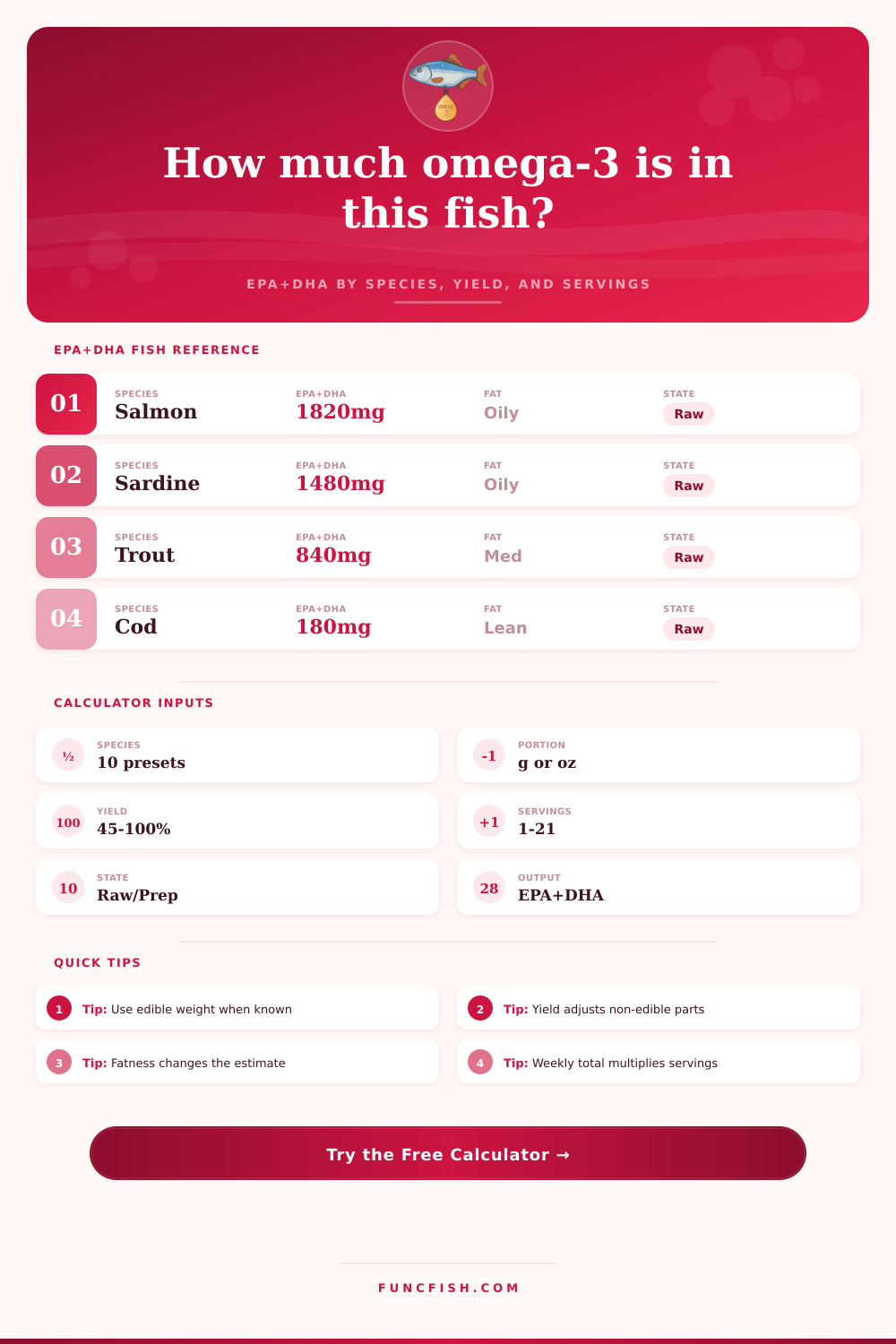
| Atlantic salmon | 1820 mg | 2150 mg | Oily rich |
| Sockeye salmon | 1200 mg | 1450 mg | Oily |
| Sardine | 1480 mg | 1700 mg | Oily |
| Atlantic mackerel | 2400 mg | 2600 mg | Very oily |
| Rainbow trout | 840 mg | 1050 mg | Medium fat |
| Albacore tuna | 860 mg | 950 mg | Medium fat |
| Atlantic herring | 1720 mg | 1900 mg | Oily rich |
| Pacific halibut | 460 mg | 520 mg | Lean-medium |
| Atlantic cod | 180 mg | 220 mg | Lean |
| Tilapia | 140 mg | 180 mg | Lean |
| Red snapper | 300 mg | 360 mg | Lean-medium |
| Reference state | Data basis | Stored factor | Calculator effect |
|---|---|---|---|
| Raw reference data | Raw edible fish | Species value | Uses raw EPA+DHA mg per 100 g |
| Prepared reference data | Prepared edible fish | Species value | Uses prepared EPA+DHA mg per 100 g |
| Drained or packed reference data | Drained edible fish | Species value | Uses drained EPA+DHA mg per 100 g |
| Custom override | User-entered value | Field value | Replaces the species mg per 100 g basis |
| Portion form | Default yield | Weight basis | EPA+DHA math |
|---|---|---|---|
| Boneless edible fillet | 100% | Edible only | Uses full entered weight |
| Skin-on fillet | 92% | As entered | Applies yield before omega-3 |
| Cross-cut steak | 78% | As entered | Removes non-edible fraction |
| Cleaned whole portion | 62% | As entered | Uses yield-adjusted edible grams |
| Whole round fish | 55% | As entered | Head, frame, and trim are excluded |
| Richness tier | EPA+DHA density | Example species | Calculator label |
|---|---|---|---|
| Very rich | 2000 mg or more per 100 g | Mackerel | Very rich |
| Rich | 1000 to 1999 mg per 100 g | Salmon, sardine | Rich |
| Moderate | 400 to 999 mg per 100 g | Trout, albacore | Moderate |
| Low | Under 400 mg per 100 g | Cod, tilapia | Low |
Values are calculator reference data points only. This tool does not provide diet advice, medical guidance, preparation instructions, or species purchase recommendations.
5 Species Comparison Grid
Atlantic Salmon
Oily rich baseline with high EPA+DHA density.
Sockeye Salmon
Oily salmon reference with lower baseline than Atlantic salmon.
Sardine
Small oily species with raw and drained reference data.
Mackerel
Very oily reference with the highest default density here.
Rainbow Trout
Medium-fat species reference for moderate EPA+DHA estimates.
Albacore Tuna
Medium-fat tuna reference with packed data available.
Atlantic Herring
Oily rich species with a high raw reference value.
Pacific Halibut
Lean-medium white fish reference for lower density estimates.
Atlantic Cod
Lean white fish reference with low EPA+DHA density.
Tilapia
Lean farmed-fish reference with a low default value.
6 Calculator Tips
Yield tip: Set edible yield to 100% when the entered weight is already edible fish. Lower it only when the weighed portion includes non-edible parts.
Reference tip: Use the custom EPA+DHA field when a database, lab value, or package value differs from the species preset.
Omega-3 fatty acid are considerd essential nutrients that is mainly found in fish. Omega-3 fatty acids includes two types of fats: EPA and DHA. EPA and DHA are beneficial for a body because EPA and DHA help to reduce inflammation and support brain function.
Most individuals consumes fish for its omega-3 fatty acid content, but the amount of omega-3 fatty acids in an piece of fish may vary depending on the species of fish and the fat content of that specific fish species. The fat content of the fish is one of the factor that determines the amount of omega-3 fatty acids that an individual will consume from the fish. Fish that contains more fat, referred to as oily fish, will contain more omega-3 fatty acids than lean fish species.
How Much Omega-3 Is in Fish
The reason for this is that oily fish species contains the fat as a means of storing energy, and that the oil in those fish species contain the omega-3 fatty acids. For example, mackerel is an oily fish species that contain a high amount of omega-3 fatty acids. Lean fish species will contain less fat and therefore contain lesser omega-3 fatty acids than oily fish species.
Due to the different fat contents of each type of fish, individuals must consider the fat content of the fish that they intends to consume. The edible yield of the fish is another factor that must be considered to accurately calculate how many omega-3 fatty acids is in a portion of fish that will be consumed. The edible yield of the fish is the weight of the fish once the edible portion are weighed and the non-edible portions (such as bone, heads, and skin) are removed.
Individuals typically purchase whole fish or fish that contain skin. The weight of a whole fish will be higher than the edible portion of the fish. If an individual weights the whole fish before cooking, they will overestimate the amount of omega-3 fatty acids that the individual will consume by including the weight of the edible portion that will not be eat.
Thus, calculating the edible yield of the fish will allow the individual to understand how many grams of edible fish the individual will consume. The third factor to consider are the cooking methods and the way in which the fish is prepared. For example, raw fish will contain different amounts of omega-3 fatty acids than cooked fish.
As the fish is cooked, the water weight will evaporate from the fish, increasing the concentration of the omega-3 fatty acids in the fish. Similarly, canned fish, such as sardines, will have different amounts of omega-3 fatty acids than raw fish if the liquid is drain from the canned fish. In these cases, the best way to determine the amount of omega-3 fatty acids in the prepared fish is to refer to the labels of the canned or raw fish or to refer to the data from the laboratory test of the specific types of fish.
Based off the amount of omega-3 fatty acids content, fish can be categorized into different tier of that nutrient. For example, very rich fish will contain more than two thousand milligrams of omega-3 fatty acids per hundred grams of fish. Rich oily fish will contain more than one thousand milligrams of omega-3 fatty acids per hundred grams of fish.
In contrast, moderate fat and lean white fish will contain lesser of this beneficial fat. Therefore, because lean fish have less omega-3 fatty acids, an individual must eat larger portion of lean fish than rich oily fish species to achieve the same amount of this beneficial fat. Additionally, there are other factor to consider when an individual eats fish for its omega-3 fatty acid content.
For instance, mercury is a toxin that is often present in large amounts in large predatory fish. Additionally, some individuals may prefer fish that are farmed rather than catch in the wild. However, the fat content of farmed fish can differ from that of wild-caught fish because the farmed fish are fed different type of feed.
Lastly, in addition to the fat content of fish, individuals can also supplement their diet with omega-3 fatty acid supplements. However, consuming whole fish provide additional health benefit to the individual beyond those of the omega-3 fatty acids. Finally, individuals should also track the amount of fish that they eat each week in order to ensure that they are able to meet their nutritional goal.