Fishing Weight Ounces To Grain Converter
Convert fishing weight ounces to grains, grains back to ounces, and total batch load for flies, sinkers, jigs, and lures with rod class, line class, casting load, quantity, and tolerance checks.
📌Named grain and ounce presets
⚙Converter inputs
Fishing weight conversion result
Enter a weight to convert ounces and grains.
Calculation breakdown
📊Lure, fly, and weight grid
Fly Bead
Nymph Head
Trout Jig
Finesse Lure
📑Reference tables
| Common label | Ounces | Grains | Typical fishing use | Load cue |
|---|---|---|---|---|
| 1/200 oz | 0.005 oz | 2.19 gr | tiny bead, fly balance, micro split | fly-scale precision |
| 1/100 oz | 0.010 oz | 4.38 gr | small split shot, Euro nymph trim | fine tippet load |
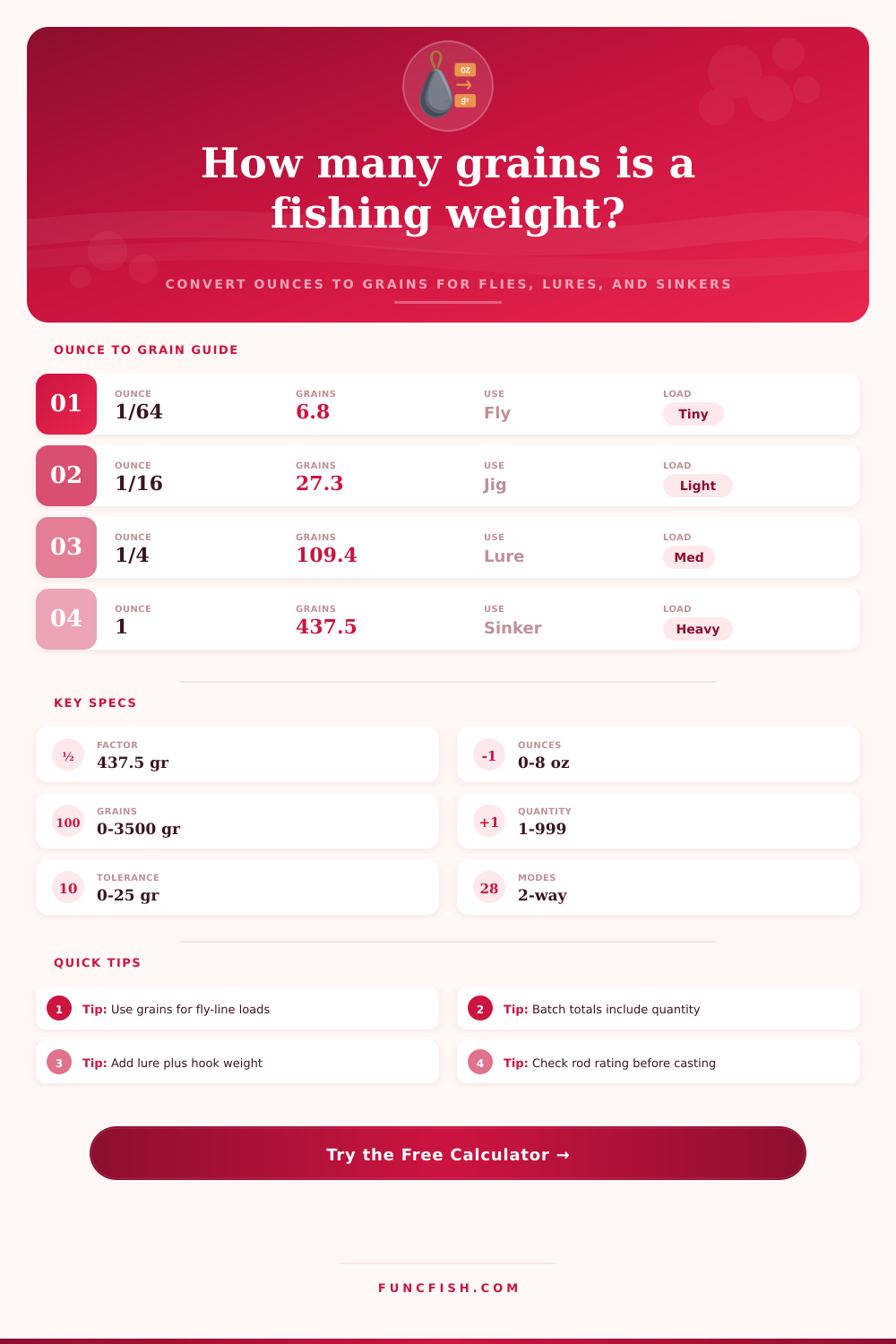
| 1/64 oz | 0.0156 oz | 6.84 gr | small jig, tungsten bead, ice fly | ultralight |
| 1/32 oz | 0.0313 oz | 13.67 gr | panfish jig, trout marabou jig | light tip |
| 1/16 oz | 0.0625 oz | 27.34 gr | trout spoon, crappie jig, small lure | light spin |
| 1/8 oz | 0.125 oz | 54.69 gr | bass finesse lure, jig head, drop shot | light-medium |
| 1/4 oz | 0.250 oz | 109.38 gr | walleye jig, spinnerbait, casting plug | medium rod |
| 1/2 oz | 0.500 oz | 218.75 gr | football jig, spoon, inshore jig | medium-heavy |
| 1 oz | 1.000 oz | 437.50 gr | bottom sinker, bucktail, trolling lead | heavy cast |
| 3 oz | 3.000 oz | 1312.50 gr | catfish bank sinker, surf pyramid | surf or boat |
| Rod or line class | Grain window | Ounce window | Best use | Calculator warning |
|---|---|---|---|---|
| Fly 3 wt line | 85 to 115 gr | 0.19 to 0.26 oz | dry flies, small streamers | fly line load, not lure casting |
| Fly 5 wt line | 120 to 160 gr | 0.27 to 0.37 oz | standard trout fly line | compare line grains carefully |
| Ultralight spinning | 6.8 to 54.7 gr | 1/64 to 1/8 oz | panfish, trout, ice jigs | overload above 1/8 oz |
| Light spinning | 27.3 to 109.4 gr | 1/16 to 1/4 oz | trout spoons, finesse bass | great for 1/8 oz setups |
| Medium spinning | 109.4 to 328.1 gr | 1/4 to 3/4 oz | walleye jigs, plugs, spoons | watch added bait weight |
| Surf rod | 437.5 to 1750 gr | 1 to 4 oz | pyramid sinkers, bait rigs | baited rigs add load fast |
| Use case | Typical ounce range | Typical grain range | Quantity check | Precision note |
|---|---|---|---|---|
| Fly bead or head | 0.002 to 0.030 oz | 0.9 to 13 gr | batch dozens for tying | small grain changes matter |
| Split shot | 0.005 to 0.070 oz | 2.2 to 31 gr | sum every shot on leader | placement changes turnover |
| Jig head | 1/64 to 1 oz | 6.8 to 437.5 gr | count dressed weight too | paint and hook add grains |
| Hard lure or spoon | 1/16 to 2 oz | 27 to 875 gr | add split rings and hooks | wet feathers add load |
| Bottom sinker | 1/2 to 8 oz | 219 to 3500 gr | batch by rig count | bait changes casting load |
| Deep-drop weight | 4 to 32 oz | 1750 to 14000 gr | usually one per dropper | boat rod rating matters |
| Line class | Nominal strength | Load style | Matched weight range | Use cue |
|---|---|---|---|---|
| 6X tippet | 3.5 lb | soft fly turnover | 1 to 8 gr terminal load | tiny flies and midges |
| 4X tippet | 6 lb | standard trout fly | 4 to 20 gr terminal load | nymphs and dries |
| 6 lb mono | 6 lb | stretchy ultralight | 7 to 55 gr lures | trout and panfish |
| 10 lb mono | 10 lb | light spinning | 27 to 164 gr lures | bass and walleye |
| 30 lb braid | 30 lb | thin heavy casting | 109 to 875 gr rigs | inshore and catfish |
| 80 lb braid | 80 lb | boat vertical | 875 gr and up | deep drops and heavy bait |
💡Practical conversion notes
Fly and lure loads: A fly-line grain number is usually the first 30 feet of line, while a lure rating is the lure or rig weight being cast. This converter keeps both in grains so you can compare the size of the load without mixing labels.
Tolerance and quantity: Small tackle parts can vary by a grain or two. Use the tolerance field when tying a batch of weighted flies, matching split shot, or sorting jig heads before a trip.
Weight measurements for fishing gear often begins with ounces. However, ounces are a large unit of measurement. One ounce is equal to 437.5 grain.
Grains are a smaller unit of measurement than ounces. You can use grains to more accurately measurement very small item. For instance, grains are perfect for measuring jig head and other lead weights.
Measure Fishing Gear in Grains
Using grains as a unit of measurement allow people to understand the exact weight of small fishing gear components. It also helps people understand how the weight of these component affects fishing gear. A fishing rig is more than a jig head.
In addition to a jig head, a fishing rig also include a hook, the fishing line thread, any paint on the fishing jig, and the bait. The total number of component in a fishing rig will add to the total weight of the fishing rig. The total weight of a fishing rig is the weight of the jig head plus the weight of the hook, fishing line, and bait.
This total weight impact the way the fishing rod will load when fishing. Fishing rod come with specific weight ratings. These weights indicate the amount of weight that the rod can handle.
If the weight of the fishing rig is too low for the rods specifications, the rod will not perform correct. If the fishing rod is too high for the fishing rigs weight, the fishing rod will feel more overloaded when fishing. Using a grain calculator will allow people to calculate the total weight of they fishing rig to ensure that it fall within the range of the fishing rod’s specifications.
Fly fishing anglists must also consider the grains in the weight of their fishing gear. Fishing lines for fly fishing are also rated in grains. The grains in this context refer to the weight of the fishing line alone.
This dont include the weight of the bait or the tippet. When people use weighted flies, the total weight of the line will change. The angler must calculate the additional weight of the weighted fly in grains to compare it to the weight of the fishing line.
This comparison will allow people to avoid overloading their more delicate fishing gear. Manufacturers may not make all fishing gear component with the same weight. For instance, a package may state that a jig head weigh 1/8 of an ounce.
However, a single jig head may weigh more than another jig head of the same make and model. A fishing jig calculator can use a tolerance value to account for these difference in the weight of the fishing gear components. Using a tolerance value will allow anglers to account for the difference in the weights of the gear so that they has the same sinking rates for all fishing gear components that they use when fishing.
A grain calculator will give people a clear picture of the total load of a fishing rod. People can enter the base weight of a single item into the calculator. People can also enter the number of items that are being use.
Additionally, people can enter the weight of the extra fishing hardware that will be attached to the item. The calculator will provide people with an idea of whether the total weight of the fishing rod is within the recommended range or if it go beyond the recommended range for the fishing rod. Using a digital scale to weigh fishing gear will provide the weight in grains.
In this case, the weight will be in a much higher number than what is represented in an ounces. Using a grain calculator will allow people to calculate the number of grains into ounces. This will give people accurate record of the weight of their fishing gear.
People often make mistake in calculating the total weight of their fishing gear. For example, people may assume that the weight indicated on the package is the final weight of all the fishing gear. However, this isnt true because the weight of the fishing gear package do not include the weight of the bait, hook, or fishing hardware.
People need to calculate the total weight of their fishing gear in grains before they go fishing. Doing so will ensure that the fishing rod will load as they expect it to when they use it. When the angler calculates the total weight of the fishing gear in grains, the fishing rod will load in the way that the anglor expect, and the lure will sink at the rate that is intended.