Flasher to Hook Leader Length Calculator
Estimate trolling leader length from the back of a flasher to the front hook, then check hook setback, pulse timing, lure action, and species clearance for salmon, trout, kokanee, walleye, and lake trout rigs.
🎣 Fishing Presets
⚙ Rig Inputs
Leader Length Results
Formula Breakdown
📏 Flasher and Dodger Data
Micro Dodger
Kokanee Dodger
8 in Flasher
11 in Flasher
📊 Leader Length Reference Tables
| Flasher setup | Typical lure | Starting leader | Metric equivalent | Action note |
|---|---|---|---|---|
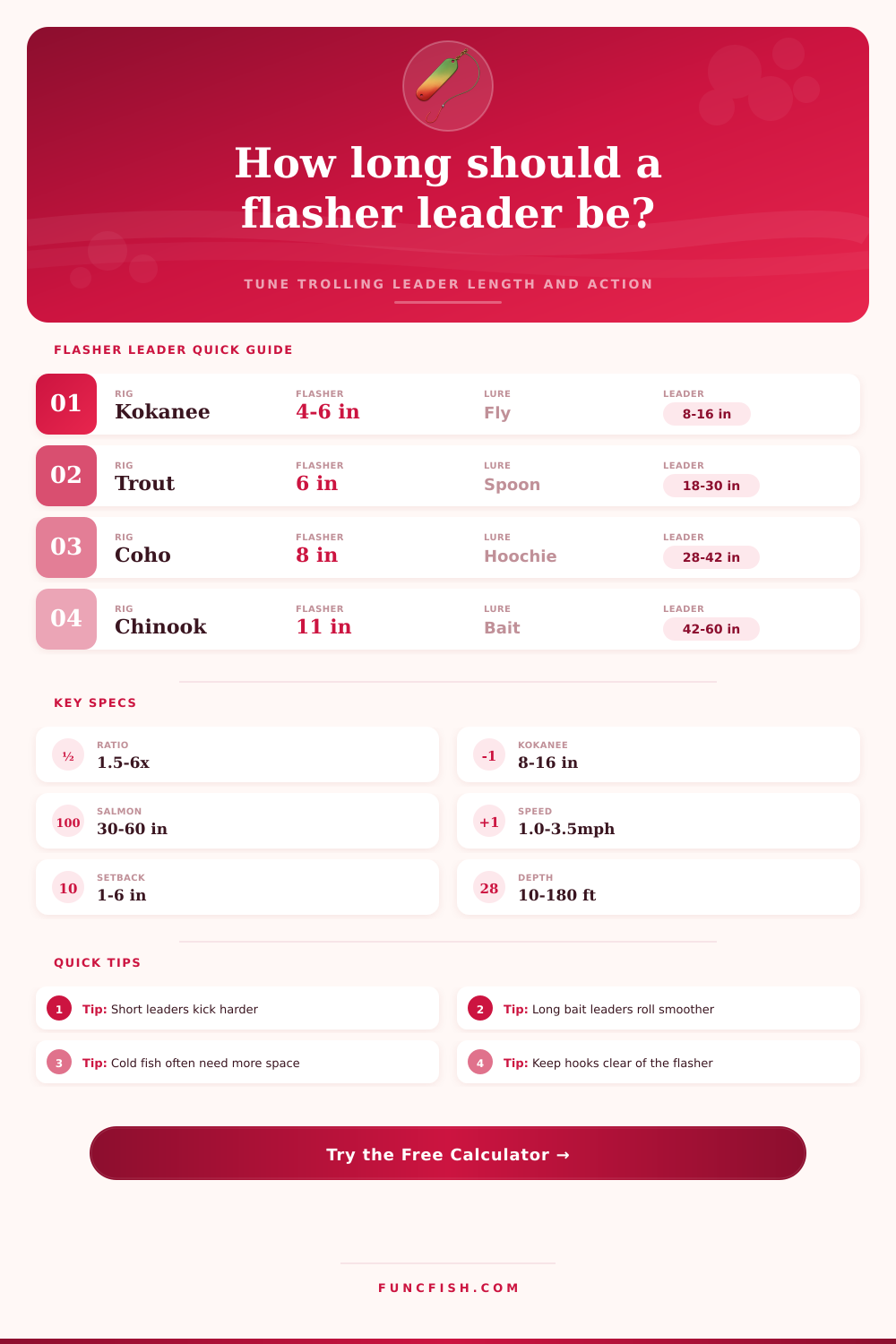
| 4 in micro dodger | Small fly, wedding ring | 7-14 in | 18-36 cm | Very tight kick for kokanee and trout |
| 5.5 in kokanee dodger | Fly, hoochie, spinner | 8-18 in | 20-46 cm | Short leaders drive lure snap |
| 6 in trout dodger | Spoon, fly, small plug | 14-30 in | 36-76 cm | Mid leaders keep trout lures loose |
| 8 in rotating flasher | Hoochie, spoon, bait strip | 24-44 in | 61-112 cm | Good coho and trout search length |
| 10-11 in salmon flasher | Hoochie, bait head, plug | 34-60 in | 86-152 cm | Longer for bait, shorter for squid skirts |
| Cowbell gang blade | Spin-n-glo, fly, spoon | 18-48 in | 46-122 cm | Use enough space to avoid blade wash |
| Species | Usual speed | Leader bias | Hook spacing | Typical reason |
|---|---|---|---|---|
| Kokanee | 1.0-1.8 mph | Short | 1-3 in | Needs sharp dodger kick and compact target |
| Coho salmon | 2.0-3.0 mph | Medium-short | 2-4 in | Chases flash and hits active hoochies |
| Chinook salmon | 1.8-3.0 mph | Medium-long | 3-6 in | Big fish often prefer smoother bait roll |
| Sockeye salmon | 1.3-2.2 mph | Medium | 1.5-4 in | Small squid rigs fish close but not crowded |
| Rainbow trout | 1.6-2.6 mph | Medium | 1.5-4 in | Spoons and flies need room to swim |
| Lake trout | 1.4-2.3 mph | Long | 3-6 in | Deep fish often want slower wider action |
| Walleye | 1.0-2.2 mph | Medium-long | 3-8 in | Harnesses must trail naturally behind flash |
| Lure or bait | Length ratio | Common leader | Shorten when | Lengthen when |
|---|---|---|---|---|
| Trolling fly | 2.0-3.8x flasher | 8-36 in | Fish nip tails | Fly spins or blows out |
| Hoochie / squid skirt | 2.8-4.2x flasher | 12-46 in | Need more kick | Big flasher overpowers lure |
| Trolling spoon | 3.5-5.8x flasher | 18-60 in | Spoon has no flash response | Spoon tumbles too much |
| Cut bait or bait head | 4.0-6.5x flasher | 40-72 in | Bait lacks roll | Bait roll is too tight |
| Spinner or wedding ring | 2.0-4.5x flasher | 10-42 in | Blade needs pulse | Blade stalls in turns |
| Crawler harness | 4.0-7.0x flasher | 36-72 in | Harness feels dead | Fish follow but do not eat |
| Leader material | Stretch feel | Diameter effect | Length adjustment | Best match |
|---|---|---|---|---|
| Nylon mono | High | Forgiving | Baseline | Kokanee, trout, salmon hoochies |
| Fluorocarbon | Low | Stiffer | Add 3-6 percent | Clear water and bait rigs |
| Soft fluorocarbon | Medium-low | Moderate | Add 1-3 percent | Spoons and squid skirts |
| Copolymer | Medium | Balanced | Minus 1-2 percent | Mixed trout and walleye trolling |
| Wire bite section | Very low | Rigid | Add 8-12 percent | Toothy fish after a mono leader |
| Heavy mono shock | Medium-high | Thick | Add 4-8 percent | Deep kings and large flashers |
🔍 Gear and Species Comparison Grid
Kokanee
8-16 inSmall dodgers need compact fly or hoochie spacing so the lure snaps with the blade instead of trailing dead.
Coho
28-42 inEight inch flashers and squid skirts normally fish best with a lively but not crowded pulse distance.
Chinook
38-60 inLarge rotating flashers can overpower bait; longer leaders smooth the roll and improve hook clearance.
Walleye
36-72 inHarnesses and spinner rigs usually need a natural trail behind flash, especially at slower speeds.
💡 Calculation Tips
Read the lure first: shorten the leader when hoochies, flies, or spinners look lazy behind the flasher. Lengthen when bait, spoons, or plugs roll too violently or foul on the swing.
Measure the actual hook point: flasher-to-hook length should include bead chains, snaps, and trailing hook setback. The calculator separates tied leader cut length from final rear hook position.
So there you go, you’re back out there trolling along in some calm water with your rig that was producing last weekend and the darned flasher’s going wild. The following lure looks like it’s swimming through its own wash. Worse yet, the bait have a dead action and the fish just stare at it and won’t commit.
The deal nearly always boils down to this. The hook-to-blade distance. How far apart they are from each other will determine how much of that spinnerblade’s energy move into the lure. It determines whether it gets a lazy roll or a sharp kick. There’s no guessing on this; it’s a matter of getting that spacing dialed in. And that means knowing something about how water moves in a particular manner. Pulse transfer is the name of the game here.
How to Set Up Your Flasher Leader Length
As flasher rotates, it sends a series of rhythmic water surges outward. These surges travel down leader line and smack into your lure. When the leader is short, the lure’s right in the blade’s turbulent wake. It’ll vibrate like mad, bending out hooks and sometimes even breaking apart from the strain. The fish gets a jumbled mess instead of something to eat.
When the leader’s too long, the pulse won’t reach the bait until it dies off. The lure will settle into a still position, and nothing will visually trigger a strike. You’re looking for that sweet spot: Natural lure pulsation with minimal hitting from raw hydraulic force.
But there are several factors that will swing this equation quite far one way or another. The first is trolling speed. The faster you troll, the faster your flasher rotate. The pulses are spaced closer together. In other words, the leader feels as if it’s much shorter then it really is.
Water clarity also affects things. Fish in clear water typically want a longer leader. That gives them more time to check out their meal. They’ll often go with something smooth and long like that. But in murky water, where you need to get someone’s attention fast, you need a tighter kick.
The calculator on this page factors in both the lure type and behavior of target species. It helps you guess at those changes and save yourself repeatedly tying stuff on boat deck until you figure it out.
What are you tying it on? Nylon mono has quite a bit of stretch, absorbing some of the shock from the flasher’s pulse. That can dampen its action but it will also help keep delicate hooks intact. Fluoro is stiffer and passes the pulse along a little more directly. Gives the lure a crisper snap in the water so use slightly longer leaders to keep the bait from getting overwhelmed. Wire passes almost no stretch at all. Use even longer leaders to let the bait swim naturaly while not getting jerked around with each blade rotation. How your line material reacts with the water pressure can be the difference between a good day and a great one.
That said, each fish species have its own liking for it. Kokanee Salmon are aggressive little buggers. They like their baits moved fast and vibrating intenseley. Use a short leader setting to get that frantic, high-frequency snap on your hoochie or fly. They want something quick and frantic. Chinook Salmon, especially the large ones found in deep cold water, tend to be a bit more deliberate. A long leader that lets a herring strip or bait plug roll smoothly is what gets them going best.
The other thing people tend to overlook is hook setback. That’s how far back from the front hook your rear bait pin(s) or trailing hook(s) are positioned. Depending upon the number of hooks on your rig, you don’t want the rear hook to foul the leader. You don’t want it to hang up in the swing of the flasher. When you measure out your overall length, be sure to account for this setback so all parts of your rig work together. Not only does it keep the profile neat and clean but also avoids needless snags that can spook wary fish.
So really, fishing a flasher rig is a process of observation and patience. It is a calculated starting point based off your conditions and your equipment. You should of made little tweaks depending on what it does behind the boat. Too tight? Add a few inches. Looks too loose? Trim a bit off. Keep adjusting until it looks like it has life in the water. Where the flasher draws the attention but the leader brings the natural action that causes the bite. And when you get it right, everything else falls into place.