
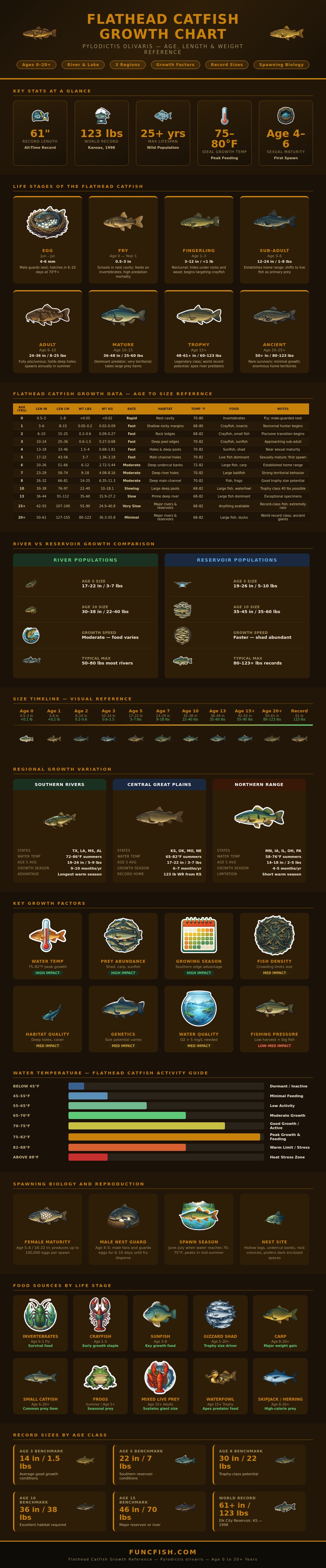
Catch Flatheads on live bait by sitting still in one location for hours at a time. When you get bit, it’s heavy. However, if you’re going after big ones, you have to understand how they mature. That means not just trying to catch any fish but old ones. You look at the graph of how fast flatheads grow and you’ll see why it takes patience.
A seven-pound flathead might only be five years old. In fact, he may be just five years old, having only put on maybe seven pounds. He hasn’t even hit his full potential yet. And that’s where the fish realy begin their growth spurt. At ten years old, a flathead can hits thirty-eight inches. But most guys quit fishing by then. Now the fish are just getting into they’re fastest growing phase.
How Flatheads Grow
The reason they don’t grow faster as young fish isn’t because of lack of food or anything like that. It’s simply their biology. Flathead Growth is dictated by water temperature. If your lake has great cover, a lot of bait, and so on, but stays under 70 degrees for more than half the year, they won’t grow well.
For instance, southern river systems produce larger flatheads at an earlier age then northern lakes. This is because warm season lasts longer in southern waters. In northern lakes in places like Kansas or Missouri, fish thrive when summers get hot but winter temperatures stop them from feeding for several months. While winters cool down other places flatheads continue to eat in Louisiana or Texas. This gives those fish in warmer climates a metabolic edge over those in colder ones.
Flatheads are obligate predators, meaning they require a live food source in order to exist. Unlike a channel catfish which can absorbs waste or plants. Flatheads require live food in order to live. For the first five years of life they can feed on small sunfish and crayfish and derive sufficient energy from them. After that they must find something bigger to fuel their continuing growth.
The most energy-rich food available for flatheads is gizzard shad. So if you want big flatheads, make sure there is abundance of shad in your lake. Capturing shad also costs less energy which allows flatheads to save more energy for growth. Want some trophies? Find some dirty water with shad.
When the flatheads get about 4 to 5 years old, they gets sexually mature and start behaving different. From June through July, males will set up shop on an undercut bank or maybe under a hollow log and defend it as a nest. So when you see one there, it means he’s guarding his territory so he’s easier to target. But he’ll bury himself realy deep within that cavity. He goes a little bit slower while he spawns because he puts everything he has into it, but once he spawn, man, he goes crazy eating to get his bulk back up. You can catch him realy well right after the spawn because he’ll be recovering from all his efforts.
Flathead size is also regional. Much of the reason the world record was caught at Elk City Reservoir in Kansas is because of how fish grow there. That particular reservoir offers protected habitat free of interference for decades, plenty of food (shad and carp), and warm summers. That combination mean those fish have the opportunity to reach giant sizes. In Northern lakes, the shorter growing season prohibits them from putting on weight at nearly as rapid a pace. So even if a fish eats all day long, cold weather still limits its yearly gains. Fifty-pounders is seldom seen north of the line.
Slow is the name of the game when chasing big flatheads. Giant flatheads don’t come easy. They are few in number and scatter across large stretches of water. While there are plenty of small, young flathead lurking beneath the rocks, there aren’t many large, old fish. Understand this and develop reasonable expectations of their growth curve. Don’t expect them to grow fast; instead, look for fish with longevity. The big fish, those exceeding 20 pounds, are all survivors. And they’ve been around for quite some time. Fast results aren’t always what fishermen seek, but the river will reward patience with those who accept the natural flathead growth timeline.