
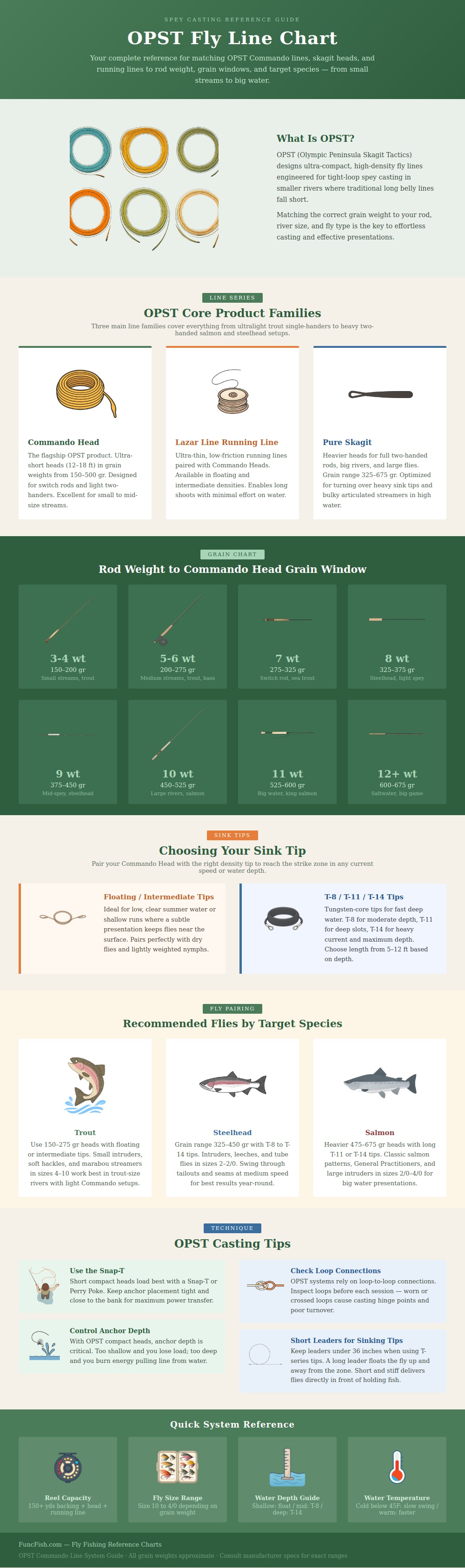
Compact Spey line are specialized fishing lines that are specifically design to be short and dense. Compact Spey lines is used for fishing in tight spaces where traditional Spey lines cannot function effective. Traditional Spey lines require a considerable amount of space behind an angler when casting.
However, compact Spey lines require very little space behind the angler due to the short head feature of compact Spey lines. Compact Spey lines are ideal for environment like overgrown streams and narrow canyons where the short length of the compact Spey lines allows the angler to effectively cast the line into the tight area of these environments. Compact Spey lines are designed to place the maximum amount of grain within the minimum length of the line.
How to Use Compact Spey Lines
Compact Spey lines have head that are as short as 12 feet in length. Because of the short head design of these lines, compact Spey lines can turn over the flies that is on the line without the need for the long section of the Spey line. If you use a thin running line, compact Spey lines can allow the angler to effectively cast a single hand or light switch rod a great distance.
For compact Spey lines to effectively function, the weight of the head must be matched to the weight of the fishing rod. If the weight of the head is too light, the casts will collapse. Alternatively, if the head is too heavy for the rod, the angler will struggle with the compact Spey line.
Using a grain chart for the specific rod that you will use with the compact Spey line is recommended to ensure that the head weigh the correct amount. For instance, 5-weight fishing rods has best function with a compact Spey line head that weigh 200 grains while 8-weight rods has best function with 325 grains. Using weight beyond the design limits of the fishing rod will prevent the angler from recieveing the feedback from the rod regarding the catch.
The complete system using compact Spey lines consist of three main component: compact heads, running lines, and sink tips. Compact heads contain the power necessary to load the rod. The compact heads also allow for the compact Spey lines to have a great deal of power behind them.
The running lines have a minimum amount of friction so that they do not hinder the performance of the Spey lines. Sink tips allow for the angler to control the depth of the fly that is being cast into the water. Each of these component can be purchased separately and used in a loop to loop fashion to allow the angler to easily change the component according to the condition of the water.
Sink tips are used to control the depth of the fishing line. Depending on the depth and speed of the water, there are a variety of sink tips that can be used. For shallow waters, floating or intermediate sink tip can be used.
For deeper waters, tungsten core like T-8 or T-14 sink tips can be used to allow the fishing line to travel to deeper waters within the river. A T-8 sink tip is used for depths in the middle of the river while a T-14 sink tip is used for very deep water or waters with strong current. Depending on the depth of the fish in the river, the length of the sink tip can be between 5 and 12 feet.
However, the fishing line leader should always be shorter then three feet. The weight of the fishing setup will determine the type of fly that are used in the fishing process. For instance, if the angler is using a lighter fishing setup, smaller flies like those used for trout can be used.
For fish like steelhead and salmon, a heavier fishing setup should be used. For salmon specifically, heavy sink tip and large flies should be used so that the compact Spey line can effectively move the flies across the broad river where salmon live. A balance in the weight of the flies and the compact Spey line will result in the flies moving through the water instead of moving unnatrually.
In order to effectively use compact Spey lines, specific technique should be used to cast the line. For instance, snap-t casting or the Perry Poke technique can be used to anchor the line to the bank so that the rod can be loaded quick. In addition to learning how to effectively cast with compact Spey lines, the angler should also ensure that the fishing lines loop are not worn down because this will reduce the ability of the line to turn over the flies.
Additionally, the angler should ensure that there is enough backing on the fishing reel and that the sink tips matches the depth of the water in which the fish live.