
It’s dawn on an oregon jetty, and you’ve reeled in something dark. It feels good in your hands and weigh just right on the scale. But what are you going to do? Your pulse quickens; you don’t know yet whether it’s legal. Is this a black rockfish, OK? Or is it one of those prohibited ones that will cost you both money and respect?
What makes all the difference isn’t the time of day, nor the lure you’re using. Instead, its proper identification. Here on the state’s rugged coast, there are 12 different species that inhabits its rocks. Mistaking one for another is a rookie error most often made by rookies. No need for biology degree. All you’ll want to learn are the traits to seek out before hoisting the fish into the air.
How to Know Which Rockfish Are Legal to Keep
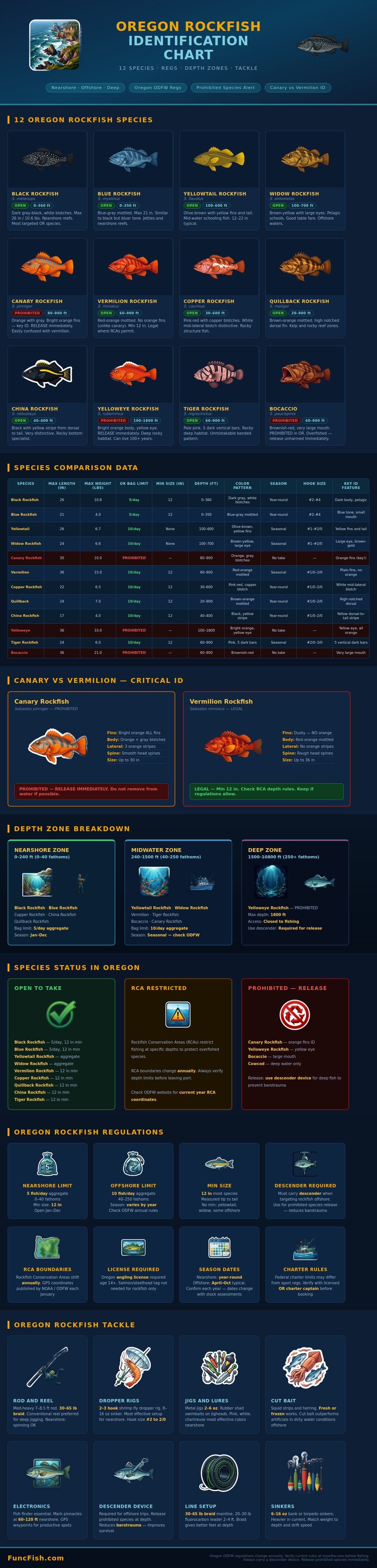
Confusing the vermilion rockfish with the canary rockfish are the largest of the traps. At first glance they appear to be identical. Both are reddish-orange. In dirty surf their colors cross over. The key lies in the color of the fins.
If you are holding a canary rockfish, its fins will be bright orange. Immediately release this fish. It’s off-limits and illegal to keep. Vermilion rockfish have dusky-colored fins that blends with their body color and lack vibrant orange. If they meet the size limits, you now has a legal vermilion. It is a tiny eye test. It’s the difference that determines whether or not you keep the meal or face regulatory consequences.
Depth also significantly impact species. Black and blue rockfish are near shore and suspend around reefs and jetties. They will inhabit water within two hundred feet of jetties and reefs. From shore structure or small boats, you can reach them. Further out into offshore areas, you’ll push further into depths where widow and yellowtail rockfish groups up. The infographic breaks this down well. This shows how habitat influences which species is present.
Move beyond four hundred feet and things change. You could be fishing for slow reproducing deep-water species like the yelloweye rockfish. They has long life spans and regulations do not allow their take at all. Knowing your depth allows you to anticipate what’s on the end of your line before it come to the top.
Consider what area you’re targeting and choose the right gear. For example, in the nearshore areas they fish simple dropper rigs and heavier sinkers. Herring and squid cut bait are popular options there. Because the current is strong, it’s best to use a weight to keep bait close to structure. Offshore jigging require a whole other set of equipment. You need rods capable of handling the weight of the jig head. Reels that pull a lot of drag as they come back. On the deeper trips many guys will also bring along a descender device.
This is because if you bring a deep water species up too fast, it suffer from something called barotrauma. The device lets you send those fish back down to a more comfortable level, giving them a fighting chance to live and keep the population alive for years to come.
Each year the regulations changes according to stock assessment reports provided by each state’s agency. A season that is open one year could be closed the next. Bag limits can adjust too. Always make sure you know the latest rules prior to going. For most nearshore trips, the bag limit is generally five aggregate rockfish. At times it’s ten for offshore trips and that number shifts too. Different minimum sizes apply depending on what you’re after. Twelve inch minimums are common with several species, though some species do not has a minimum. Carry a good measuring board in the boat so you don’t accidental run afoul.
Preparation pays off when you have fresh seafood from the ocean. Ignorance is no excuse, however, as there are no exceptions to legality. Fishing is fun. Catching fish is fun. Figuring out what’s legal and illegal should of never be part of that fun. Knowing common visual cues for what’s off-limits adds another level of confidence to the game of guessing. Knowing where fish live based off depth also helps.
Standing on a piece of cold rock or swaying in a tiny boat can make your whole day based on one telltale sign, such as a bright orange fin. Look closely, measure accurately and remember the rules exist to ensure Oregon’s rockfish population remains healthy for all.