
There are lots of different kinds of rockfish; it’s easy to assume there aren’t based off what we catch. Turns out there is several species, all within the same genus. But each species have its own characteristics: size, behaviors, etc.
The wrong assumptions can land you into hot water. Next time you go fishing and grab a twelve inch fish, remember that may not be legal. You risk breaking conservation law or losing your fish. Knowing physical distinctions between species will help you avoid any such issues as well as ensure compliance and a delicious meal.
A Guide to Catching Rockfish
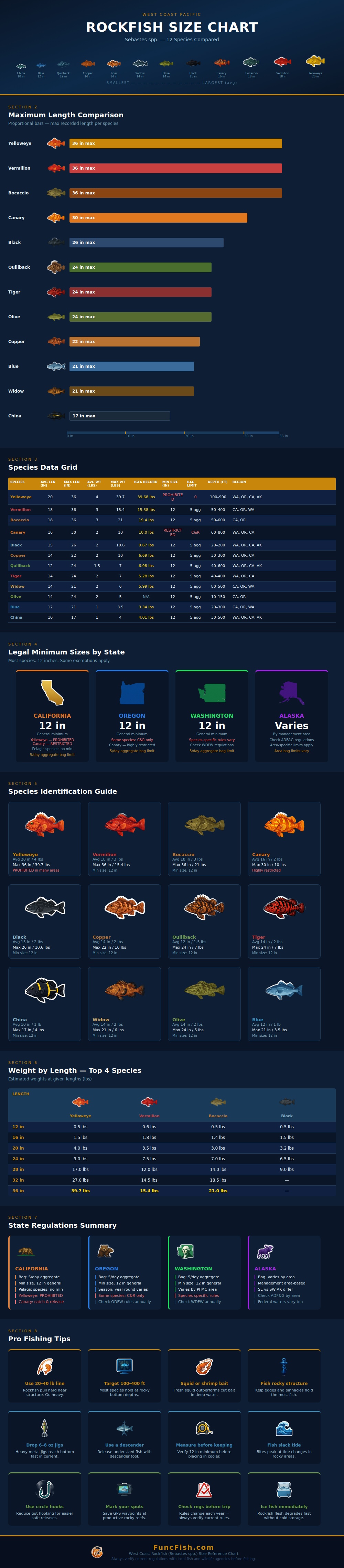
There are twelve common species. This is a visual comparison to show the averages of these twelve commonly caught West Coast species. The big to little range is from Yelloweye on down to China rockfish. You can see there’s a lot of variation within the family. For example, Quillback and Blue rockfish runs about a foot long on average. Vermilion and Bocaccio are regularly larger then eighteen inches.
That makes a difference as many regulations has a minimum size limit of twelve inches. Here on the West coast in California or Oregon, twelve inches is the bottom line. And it doesn’t apply to all fish with spines, which is why we say to always be sure to reference the specific rules. Legality matters, as do size and work.
Why do fishermen go after bigger ones? Here’s some weight information on that: A 24-inch Yelloweye weighs in at nine pounds. Another fish of equal length could weigh as little as six pounds or even seven pounds. That makes a big difference when you’re fighting it. It also changes how much meat you’ll have to eat.
The gear has to be specific for these fish too. You need big line, sometimes as high as 20 to 40 pound test. And rockfish are powerful. They holds tight to structure. Fishing around those rocky reefs on light tackle will not only make you lose your lures but, more importantly, it will wear down your confidence.
But it’s not just about size. There are regulations, too, which add another level of difficulty. In most states, there is a 12-inch minimum with a five-fish per day bag limit. Some species require special treatment. Slow growing yelloweye rockfish are banned from many waters because the population is too small to support fishing. These slow growing fish lives deep (typically between one hundred and nine hundred feet) and take decades to grow large.
Canary rockfish are subject to tough limits or must be caught and released. Beginners often fall into the trap thinking that limits for certain species extend to all. Get to know what you are catching. After a while you will get a good eye for distinguishing your fish.
Some hints are highlighted in the chart. For example, tigers has stripes and yelloweyes have yellow eyes. Widow rockfish have black tips on their fins and are more brownish-orange, while olive rockfish have a similar mottled pattern but in a green-brown color. Knowing how they look helps determine if you will need to take the time to measure or just release the fish.
Also, remember that deep water species can be negatively affected by gas bubble trauma so being quick is important. Keeping a deep fish too long before icing it or venting it will damage meat. Not handling it properly would of resulted in wasting your catch.
To fish successfully you have to learn where these fish are holding. They are on the bottom around structure such as rock bottom or kelp edges. They don’t roam open water. You will find them anywhere between twenty and six hundred feet. Big jigs is usually used with six to eight ounce weights to get down fast. Also that keeps the current off your jig so it doesn’t sweep the bait away.
Cut bait and fresh squid both work well but in general the squid does better in the deep runs than cut bait. It holds on the hook better and flows with the current. Tide charts are just as important because they trigger feeding during slack tides.
Before heading out, check with your local wildlife agency to make sure you know what is allowed this year. Stock assessments constantly change, so what may have been OK yesterday could be off-limits today. Make sure to measure all fish before putting them in the cooler so that you don’t accidently violate your limit. If you’re planning to let any fish go and they came from deep water, bring along a descender device. That way the undersize fish will get back down to the reef unharmed.
There are plenty of rockfish for all of us if we only follow their limits. Understanding each species’ stripes allows you to keep more on the table.