

Beyond the mysteries of deep Texas waters live some of the most misunderstood predators of the oceans dwellings. These underwater predator are located just off the coast of the Gulf of Mexico. Sharks can be seen patrolling the Texas waters year-round, from the shallow bays where families like to swim all the way to the deep areas where the offshore oil rigs live and where anglers go to catch there dinner for the day.
If you are aware of the types of sharks that live in Texas, then your approach to the water will change and your respect for the water will change. The Gulf of Mexico is home to more than a dozen species of sharks and is also the hunting ground for more than a dozen species of sharks. Some shark species lives near the shores where children can build sandcastles, while other species prefer to live near the continental shelf where the oil rigs live.
There are a few other species of sharks that live in the gulf only during certain months of the year when the water is warm enough and the food fish need to survive in this ecosystem is present. If you learn more about these species of sharks, you will have an appreciation for these fish, and you will no longer fear them as much as people do. The following text will discuss the sharks that can be encountered in the waters of Texas.
Each shark species has its own personality and its own preferred habitat, and each plays a crucial role in the survival of the different species within the ecosystem of the Gulf of Mexico. If you learn more about these species of sharks, your experience on the water will be safer, and you will have a better understanding of the world beneath the waves in Texas.
Common Shark Species Found in Texas Waters
1. Blacktip Shark
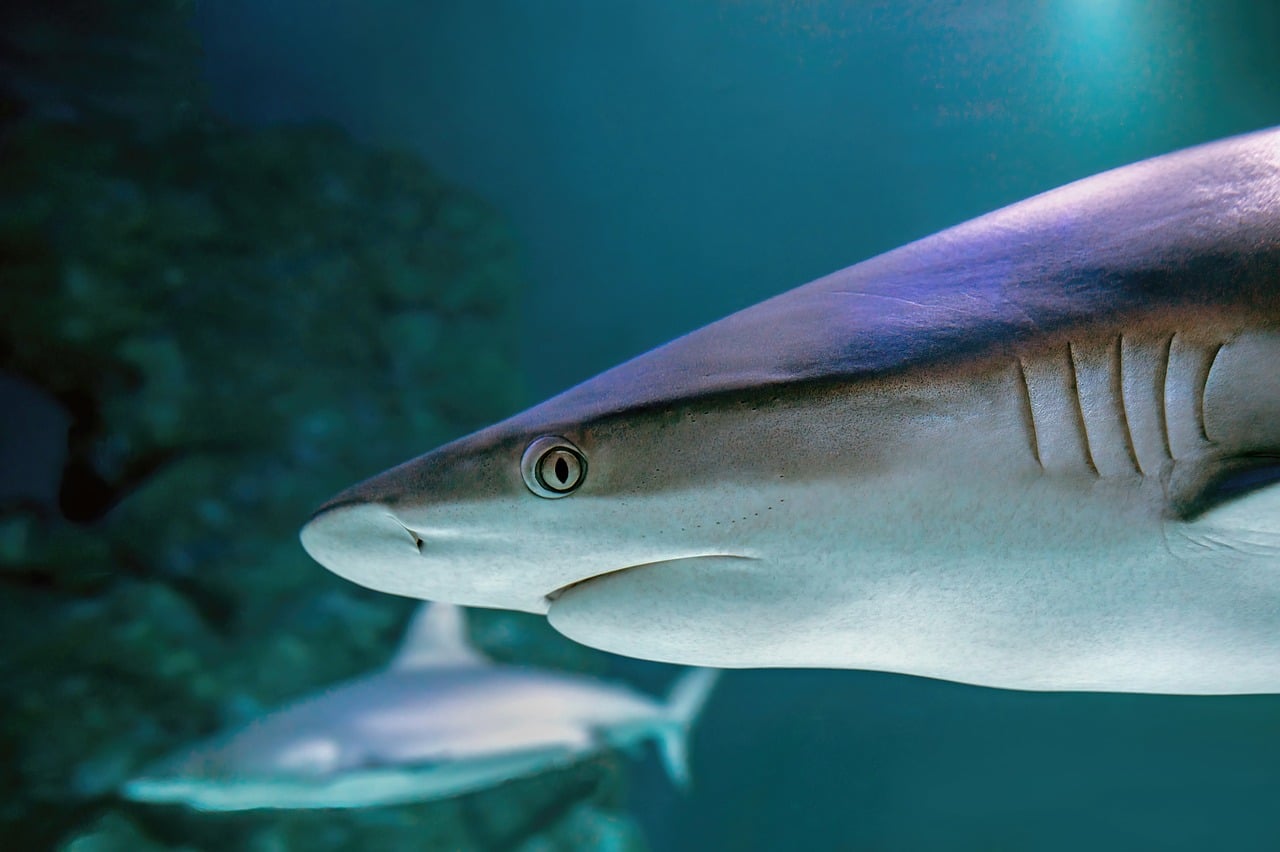
The blacktip shark can often be seen leaping out of the water in excitement as they chase the baitfish that live near the surf.
These sharks can be easily spotted due to their slender bodies and blacktip shark fins. These species grows to no more than six feet long. Their size accounts for the fact that they have some of the most developed pectoral fins of all the shark species as they can chase the baitfish to great distances.
The blacktip shark lives in the waters along the Texas coast from spring until the fall when the water warms to a suitable temperature for the blacktip shark. These sharks give birth to their young in the shallow estuaries. This is why fishermen may hook small blacktip sharks when they are sitting on the jetties along the coast.
The blacktip shark species play a crucial role in the Gulf of Mexico as they help to keep the population of baitfish in check. Although blacktip sharks are most often seen near the surf, these predators tend to venture into deeper waters to lie on the sandy beaches when the sun is bearable during the day. Their habit of jumping out of the water when chasing fish is a favorite sight for beachgoers who wait on the piers to see them leap over the water.
2. Atlantic Sharpnose Shark
The Atlantic sharpnose shark is the next species of shark to encounter in Texas waters, and this species is a popular catch for those who fish the Texas surf zones. These sharks are small in size and grow to a maximum of four feet and dont weigh much over ten pounds. The pointed snout that gives this shark its name allow it to dig into the sand to find the crabs and small fish that are the main part of its diet.
These species are abundant from the beaches to the jetties from Galveston to South Padre Island. These sharks show an aggressive bite when confronted with the proper bait. Therefore, they are perfect for introducing children to shark fishing as they are much less of a threat to humans than most other shark species.
They are small, but their teeth are strong enough to deliver a nasty nip at the unwary fisherman who is unhooking his catch. The Atlantic sharpnose shark teaches humans that not all sharks are the monster that is depicted in the movies but one of the most important species in performing the function that all sharks have performed for millions of years.
3. Bull Shark
The bull shark is the most dangerous of the shark species in Texas waters.
This species earns its reputation due to its unique ability to comfortabley swim in both fresh and salt water. Bull sharks use their unique abilities to enter rivers such as the Brazos, the Trinity, and the Houston Ship Channel. Bull sharks have a body shape that is more stocky and robust than most other shark species.
They have broad heads with small eyes. Bull sharks can tolerate low levels of oxygen in the water and murky waters that other species of sharks do not like to swim in. Bull sharks use this bumping behavior to investigate the water for food and may eat the discovered prey.
Bull sharks have the most documented bites in Texas. However, the total number of bites that these sharks have taken remain very low when compared with the number of people who use the gulf and the river systems in Texas. The ability of bull sharks to live in brackish water help these fish navigate to the rivers in Texas during the spring and summer where the rains make the rivers brackish.
Therefore, beachgoers should of be aware of this when the rivers has experienced heavy rains recently. Bull sharks, while large and powerful, are not the only predators to stalk the Texas coasts. The other species to keep an eye on is the hammerhead shark.
4. Hammerhead Shark
Hammerhead sharks are seen with great frequency in the waters along the Texas coast as the scalloped hammerhead species is more common in these areas than the great hammerhead shark. Hammerhead sharks have a bizarre head shape called the cephalofoil. This shape contains many sensory organs that help the fish detect prey that is buried in the sand on the ocean floor.
Hammerhead sharks prefer to be active and hunting in the warmer months between May and September. These predators live close to the offshore platforms and reefs. The mouth of the hammerhead shark is located well away from the front portion of its head, which force it to swing its head in a lateral direction to eat its prey.
Despite the look of the shark when it consumes its food, this lateral movement is a perfect tool for hammerhead sharks to eat their meals with great efficiency. The hammerhead shark species is protected in many areas due to its slow reproduction rate. This rate place them at risk of being overfished by humans.
The other predator to keep an eye on is the tiger shark species. Tiger sharks have distinct vertical stripes of dark coloration on their bodies, which fade over time as the sharks age. These predators are among the largest of the shark species and can grow to 14 feet or more in length.
5. Tiger Shark
Due to their blunt snouts and saw-like teeth, these predators are capable of eating the diet of almost anything in the ocean. Tiger sharks are the species with the widest diet of all the shark species. That is the reason why they are often seen near the boats and docks where food is plentiful.
Tiger sharks live in deeper waters during the daytime but come near the shore during the night. Commercial fishermen occasionally hook these predators while fishing for snapper and grouper fish. These fishermen feel a mixture of relief and respect as the massive species of tiger shark approaches their boat while they are fishing.
Unlike most species of shark, tiger sharks reproduce through egg laying. As such, there are fewer tiger sharks in the wild but each one is more hardy than other sharks. Tiger sharks are most common between July and September along the Texas coast as the water warms to more comfortable temperatures for these predators.
Along the Texas coast, there are a few other species of shark to observe, including the blacknose shark.
6. Blacknose Shark
The blacknose shark rarely grows to more than five feet in length.