
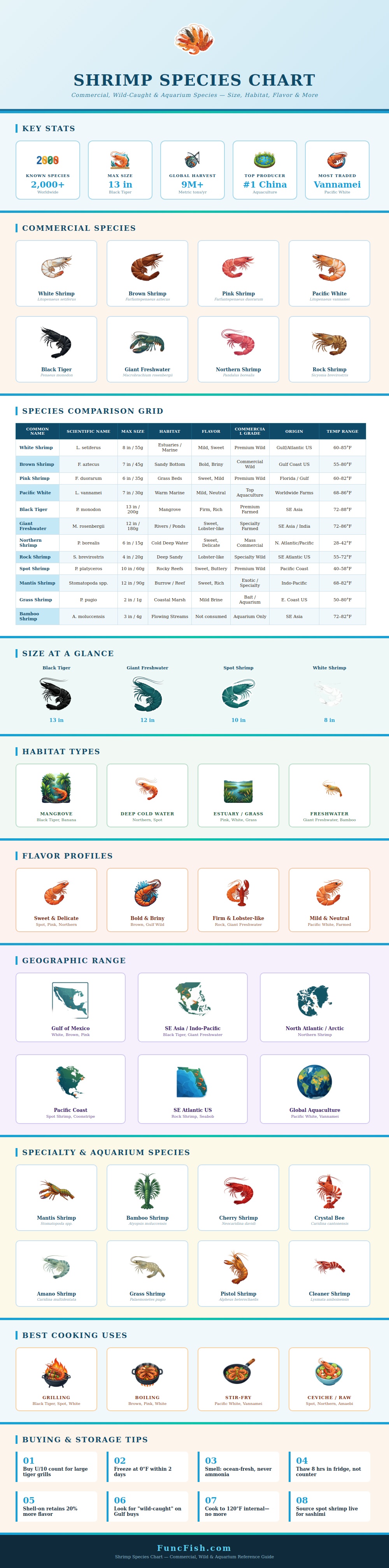
The next time you’re standing in the seafood section with a wall of frozen bags before you, you might feel confused. Each bag claims to be top quality, yet they all hide something more ordinary underneath label, like farm-raised or wild-caught shrimp. You won’t know which variety will hold together nicely on the grill and which will dissapears in a modest cocktail sauce.
With this visual guide, though, things gets sorted out: Common varieties are laid out according to their defining characteristics, making it easy to match the shrimp to the dish at hand. From habitat to size to flavor, it’s all broken down here to provide enough info for a confident selection, even if you don’t have degree in marine biology.
How to Choose the Best Shrimp
So what’s the deal with white shrimp versus pink and brown shrimp? Most home cooks gets hung up on this point, mostly because when they’re peeled and thawed, they all appear pretty much the same. The chart calls out how white shrimp tend to be sweeter and more mild, versatile enough to work in pretty much any dish. Brown shrimp have a bolder, brinier flavor that will hold its own against robust sauces or heavier spices. Pink shrimp tend to be on the small size, but is sweet and delicate enough for subtle preparations. Knowing your shrimp means you won’t accidentally serve a mild white shrimp in a dish that calls for the punch of a brown. It’s not just about preference; it’s about respecting the ingredient’s natural profile.
Size also has a big impact beyond texture. Bigger shrimps, like the giant freshwater shrimp or the black tiger, has firmer flesh. They won’t dry out as fast on the grill making them a great choice. You get a good chew while still getting something more similar than in terms of rich, lobster-like texture. At the opposite end of the scale, small shrimp like the northern variety are loved for their subtle sweet flavor and eaten in large amounts for salads, boils etc. Note the huge difference in sizes in the infographic. Some shrimp, like grass shrimp; barely reach an inch and may just be used as bait. Others, like black tigers, gets to a very long length.
That’s why buying just any frozen bag won’t work (unless you’re willing to adjust your expectations and cook accordingly).
The shrimp’s origin also determines how sustainably it was raised (and therefore how much it costs). Most of the world’s aquaculture production consists of Pacific white shrimp, which is easy to raise and tastes mild enough to please most people. Wild-caught Gulf shrimp, on the other hand, have labor-intensive harvesting methods and seasonal availability so they cost more but contribute to local fishing economies. Knowing what types of shrimp are mostly raised vs. Knowing which shrimp are mostly raised versus caught in the wild visually helps you decide if you prefer the taste of consistent aquaculture or the unique flavor of a wild-caught product. It is a personal preference between the environment and your wallet, where both matter, but having this information lets you make a conscious choice instead of an uninformed one.
The guide contains preparation and storage tips that will help you avoid some of the most common mistakes when handling good seafood. For example, so many people overcook their shrimp because they are afraid of serving it undercooked. That won’t work: once your shrimp gets rubbery nothing will save it for you, not even sauce. Following the tip regarding proper internal temperature will prevent this mistake.
To ensure you retain as much flavour as possible, keep the shells on your shrimps until cooking time. Too often we overlook this detail in search of convenience. Finally, thaw your frozen shrimps in the fridge (NOT at room temperature), which will allow for even results while keeping your food safe. Little changes like these make all the difference between an ordinary and a special meal.
Finally sitting down at the table, you notice how thoughtful; or not… Your meal was. Without heavy seasoning to mask its taste, the shrimp’s flavor jumps out at you. It’s tender but firm enough for whatever dish it came from. There is no question whether this was good quality shrimp or a generic shrimp dinner. This isn’t simply about reading the label; now, you know exactly what’s on your plate. And that brings confidence to the kitchen making any simple trip to the grocery store a chance to feel like a better cook. Knowing about your shrimp is equal to the skill in preparing it.