Soft Plastic Plastisol Mix Calculator
Estimate a pourable soft-plastic bait batch from cavity volume, plastisol hardness, softener, hardener, salt, floating additive, colorant, glitter, scent, regrind, sprue loss, and mold count.
📌 Plastisol mix presets
⚙ Plastisol and mold inputs
Plastisol batch results
Mix math breakdown
🧪 Additive math cards
Working density for many liquid plastisol bait mixes before salt and fillers.
Salt greatly raises mass and sink rate while reducing clarity and stretch.
Microballoon-style filler adds volume with low mass for neutral or rising baits.
Composite density above water means the bait will tend to sink before hook weight.
📊 Plastisol reference tables
| Plastisol grade | Hardness index | Useful bait styles | Adjustment note |
|---|---|---|---|
| Super soft | 24-30 | Drop-shot worms, thin tails, finesse shads | Usually needs little softener and careful sprue-loss tracking. |
| Soft | 31-38 | Worms, craws, finesse swimbaits | Good base for small salt loads and flexible appendages. |
| Medium | 39-48 | General trailers, flukes, paddle tails | Accepts softener for action or hardener for nose durability. |
| Firm | 49-58 | Large swimbaits, tubes, saltwater shapes | Best where hook slots, tails, and rigging need support. |
| Heavy-salt grade | 44-54 | Stick baits and dense sinking pours | Often starts firmer so salt and oil do not make it mushy. |
| Additive | Typical range | Math effect | Watch value |
|---|---|---|---|
| Softener | 2-18% of base volume | Lowers hardness, adds liquid volume, lowers density slightly. | Too much can weaken hook noses and reduce memory. |
| Hardener | 1-10% of base volume | Raises hardness and slightly raises working mass. | High doses reduce tail kick and stretch. |
| Fine salt | 3-40% of base weight | Adds mass and small volume; raises sink behavior quickly. | Coarse salt changes cavity fill and surface finish. |
| Colorant | 0.3-3% of base volume | Adds small mass and volume, mostly visual. | High pigment may bleed or stiffen the bait skin. |
| Glitter | 0.2-4% of base volume | Displaces plastisol volume and slightly raises hardness. | Large flake needs extra injector and runner allowance. |
| Regrind | 5-35% of final mix | Adds usable volume but raises variability and opacity. | Count it as final-share, not base-share. |
| Bait size | Example cavity | Density target | Yield use |
|---|---|---|---|
| 2.5 inch drop-shot worm | 0.06 fl oz / 1.8 ml | 0.97-1.03 g/ml | High count batches where sprue volume can exceed bait volume. |
| 4 inch finesse worm | 0.15 fl oz / 4.4 ml | 0.98-1.05 g/ml | Soft action and repeatable color are more important than salt. |
| 5 inch stick bait | 0.32 fl oz / 9.5 ml | 1.15-1.35 g/ml | Salt-heavy fall rate drives both weight and yield per cup. |
| 3.8 inch paddle tail | 0.28 fl oz / 8.3 ml | 0.98-1.08 g/ml | Medium hardness protects the nose while keeping tail kick. |
| Tube body | 0.24 fl oz / 7.1 ml | 1.02-1.15 g/ml | Trim and skirt cuts justify a larger sprue-loss percentage. |
| Problem signal | Likely math cause | Calculator adjustment | Expected result |
|---|---|---|---|
| Baits tear at hook slot | Softener too high or recycle too high | Lower softener 3-5 points or add 2% hardener. | Higher hardness and better nose strength. |
| Short shots in final cavities | Sprue loss or overage too low | Add 4-8% sprue loss and recalc target baits. | More realistic pour-round count. |
| Stick bait sinks too slowly | Salt load below density target | Raise salt until density clears 1.15 g/ml. | Faster fall and heavier bait mass. |
| Floating bait barely rises | Salt, glitter, or regrind offset filler | Raise float powder or lower dense additives. | Composite density moves toward neutral. |
🔗 Mix comparison grid
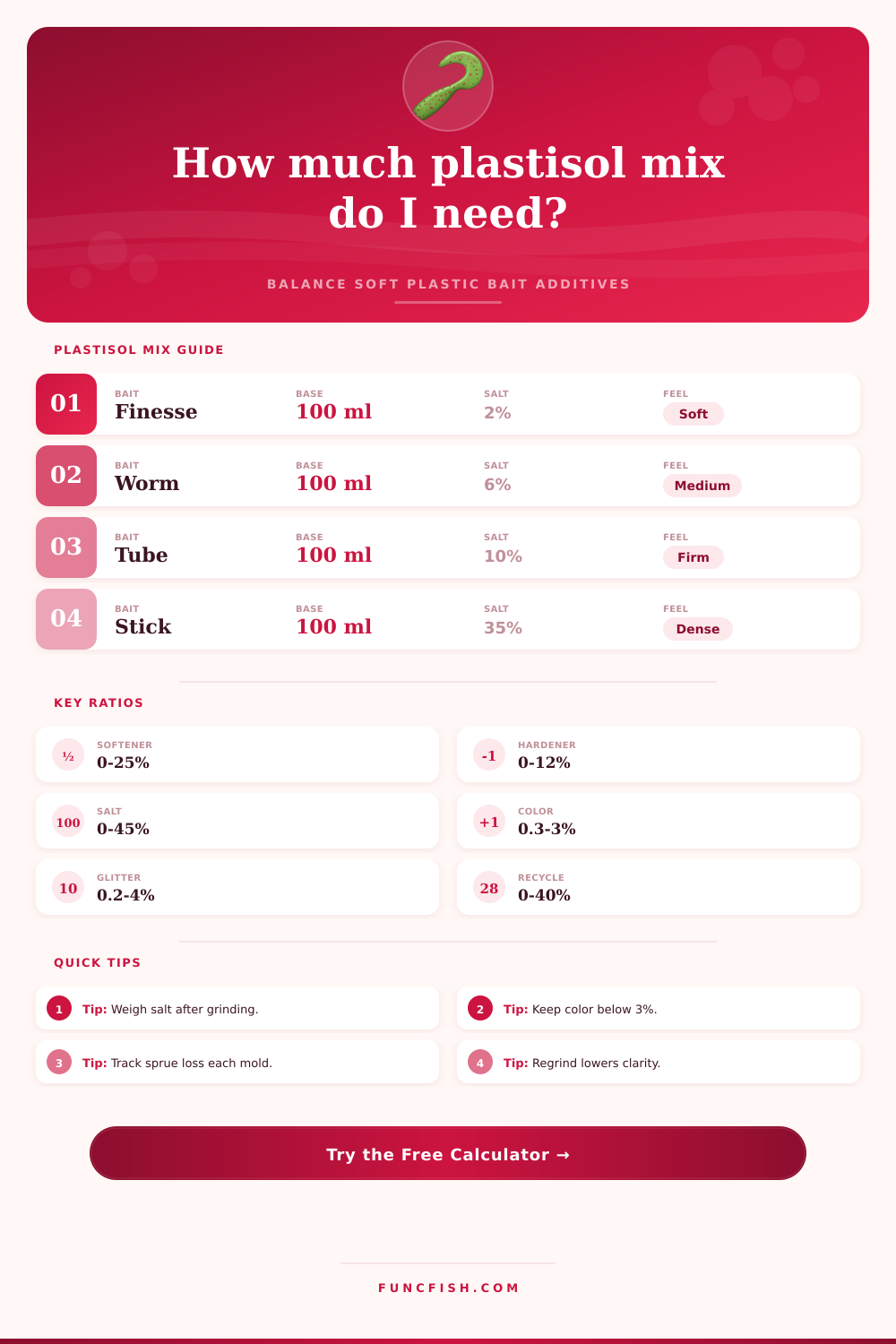
Use low salt, moderate softener, and small cavity volume for thin tails and slow fall.
Salt percentage dominates density, so yield by count drops as each bait gains mass.
Medium-to-firm hardness helps bodies stay straight and noses survive rigging.
Floating filler offsets density but adds stiffness, so softener may be needed.
💡 Calculator tips
The science of pouring soft plastics. Pouring soft plastic lures feels like magic, but it is actualy just applied chemistry and geometry. There’s only geometry and chemistry.
You begin with a clear liquid plastisol, sprinkle in some salt to control sink rate, then add color to make ’em visible. Ideal result will sink instead of float and won’t tear where it touches the hook. The calculator (above) figures all that stuff out for you. This means you don’t have to estimate what percentage of your base resin has been absorbed by additives and wasted during sprue.
How to Pour Soft Plastic Lures
Additives such as fine salt makes the plastisol denser by increasing mass and thereby displacing some of the polymer resin. This is important since the less resin there is, the less flexible finished bait will be. While you may achieve a faster sinking stick bait, they can get brittle in cold water if you don’t take the compromise into consideration. As you can see from table on page, each grade has its own response to modifiers.
There are other variables that cause problems, such as hardness. For instance, maybe you like how a certain medium plastisol feel in the cup so you choose that grade. Then you adds a certain amount of softener to get a particular texture. The addition of that softener drop the durometer substantially and reduces strength of the lure’s nose. A compromised-nose bait won’t last through multiple hook set.
With your inputs for both hardener and softener, the calculator will adjust the expected hardness index to give you look at what the physical feel will be prior to heating the mix.
Most people mess up their pours when it comes to calculating volume. When they measure one cavity with water, they don’t factor in splatter during pouring, injector nose, or the runners. Typically, you can lose as much as 10-15% of the batch to trim and sprue in most molds. If you’re only calculating how much volume finished baits have, you’ll find yourself running out of mix half way through your final pour. By adding an overage buffer, you’re sure all cavities gets filled to capacity without short shots ruining your whole production run.
There is a fine line with regrinds. Using scrap baits and leftover sprues is good for not wasting plastic and money. But it adds inconsistency to your batch. Regrind has shorter polymer chains then brand new material which will change some things like stretch and clarity. If you have lots of regrind, those paddle tails may gets cloudy or be so brittle that they snap instead of bend. Keep the percentage of regrind reasonable to see the cost savings. This way, you won’t compromise structure of new lures.
While they may appear insignificant; like a drop of scent and a couple drops of color (it all add up). Colorants (if used heavily) will change viscosity a bit as well as increase volume. Scent or slickness oils will not cure with the plastisol, and they can be affected by time (leaching out) or how the bait feel as it moves through water. You must account for these small details on the tool, so every drop counts when you need precision.
This shift in understanding how things work change your workbench experience. From there on out you are engineering rather than guessing. What was a chance event turns into a predictable result with each pour. You know how much softener you need to lower hardness and how much salt is needed to raise the density; it’s all under your control when making finished product.
It is that control that makes the difference between those who just dabble and those who make quality lure every time. You’re not building a bait that merely resembles a fish. You are designing one that holds up to rigging, acts right in the water and does what it’s supposed to do when pressured. That requires careful balance with all those factors where every drop counts.
The baits holds up from cast to cast. They sink the way they were intended and hook the way they’re meant to be.