
There comes a time when maintaining usual common fish in an aquarium becomes simple tasks. If it’s not guppies, then it’s neon tetras. So what’s next? Is the next step something more difficult? Then there are Sulawesi shrimp. They is an ancient species of shrimp native to remote lakes with specific water chemistry. Maintaining these little guys are more akin to balancing a lab experiment than aquarium hobby. That’s why proper care is essential for these shrimp.
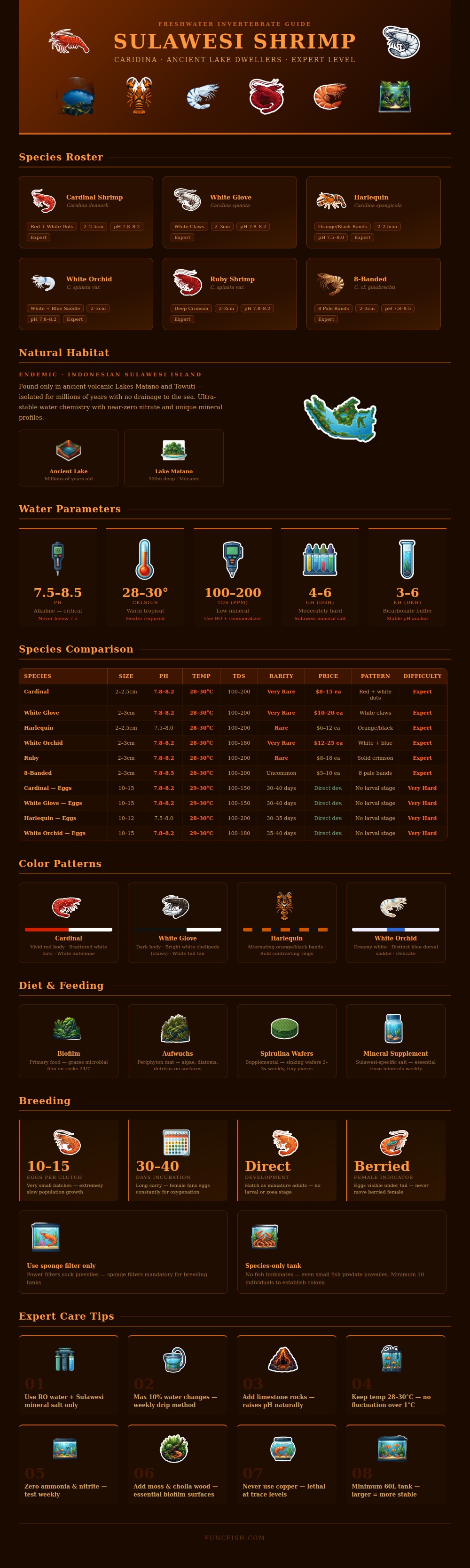
It requires very stable water conditions (high pH being a hard floor) with low nitrate and high alkalinity. These shrimp were naturaly adapted to live in lakes with no outflow/outlet to the ocean, which created an ultra-stable environment within those volcanic bodies of water. This explains why tap water won’t cut it. And you can’t “fix” things by tweaking water parameters either. A tiny change in your test strip readings will determines if colony succeeds or fails. You’re fighting millions of years of evolutionary adaptation.
Why Keeping Sulawesi Shrimp Is Hard
Getting started on the correct foot means picking the proper species. The Cardinal is a classic example of a famous shrimp that are difficult to keep. An alternative would be Ruby and/or White Glove. All three is finicky about change, want consistency (anathema to anyone keeping “hardy” fish) and hate to tolerate change. People tend to equate color with difficulty but it’s not true…it’s water chemistry. More important then what it looks like is stability.
This means it will take them several months instead of a couple of weeks to reach maturity. It also mean that they don’t go through a larval stage. Larvae are not technically considered juvenile. They’re mini-adults right out of the egg, which may be good news except for one thing: very few individual come from each clutch. Every fish counts toward the population. Any mistake with water changes can wipe out your hard work, and you might not even realize anything was wrong for weeks.
The key is keeping it as simple and ritualistic as possible. Use reverse osmosis water mixed with a remineralizer made specifically for Sulawesi species (standard salt lacks the right trace minerals). Perform weekly ten percent water changes using the drip method so you don’t shock the system. Keep the temperature constant at between twenty-eight and thirty degrees Celsius. Shrimp is sensitive bio-indicators; any aggressive heater cycling will send a message to the shrimp.
Frequently overlooked (and challenging) care: Shrimp are scavengers/ grazers that feed on detritus and biofilm; you don’t need to feed them expensive flakes, instead focus on feeding the bacteria that they’ll eat! Supplements can includes spirulina wafers (not too much!), but watch your water quality since overfeeding will ruin it far quicker than not feeding enough. Copper is deadly, even in very low levels present in certain algae treatments.
Use sponge filters exclusively (to protect juveniles from being sucked into power filter). Purchase at least 10 shrimplets initially (for genetic diversity!). Caring for Sulawesi shrimp is precise work that takes discipline. It’s not something where you’ll see instant results if you aren’t willing to fail at first. You should of known it would be hard.
When you see that first batch of white-clawed juveniles cling to the moss in their stable, alkaline environment, you understand the payoff. Now you understand. You’ve re-created a part of pre-historic Indonesia right in your tank. You’ve got some ancient lake dwellers alive. The work it took to keep up with water is worthly.