Swivel Rating by Line Test Calculator
Match swivel strength to main line, leader test, drag pressure, shock load, current, and swivel type so the terminal connection has enough reserve.
📌Scenario presets
⚙Swivel sizing inputs
Swivel rating forecast
Full breakdown
📋Swivel style reference grid
Barrel
Crane
Rolling
Ball Bearing
Snap
Coastlock
Three-way
Power
📊Reference tables
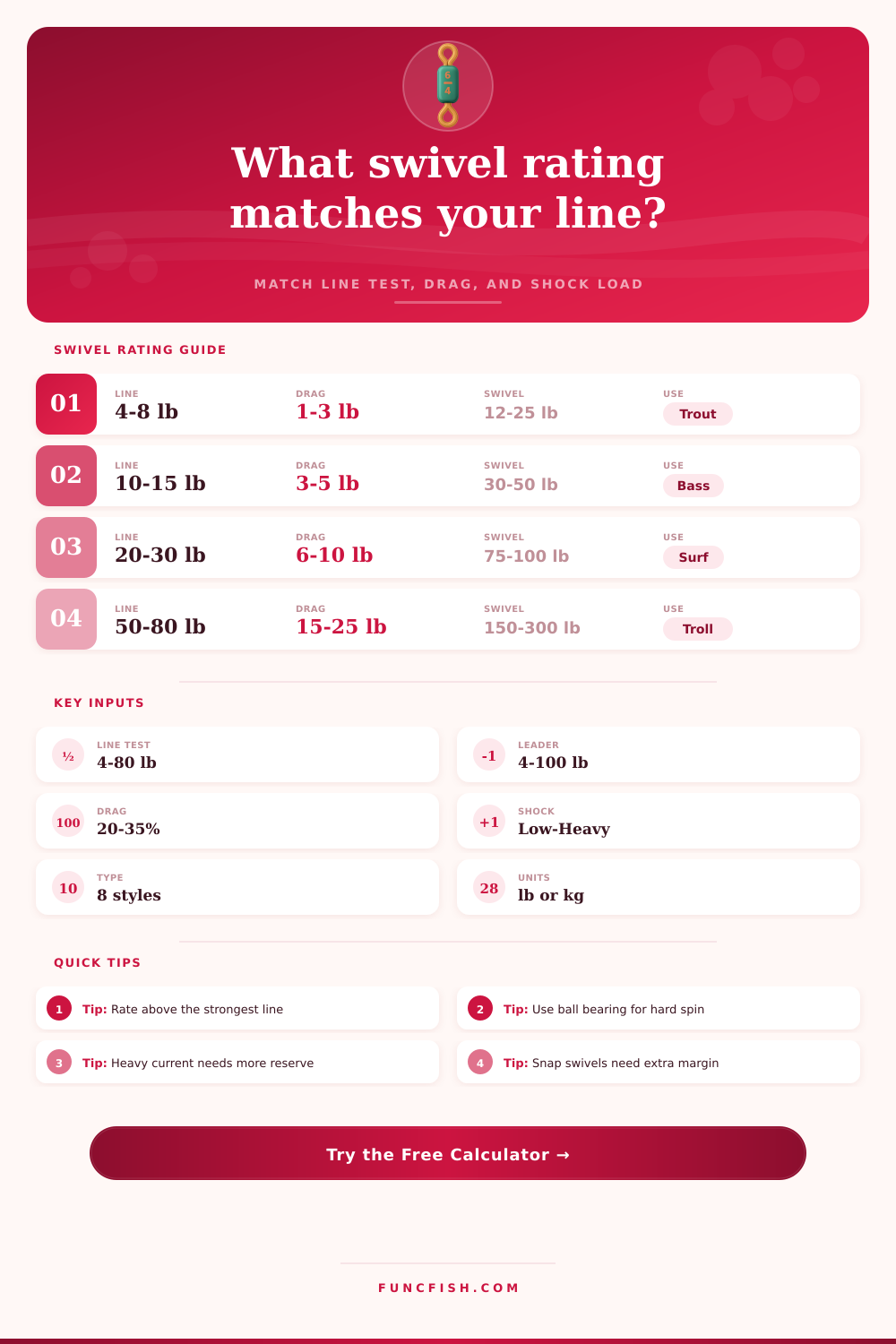
| Main line test | Typical drag | Baseline swivel | Common setup |
|---|---|---|---|
| 4-6 lb / 1.8-2.7 kg | 1-2 lb / 0.5-0.9 kg | 12-20 lb / 5-9 kg | Trout, panfish, fly leader |
| 8-12 lb / 3.6-5.4 kg | 2-4 lb / 0.9-1.8 kg | 25-40 lb / 11-18 kg | Bass spinning, walleye jigging |
| 15-20 lb / 6.8-9.1 kg | 4-7 lb / 1.8-3.2 kg | 50-75 lb / 23-34 kg | Inshore plugs, catfish bait |
| 30-40 lb / 13.6-18.1 kg | 8-13 lb / 3.6-5.9 kg | 100-150 lb / 45-68 kg | Surf, pike, heavy current |
| 50-80 lb / 22.7-36.3 kg | 15-28 lb / 6.8-12.7 kg | 200-300 lb / 91-136 kg | Trolling, big bait, offshore |
| Swivel style | Rating adjustment | Rotation control | When to step up |
|---|---|---|---|
| Barrel | Baseline | Low to medium | Spinner blades, spoons, or hard current |
| Crane | Small reserve | Medium | Long bait leaders or bait twisting in flow |
| Rolling | Moderate reserve | Medium high | Surf rigs, dropper rigs, bottom bounce |
| Ball bearing | High reserve | High | Fast retrieve, trolling, spoon wobble |
| Snap swivel | Extra margin needed | Low to medium | Hard hooksets or heavy plug changes |
| Power swivel | High reserve | Medium | Heavy braid, wire leaders, big fish |
| Fish class | Line window | Shock behavior | Swivel note |
|---|---|---|---|
| Panfish / small trout | 2-6 lb / 0.9-2.7 kg | Light, short runs | Use the smallest clean-turning size |
| Bass / walleye | 8-17 lb / 3.6-7.7 kg | Moderate surge | Size to the leader plus hookset load |
| Catfish / bottom rig | 15-30 lb / 6.8-13.6 kg | Steady pull | Three-way and rolling styles need reserve |
| Surf striped bass | 20-40 lb / 9.1-18.1 kg | Current plus sweep set | Use rolling or ball bearing in heavy wash |
| Pike / muskie | 30-80 lb / 13.6-36.3 kg | Fast strike, hard roll | Match wire leader and snap strength |
| Offshore pelagic | 50-130 lb / 22.7-59 kg | High strike shock | Favor power or ball bearing styles |
💡Practical checks
Tip: Size the swivel from the stronger of the main line and leader, then confirm the selected snap or ring is rated at least as high as the swivel body.
Tip: If the rig spins under retrieve or current, a higher-rated barrel swivel still may not solve twist. Step to rolling or ball bearing style.
A swivel is a component that connects a main fishing line to a leader line. The swivel must be strong enough to handles the drag, the current, and the physical force of the fish when it is being reeled in. Many people choose a swivel based off habit, or the strength of the swivel listed on an package.
However, choosing a swivel based on habit can cause the swivel to fail when the fish pulls against the line with great force. A swivel can fail if the body of the swivel break or if the knot holding the swivel opens. Therefore, the swivel must be strong enough to handle the expected physical force of the fish that will be caught.
How to Choose the Right Fishing Swivel
The calculator will provide the minimum strength of the line and the size of the swivel that should be used. The calculator take into account the specific conditions of the fishing setup. The parameters that must be entered include the test of the main fishing line, the strength of the leader line, the drag setting for the fishing setup, and the environmental conditions where the fishing will take place.
The calculator will provide one number that represent the strength of the fishing rig. This fishing rig strength accounts for the forces of the current and snap that may act upon the fishing line. The test of the line and the leader line indicates the strength of each of these lines.
The swivel must be at least as strong as the strongest line. If the strength of the leader line is stronger than the swivel, then the swivel will be the weakest link in the line. The drag percentage must be accounted for because this number represents the percentage of the strength of the line that the fishing reel takes up.
This allows for only the remaining line strength to act upon the fish when it is being reeled in. The shock and current strength settings is important to account for in the calculation of the strength of the fishing setup. The fishing conditions may include hard hook sets or fish movements caused by waves.
These can create a multiplier of the force of the line. This force the swivel must account for. The style of the swivel is another important factor in the strength of the fishing line.
A barrel swivel is a simple swivel that works best in calm water. A ball bearing swivel is a more expensive option that is better used in situations in which the lure experiences spin or the current in the water may cause the fishing line to turn. A barrel swivel may allow for line twist if the fishing lure is spinning during retrieval of the line from the reel.
In these situations, a ball bearing or rolling swivel should be used to eliminate line twist. The calculator can provide recommendations for different types of swivels so that the angler can determine which type of swivel will work best for their fishing situation. After the calculator provides the result of the strength of the fishing rig, the next step is to purchase the fishing hardware.
Purchase the next size of swivel above the minimum required to account for wear and tear on the swivel. Additionally, make sure the snaps and fishing rings attached to the swivel have the same strength as the swivel itself. If the fishing rig is exposed to powerful surges caused by the environment, such as waves, purchase a swivel that is larger than the recommended size.
This will ensure that the swivel is not the first component of the fishing rig to fail. The fishing line and swivel strength calculator cannot account for the quality of the knots used in the fishing rig or the physical condition of the swivels. If the knots are not tied correctly, they could be a weak link in the fishing rig.
Additionally, if the swivels are stored in a way that creates a bend in the swivel, it could be a weak link in the fishing rig. While the line strength calculator can make it easier for fishermen to determine the physical strength of the fishing rig, there is still some guesswork involve in the quality of the knots and physical condition of the swivels. Therefore, the angler is responsible for making sure that the knots are tied correctly and the swivels are physically in good condition.