
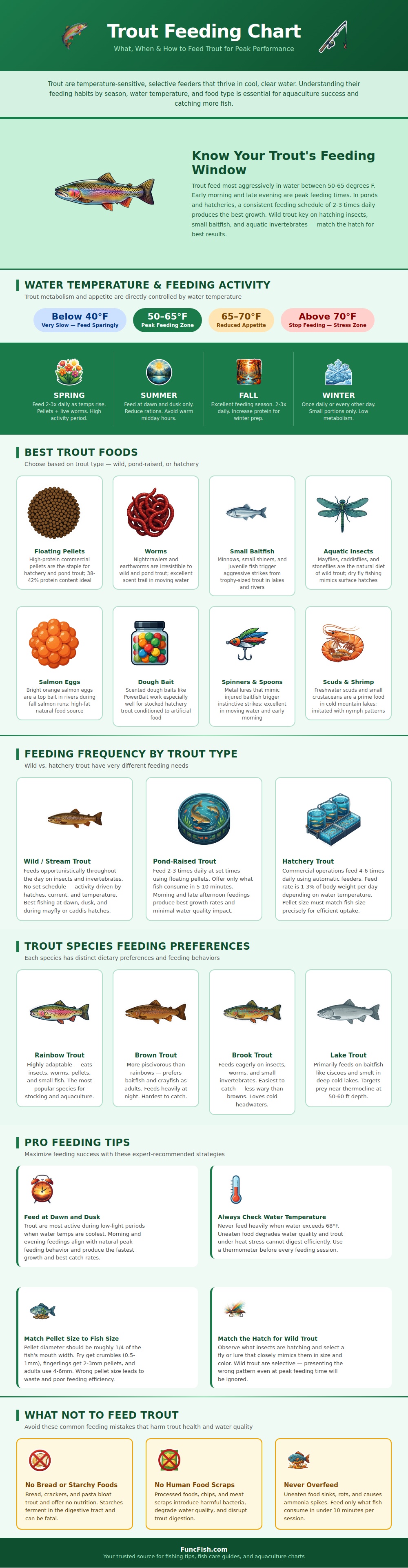
Trout are thermometers for water, and key to how they behave depends on the water’s temperature as well as the season and what you feed them. Ever wonder why they won’t bite during middle of the day when water warms up from sun? You aren’t doing anything wrong; it is simply due to physics. Fish have a very strict metabolism, and if you know their timing, you catch them. You don’t wait next to flat of still water, you catch them.
Here are those temperature points (chart above) in which trout gets hungry and shut down. Trout activity is at its best between fifty and sixty-five degrees Fahrenheit. In that range, their metabolism is good; they’re quick to eat a meal but don’t waste time digesting it. Below forty degrees everything slow down. They have trouble digesting even light meal since their digestive enzymes hardly work. And above seventy degrees they become stressed out. The warm water causes oxygen depletion and the trout suspends in deeper pools rather than actively hunt for prey.
How to Feed Trout in Different Seasons
Fishing in summer can feel tough because fish aren’t comfortable and don’t particularly care to look for food. Before you drop hook, know the season. In spring, warm weather stimulates both metabolism and aggression, so trout will strike aggressively or feed often. In summer: Be patient, only eat (or fish) during the cool periods of early morning and late evening. Fall: Another feeding frenzy ensues as trout fatten up for winter. In winter, exercise restraint.
Overfeeding in cold water are unhealthy for fish because they can’t digest everything they ingest, and rotting food increases ammonia content. This seasonal wheel shows the process, reinforcing point that consistent feeding is less important in cold water than proper timing. Knowing what to feed them is almost more important than knowing when to feed them.
Trout, especially wild ones, are selective and opportunistic. You need to know what’s hatching and what they’re focusing on. In most streams, this consists primarily of mayflies, caddisflies and stoneflys. “Matching the hatch” is basic biology. Unless bugs are floating on surface, your subsurface offerings won’t get any attention. Your hatchery raised trout have been conditioned to eat floating pellets or some other flashy dough bait. Since they’ve associated being there with getting an easy meal, they often feed heavly. The nature of the trout will dictate how you approach it.
A wild brown trout want a perfect imitation of baitfish while a stocked pond fish expects a crumb. Veteran anglers can also get tripped up with some easy errors that not only hurt fishery, but hurt your odds too. One common mistake is using bread. While seemingly innocent, bread does not nourish anything and bloats in belly, making the fish very uncomfortabely. Other processed human food are harmful due to bacteria introduced into the water, further deteriorating its quality. Over-feeding can be equally detrimental as providing inappropriate feed, according to the infographic. Unconsumed feed will sink to bottom and rot out, stealing oxygen from water. This is not good for any living thing in the stream, especially fish.
Trout fishing is a lot like farming: it’s an observational sport. Pay attention to time of day. Pay attention to water temperature. Know the dominant food source. Look for the clues; the fish will tell you what they desire. Avoid heat stress zones and respect their energy needs. Show them proper food at appropriate time. Your success increases when you sync up with nature. It’s then that you’re not fighting the conditions, but rather working with them.