
Because it’s a crucial shark nursery ground, Tampa Bay host a wide range of shark species. The average visitor, however, mistakenly believes they’re mostly swimming with great whites or bull sharks in the bay. The truth is, those aren’t the residents.
There is much more diversity, and it’s generaly not as frightening as popular media portrays. Learning about the creatures we share our waters with transforms our view of them. Fear fades into fascination, and what was once a simple day on the water becomes an educational trip.
We know what to look for in the water, so instead of just seeing a threat we see a pattern, and we begin looking for fins. That matters because lots of other species use these seagrass-rich, shallow areas to rear their offsprings. Once we understand which species of sharks live in this ecosystem, we can better appreciate its delicate balance among all its inhabitants.
That way, you’ll be aware of what to anticipate whenever you go diving or swimming. This is a breakdown of some of the more common sharks that live in these waters. They all serve a different role within their food webs.
Common Shark Species Found In Tampa Bay
1. Nurse Shark
You have your bottom-dwellers and those who spends time patrolling deeper channels. Knowing how to identify them means being able to interact with them safely. Nurse sharks dominate the shallow flats of Tampa Bay.
During the day it lie quietly on sand bottoms. Its brownish-grey color blends well with the seagrass and mud to match its surroundings. Its eyes is very small and its nose is blunt and short.
This gives it a friendlier look then its nature as a predator would suggest. A bottom feeder, this shark feeds mostly on mollusks, crustaceans, and small fish hiding in crevices. Divers often spot these sharks napping beneath ledges or in cave-like structures, where they seem indifferent to human activity.
They are not aggressive towards humans and are not likely to be, except perhaps when provoked. If anything they are a diver’s delight, a favorite target for underwater photographers due to their calm demeanor and lack of aggression. When moving around at night, their very large pectoral fins allows them to gracefully glide across the sea floor.
Mangroves (where there is plenty of cover) is where you’ll most likely spot them. Since they hunt at night, they stay hidden from boaters during the day, although divers regularly run across them while resting in schools. Seeing them means you’re visiting a healthy seagrass ecosystem that nurtures other small prey species.
2. Spinner Shark
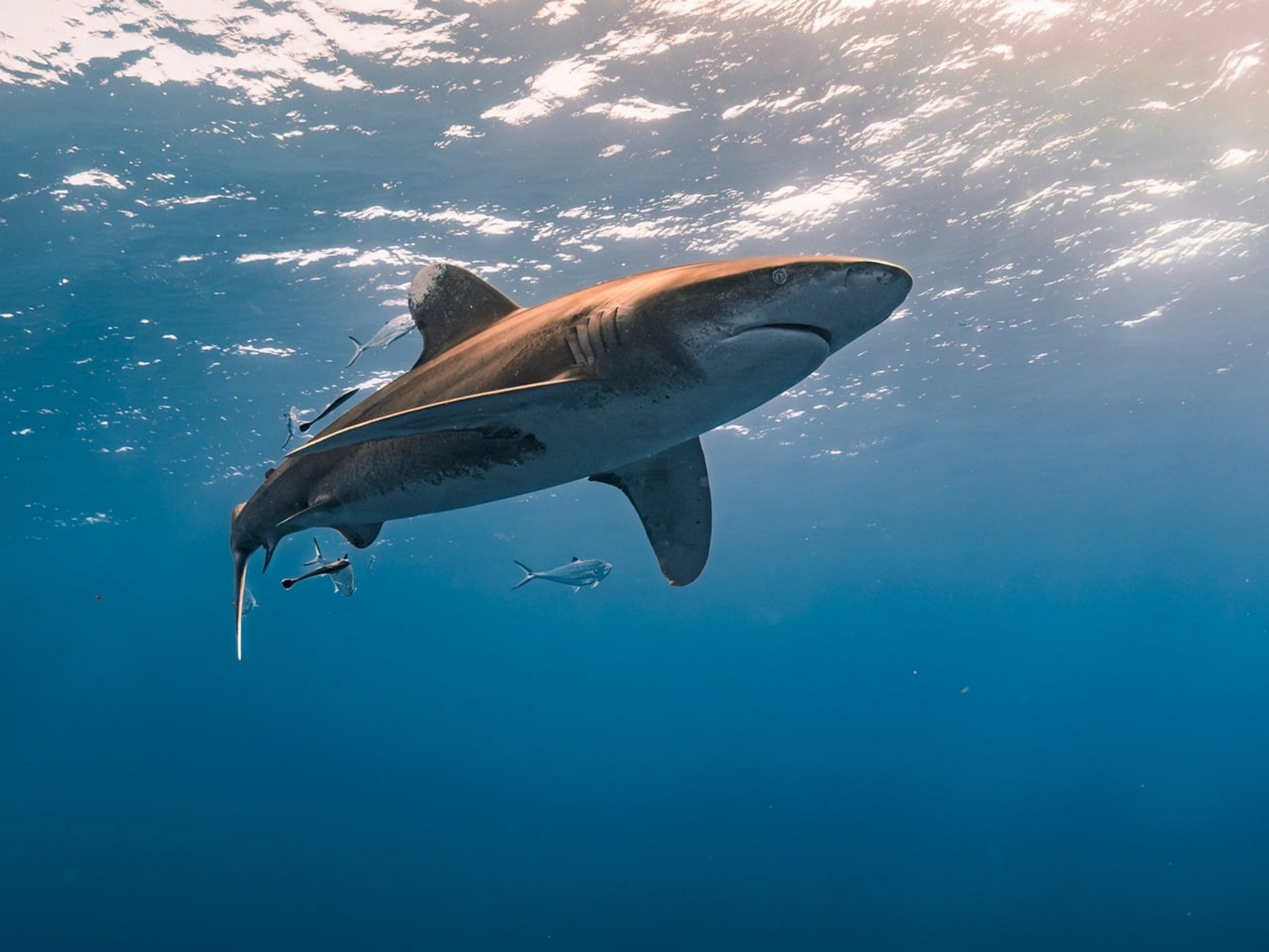
Spinner sharks are acrobats famous for leaping high into the air and putting on quite a show in the bay. They often jump straight up, then spin several times on the way down before splashing into the water. Scientists aren’t sure why they do it…maybe to dislodge parasites from their skin, or perhaps just scare off predators.
Either way, it’s pretty cool. These sharks is lean, mean fighting machines that actively hunt fast-swimming baitfish like pinfish and mullet. Unlike nurse sharks which tend to hang-out on shallow flats, you’ll typically see a spinner shark cruising through deeper channels.
It’s not uncommon to see spinner sharks around jetties and fishing piers. Bait fish congregate here and makes an easy snack for hungry anglers and sharks alike. Usually curious, spinner sharks don’t bother people too much (unless they get snagged by accident or if harassed).
If you’ve ever been on the water in Tampa Bay, seeing one breach the surface is a sight to behold! You’ll get a good look at their streamlined body and prominent dorsal fin.
3. Bonnethead Shark
Broad, rounded head that resembles a bonnet gives Bonnethead sharks a somewhat comical appearance. The distinctive head shape holds very large ampullae of Lorenzini, which are sensory organs called electroreceptors that pick up electrical signals from prey. Typically seen in shallow mangrove channels and estuaries, Bonnetheads pursues small fish and crabs. One interesting fact about this species is that they eat seagrass along with their normal prey to get nutrients from it.
This is quite unusual behavior for cartilaginous fish. Because they reach only a few feet long (typically not more than four), Bonnethead sharks aren’t that scary and are relatively small compared to most others. Frequently encountered while diving in shallow areas, they are typically seen in small groups or pairs hunting around the bottom.
You can also approach them closely without stressing the animal, so they are usually seen as a docile species. Spotting one is a unique opportunity. You get to see a shark that defies the stereotype of all sharks being purely meat-eaters, as this one lies somewhere in-between.
4. Blacktip Reef Shark
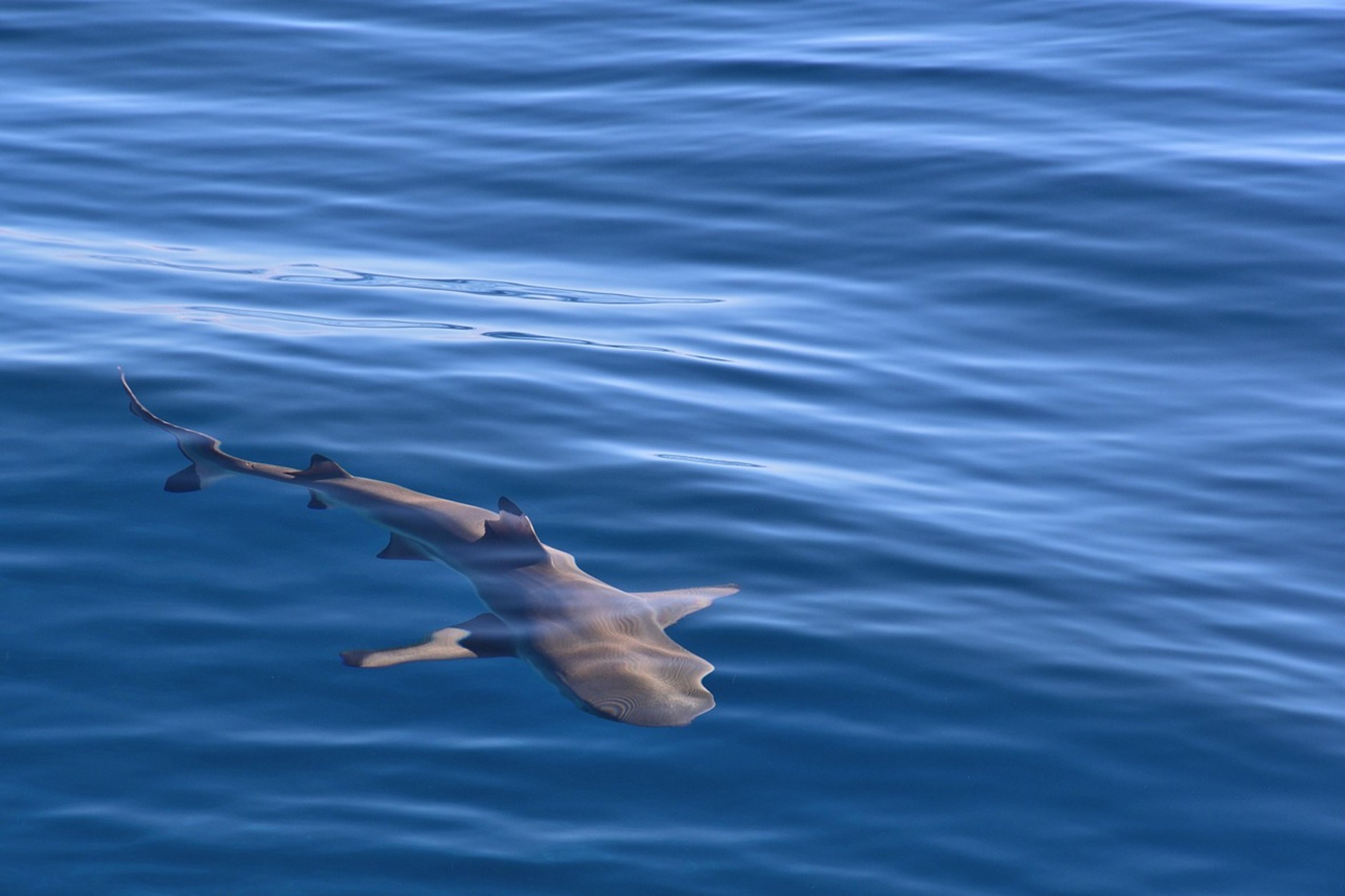
One of the most popular inhabitants seen in shallow water is the blacktip reef shark. These guys love to cruise the shallows close to the beach. They are known for their distinctive black tips on their dorsal and pectoral fins, which makes them easy to spot from the shoreline or even from a boat.
They usually hang around areas with scattered rocks and sandy bottoms, as this shark species like it a little warm. It’s not uncommon to have these sharks follow bait boats hoping to snag some stray scraps or the smaller fish that are drawn to the chum. They’re typically shy but can become more bold over time when they learn your closeness means possible food drops.
With their quick reflexes, they will dart in and out of seagrass beds to hunt by ambush. Often times you’ll see them ride the bow wave of slower moving boats. Blacktips is curious opportunists.
They are not aggressive towards people but are still very much wild animals. The encounter is often brief as they give you just a flash of their slender profile. They’ve adapted well to both remote bay areas and city environments.
Because of this, they do well throughout all parts of the bay.
5. Sandbar Shark
Larger, robust Sandbars sometimes school loosely in deeper water, often hunting near the middle of the water column and near the surface. Since they are targeting prey such as squid and fish they tend to have good camouflage from both below and above.
They are also well known for their tolerance of wide ranges of salt levels, enabling them to easily travel from brackish bays to more open water. Sandbar sharks has large potential. They can become very large unlike their smaller cousins, which means they can be a threat if provoked.
They typically do not hang out around crowded beaches but prefer more open water instead. If you see them from afar, it is much better since they put on a great show when schooling. Seeing one or more of these sharks means there is usually something deeper in the channel drawing in bigger prey.
The classic image of a shark is a menacing predator like a sandbar shark, so it is no wonder that most folks picture them that way. Each of these sharks add to the rich variety of Tampa Bay’s marine life. Knowing about them makes what might otherwise be just another fishing trip into an encounter with nature.
Give them their space and hopefully they’ll still be sharing this habitat with us.