
By day forty of your shrimp growing, they’re just not getting bigger as quick as you hoped. You get a creeping sense that something is wrong with the feeding plan or water chemistry. What did I miss?
Most farmers monitor growth, but they don’t fully understand how to fine-tune variables, such as adjusting feed levels without considering temperature. They adjust protein without considering dissolved oxygen. From larval stage through harvest it all turns on maintaining balances. Shrimp are small, small enough to be missed. The result? Early mistakes.
How to Feed Shrimp and Keep Water Clean
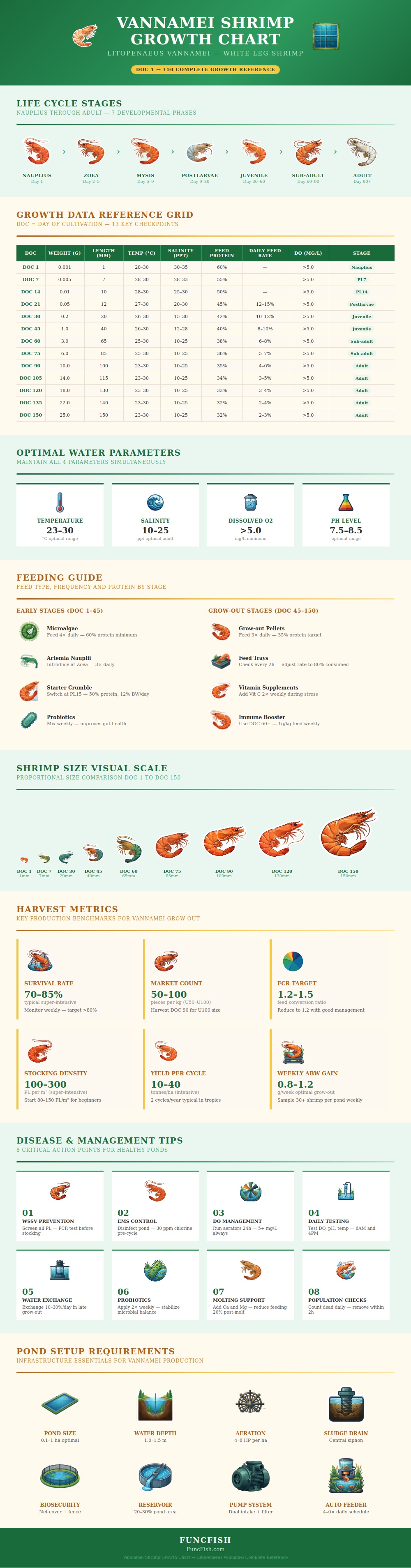
You begin with nauplii that resemble dust motes and they need special conditions. The change from nauplii to postlarval stages require less dietary protein and lower salinity, as indicated by the chart above. Why is this important? Young shrimp has tiny guts; they can’t digest complex nutrients well. Feed them like adults and what happens? You waste money because there food sinks and rots. Rotting food poisons water quality you’ve labored to create.
And that’s where the aquaculture logic comes into play. Early on you need a lot of protein to build tissue. But once past day thirty, it’s all about maintaining bulk and health. Overfeeding occur because people believe that more equals bigger. Wrong. In this stage, excess feeding results in ammonia spikes and poor water clarity. That stresses the shrimps and will stunt their growth. The key is having the discipline to resist adding more pellets simply because you can see them on the bottom.
Growth results also depend heavily off water parameters. For example, regarding temperature, maintaining a constant temperature isn’t as important as achieving optimal conditions as long as you’re inside the ideal range. Dissolved oxygen (the line at 5 mg/L) is also critical (see chart). So your aerator needs to be working well when it’s warmer outside (especially on those warmer nights). It’s not enough for surface of tank to appear peaceful; shrimp consume most of their oxygen from the bottom up. Having plenty of O2 help them use their energy to get bigger and shed their exoskeletons during molting.
By day ninety things change as shrimp become adults/sub-adults. At this point management decisions either pay off or create problems. Managed properly, the shrimp can tolerate rougher conditions, but you’re not talking about those fragile larvae anymore. About now you should of also start seeing how big the individuals are at harvest on visual scale.
To avoid the stress of overcrowding, you must follow the stocking density. Don’t keep them too long and face lower returns, but make sure you balance that against getting them to market at the right size. The key to successful farming is keeping the rhythm going smoothly; this applies as much to vannamei as any species.
Life in water is a delictate thing; you are shepherding something that has a schedule but not necessarily one of yours. When you know how each step fits together, you shift from reacting to things breaking down and instead prevent them by anticipating what comes next. The nauplius you started with was part of a bigger picture, just waiting on you to provide what he require.