
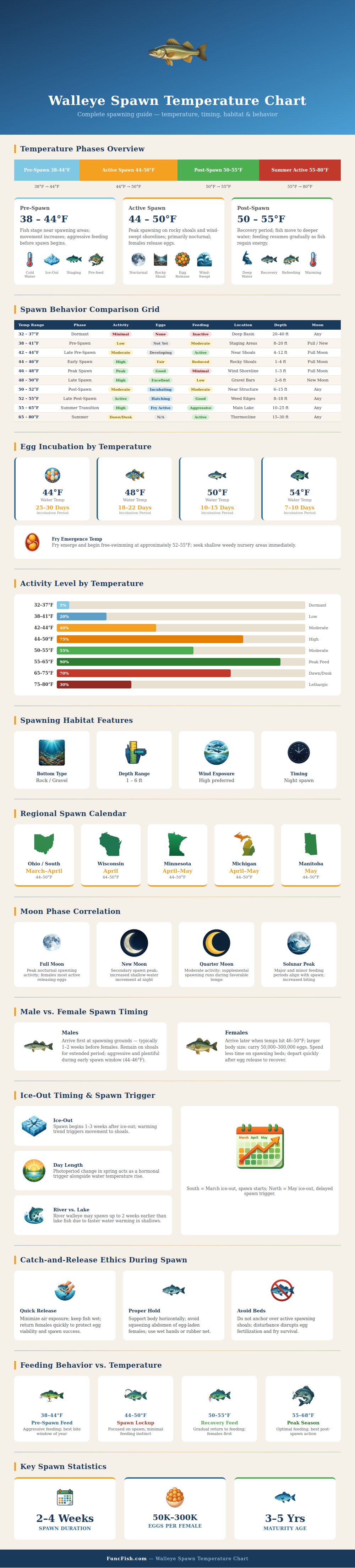
Are you fishing in the spring? Watch the water temp, not the calendar Most of us plan our trips around dates. That’s wrong. Lakes warms at their own pace. Sunny March weather in Ohio will get lake to your target temperature weeks earlier then cloudy April weather in Manitoba. The truth is that days on your cell phone aren’t the trigger; it’s water temperature versus bottom structure.
Once you learn what those changing degrees do to walleye, you quit guessing where they are and begin knowing where they will be. That mental shift make all the difference for the entire trip.
How Water Temperature Changes Fish Behavior
Even if there are no eggs on the bottom yet, it starts well before that. As soon as ice is gone, the fish wake up out of their wintertime sleep but they aren’t ready to move into rocks just yet. They’ll first move towards deeper basins and then when that water warms slightly, they’ll start coming towards shallow stuff and stalling around cover.
The prespawn period is perhaps the hottest bite of the whole year; these fish is wide open and are actively feeding to build up energy reserves before spawn so they’re chomping on anything you put in front of them right now. They’re active, aggressive and they don’t mind ripping your face off with either a jig or live bait rig. But most folks completely miss this window because they go straight to the rocks in the back. They haven’t learned about the fishs staging behavior prior to the real deal.
That brings us to the crucial moment when things change drastically. With water temps reaching the mid forties, the focus become all about reproduction. Activity will spike in this very small range, as shown by breakdown on the chart above. It will then taper off once more. First males shows up and often spend a week or two prior to females showing up in force. They’re abundant and aggressive, so if you know what to look for, you can catch your share.
The females show up soon after with a full load of eggs. They’re sluggish and not very interested in eating. The desire to feed pretty much evaporates during prime spawning hours which are typically late evening or nighttime under a full moon. It’s all about biology now, just getting those eggs out there and fertilized on a wind swept shoreline or a rocky shoal. A feeding walleye is hard to come by at this time. The fish have no interest in anything but the business of reproducing.
However, behavior turns right around nearly instantly after it’s over. When water reaches temperatures above fifty degrees, the females will drop off those shallow beds fast and go recuperate out deep. Not only do they need time to recuperate, but they also has to pig-out on some food to replenish all the energy used while spawning.
Unlike the pre-spawn frenzy, this post-spawn time period present a new type of opportunity. The fish aren’t quite as aggressive yet, but they’re far more consistent where you can find ’em as they slide along transitional areas and weed lines. Because they’ve just exerted themselves spawning, you’ll want to slow your presentation down and provide them with an easier meal. It’s a small change, but it separates good anglers from great ones.
You should of slowed down earlier too. These are delicate moments, so being ethical is vital now. A female that has not fully developed her eggs will be injured if handled improperly, which means no negotiation on quick release. Support the fishs body while keeping it in water, but do not squeeze its abdomen. Staying out of the area you anchored over top of the active beds will also protect fertilization process and prevent ruining years worth of habitat work in a matter of minutes. Your goal is to catch your limit, release the other unharmed, and leave the fishery healthy for coming seasons.
In the end, understanding walleye spawn temps comes down to precision and patience. It is more than just fishing for fish; it is fishing for a time of day, a time of year, and a moment in a fish’s life. And when you can sync up your strategy to their biological clock instead of yours, everything becomes clear.
Ice melts off, the water warms and the pattern shows itself if you’re willing to wait on it. Actually, things gets clearer once you see it.