Anchoring Scope By Depth Calculator
Estimate anchor rode length from effective depth, tide rise, bow height, rode material, bottom, wind, current, boat length, and swing-room limits for fishing stops and overnight sets.
📌Anchoring presets
⚙Anchor set inputs
Measure from the anchor drop point to the nearest shoal, dock, boat, bank, reef edge, or channel boundary.
Anchoring scope results
Full calculation breakdown
🔗Rode and anchor gear comparison
Nylon + Chain
All Chain
Rope Only
Long Chain
Kayak Line
Stern Utility
Heavy Set
Limited Room
📊Scope ratio reference table
| Anchoring use | Common scope | Best rode match | Condition notes | Pull-angle goal |
|---|---|---|---|---|
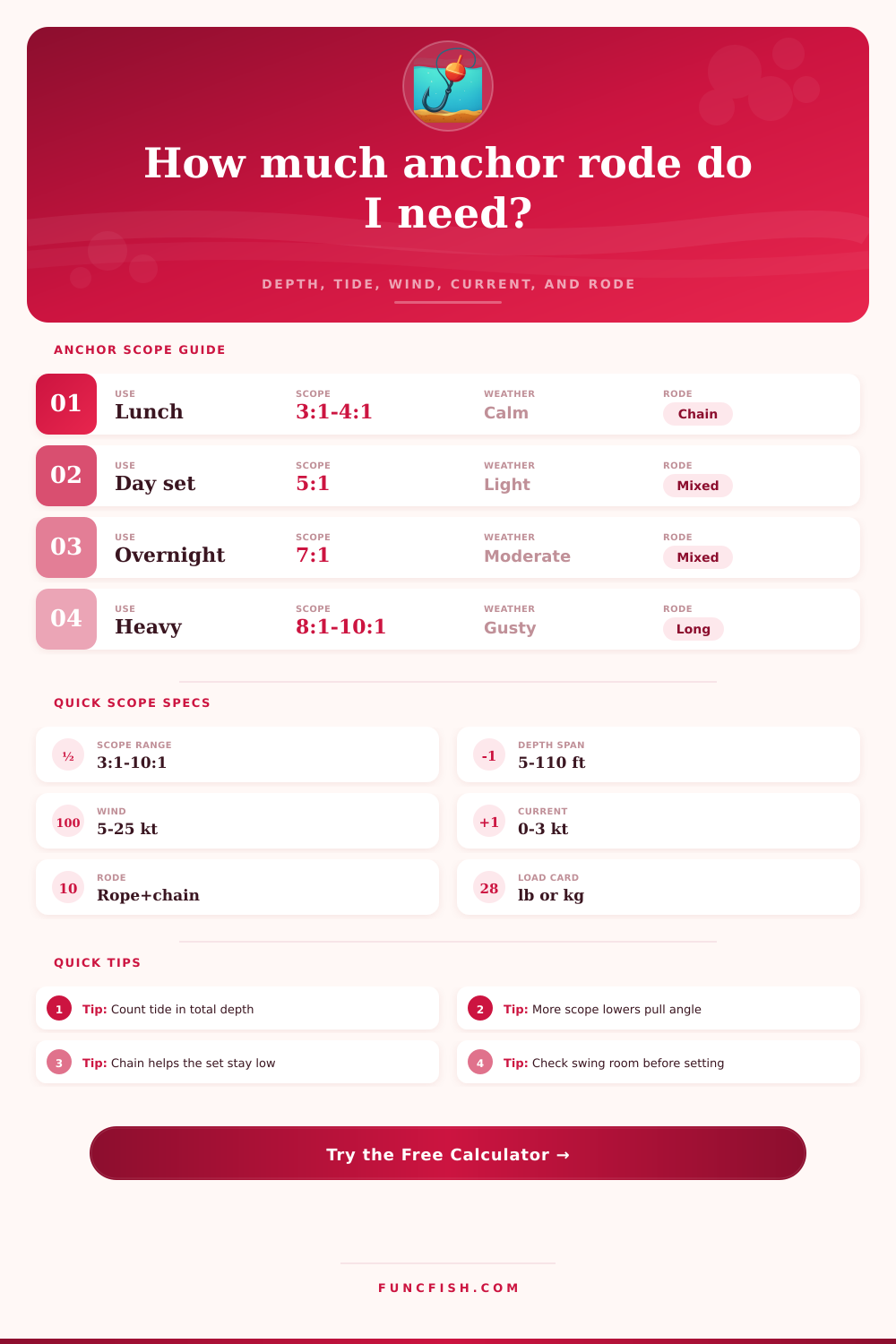
| Lunch hook while fishing shallow coves | 3:1 to 4:1 | All chain or rope-chain | Calm, short stay, watch aboard | About 14 to 19 deg |
| Normal day fishing set | 5:1 | Nylon rode with chain leader | Light wind and modest current | About 12 deg |
| Overnight or unattended sleeping set | 7:1 | Nylon-chain or long-chain mix | Extra tide and wind allowance | About 8 deg |
| Windy chop, reversing tide, or poor bottom | 8:1 to 10:1 | Long chain, snubber, chafe guard | Requires large swing room | About 6 to 7 deg |
| Crowded marina fairway or tight river bend | 4:1 to 5:1 | More chain and careful watch | Lower scope raises anchor load angle | About 12 to 15 deg |
⛓Chain length guidance table
| Boat class | Boat length | Common chain leader | Metric equivalent | Where it helps most |
|---|---|---|---|---|
| Kayak, canoe, small jon boat | 10 to 16 ft | 3 to 6 ft | 0.9 to 1.8 m | Keeps a tiny anchor from hopping |
| Bass boat, flats skiff, bay skiff | 16 to 22 ft | 12 to 22 ft | 3.7 to 6.7 m | Sand, mud, grass edges |
| Center console or walleye boat | 22 to 30 ft | 22 to 35 ft | 6.7 to 10.7 m | Inlet chop and reef current |
| Pontoon or cabin fishing boat | 24 to 36 ft | 30 to 50 ft | 9.1 to 15.2 m | High windage and night sets |
| Offshore bottom-fishing boat | 30 to 45 ft | 45 to 90 ft | 13.7 to 27.4 m | Deep water and surge |
🌊Bottom and load adjustment table
| Bottom type | Scope adjustment | Holding behavior | Rode concern | Calculator treatment |
|---|---|---|---|---|
| Clean sand | 0.0 | Fast set and predictable reset | Normal chafe control | Baseline scope |
| Soft mud or silt | +0.25 | Can need time to bury fully | Mud can mask drag marks | Small scope increase |
| Shell, gravel, mixed bottom | +0.25 | May skate before biting | Sharper chafe points | Small scope increase |
| Grass over sand | +0.50 | Flukes may foul with weed | Higher reset risk | Moderate scope increase |
| Rock or rubble edge | +0.25 | May wedge rather than bury | High chafe and snag risk | Small scope increase |
| Fragile hard bottom | +0.75 | Holding can be uneven | Avoid dragging across bottom | Conservative scope increase |
🐟Fishing target and boat setup comparison
| Fishing target | Typical anchor depth | Boat and rode pattern | Wind or current concern | Useful starting scope |
|---|---|---|---|---|
| Bass on lake points | 6 to 18 ft | Low bass boat, nylon-chain | Gusts swing the bow off casting lanes | 4:1 to 5:1 |
| Redfish and trout in tidal creeks | 5 to 14 ft | Skiff or kayak, short chain | Current can reverse at tide turn | 5:1 to 7:1 |
| Walleye on windblown points | 12 to 28 ft | Deep-V boat, rope-chain | Steep chop creates snatch loads | 6:1 to 8:1 |
| Catfish on river ledges | 8 to 30 ft | Jon boat or pontoon, mixed rode | Current dominates over wind load | 7:1 to 9:1 |
| Snapper or grouper on reef edges | 30 to 120 ft | Center console, long chain | Depth multiplies rode and swing room | 6:1 to 8:1 |
| Striped bass in inlet rips | 18 to 45 ft | Open boat, strong chain leader | Current shear can pull sideways | 7:1 to 9:1 |
💡Anchoring calculation tips
Depth tip: Scope uses the vertical distance from the bow roller to the bottom, not just the number on the depth sounder. Add expected tide rise before multiplying by scope.
Swing tip: A correct rode length can still be unsafe in a tight spot. Compare the calculated swing radius with nearby boats, docks, banks, ledges, and shallow water.
Dropping a hook in some seemingly benign looking water isn’t enough. Tying off 30 feet of rope because it seems secure doesn’t mean you won’t be aground when you awake or pushing up against a dock as you drift away. It’s common. The problem most times isn’t faulty gear. It’s poor math; scope is much more than just a rule of thumb.
Scope are a geometric compromise between your boat, the bottom, and the forces that push and pull at you. If you can feed it correct variables, the calculator does the rest (above). Most folks only use depth of water, and that is where there problems start. You need to add height from the water line to top of your bow roller plus the anticipated amount of tide rise while you’re there.
How to Calculate Safe Anchor Scope
For example, a two foot swing matter just as much as your starting depth when anchoring for four hours in a tidal inlet. If you don’t account for this, your anchor will pull up at a steeper angle than intended. And steep is not good for holding power. A steep angle will lift the fluke and it will fail to drag it across the bottom to set it correctly.
Current and wind cause lateral loads and pulls the boat off the drop point. Your tool factors in windage relative to boat type. High side pontoon boats and cabin cruisers offers much more sail area compared to low-profile of a bass boat. If you’re not catching as much wind, you requires less scope to hold equal load.
Current’s harder because instead of wind striking the superstructure, current pushes up from below, often resulting in a different drag profile. To prevent surge from pulling anchor upward, you may want more chain leader so that rode lays flat against bottom in strong current.
So what happens when it grabs bottom? That depends on what’s below. If it’s clean sand, it will set fast and be forgiving. Muddy bottoms, while deceptively soft at first, hold well after the fluke has dug deeply into them. And then there’s grass and weeds, which is a whole other story. Grass and weeds can foul your anchor or provide a slippery layer, so you’ll have to go heavy with scope to ensure anchor digs through vegetation to the hard bottom underneath. All of that is spelled out by substrate type in the table on the page along with recommended adjustments.
Another often-overlooked variable is chain length. A short piece of chain leader leads the anchor down into right position when it hits the bottom. A longer stretch of chain add weight to hold the rode in line. This keeps the hook point closer to surface and minimizes the angle of pull on the anchor shackle, which is critical to holding power. Using nylon rope also contributes to shock absorption from wind gusts, protecting the anchor from being snatched free by sudden loads. If you mix the two, you get best of both worlds (assuming enough overall length to maintain a shallow angle of pull).
Nobody likes to think about swing radius, until it’s scraping paint off another hull. You can’t outrun geometry in a crowded anchorage, even if you get your scope calculations right. If conditions call for seven-to-one and all you’ve got is five-to-one, then you’re either moving or taking on more risk. There’s no magic formula that makes room from thin air. Every time you drop the hook you should of balance convenience versus safety. The difference between a savvy boater and someone that will learn it the hard way is knowing his or her limits.
Include the bow height on the depth sounder. Account for the tide. Keep an eye on what’s going on down there besides up here. You are not going to go anywhere. You want to be sleeping like a baby as the tide comes in and the wind changes direction. Drop the hook, trust the math, and then let the day play out without checking behind yourself every ten minutes. Letting the anchor do its job mean respecting how it works.