
There is a certain kind of panic that sets in when you’re sitting there in your boat, on your knees, and you see bass swimming around in the grass and you remember you don’t have any idea which hook fits which size of the worm you’ve got rigged up. It’s confusing for both new guys and seasoned vets alike.
People purchase tackle not based off how it performs but how they hear it “works” and before long, their tackle boxes has a bunch of junk in them that doesn’t fit together or was only used halfway. Something simple like a chart of bass fishing rigs make sense of all of this. It also takes away the guesswork of what does and doesn’t work without adding anything else to the mix.
A Simple Guide to Bass Fishing Rigs
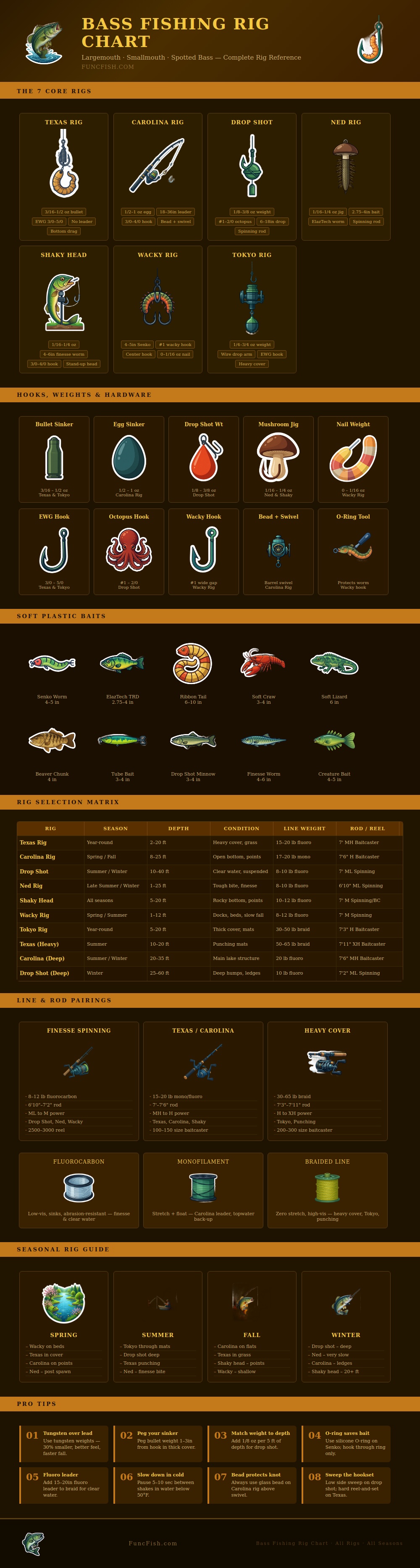
You can boil down most fishing scenarios into one of these seven basic rigs (see chart above). That doesn’t mean you have to learn them all immediately, but knowing the “why” helps you fish more effectiveley.
The Texas rig is weedless. This one is a staple for its ability to slip out of thick cover with an offset hook and bullet weight. It slides over and under limbs, logs, and other submerged junk without getting stuck on snags. And as infographic indicates, this rig fishes all year long. Why? Because there’s always a bass in the grass.
It is as much about psychology. You need confidence in your equipment to get out of trouble so you can focus on your presentation.
What’s unique about the drop shot rig? It’s all about suspending finesse. Even when fish are suspended deep or inactive, the rig keep the bait up out of contact with bottom in the strike zone. According to the chart, it is effective in clear water during both winter and summer. You also need different tackle, like a more sensitive spinning rod and fluorocarbon line, which require a lighter touch. Why does that matter? Because rather than violent strikes you’re looking for subtle taps so sensitivity is key. That little change can mean adjusting the hook set timing.
A recent craze is the Ned rig. It is essentially a short stringer of bait on top of a small mushroom jig head. This look like a creature or minnow and is something reluctant bass won’t refuse. When it gets tough, go small and slow. As you can see from the visual guide, this rig goes hand in hand with smaller rod and light line. This is because you want the rig to have a natural fall in the water. You want to look like an easy meal not a threat.
This will also help plan out what to use seasonally. You’ll see when it is time to switch from using a punch rig in heavy cover to using something lighter, like a wacky rig. Spring finds bass moving shallow and bedding up, which makes the slow falling wacky rig good for them. As the heat of summer settles in, fish push back into thicker mats or deep water structure where something with more penetrating action like a Tokyo rig may prove necesary. Wire drop arms allows it to penetrate heavy cover without severing line on stumps.
Other hardware selection matter as well. Even if your weight is small, tungsten weights will fall faster then lead and give you a better feel for the bottom. Another seemingly small detail makes the difference between getting bit or not when fishing deep or in a current. Beads are another tip from the guide that help protect knots, and dampen any noise that might spook wary fish on Carolina rigs.
Match the method to the moment. There’s no one size fits all for fishing. If you’re going to punch in lily pads but then try to drag a finesse worm down some rock points, you’ll run into trouble. Having a mental map of the tools will help keep you out of trouble. Trust the gear, keep it simple, and let the water tell you what it wants to eat. You should of used this guide earlier.