
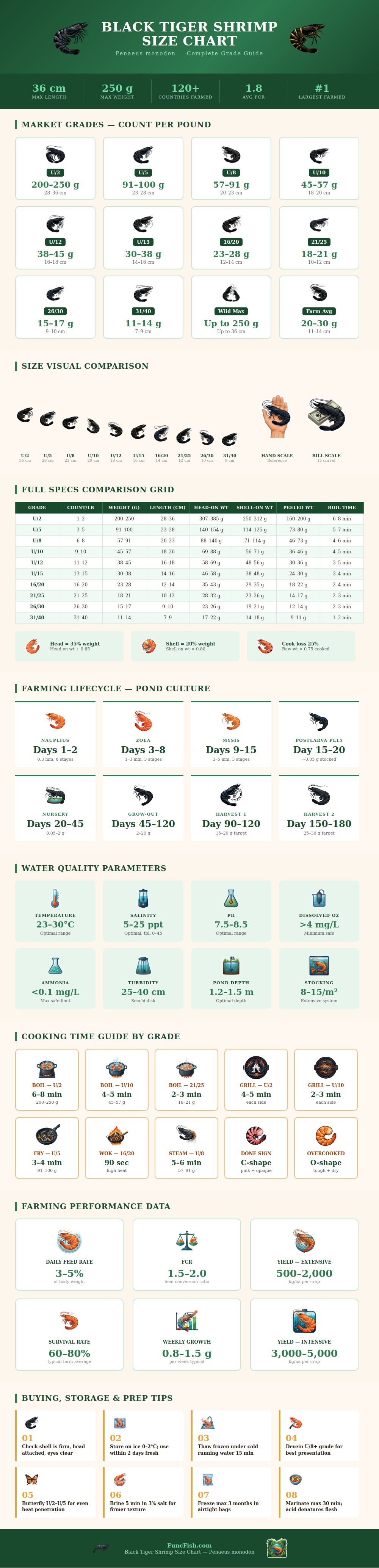
But what happens when you look down at your shrimp and they’re bigger than recipe calls for? You panic; you see them curling up as they shrink. You know that all those seconds you was waiting became critical minutes. And that’s where the black tiger shrimp size chart comes into play. Why should it matter to anyone? Because it has less to do with numbers on a spreadsheet different than the difference between tender meat and tough results. Here’s where the visual guide realy comes in handy. It lays out grades in a clear way that goes from huge U/2s to tiny 31/40 sizes.
You know most home cooks don’t pay attention to it: Once shucked, who cares if they’re all from one size or another, right? Wrong. Here’s why: The chart shows how weight relate to yield and cooking time… Influencing your approach entirely. A higher-count item like U/5 or U/10 will require different treatment than those larger U/2 or U/3s you pick up. They’ve got more muscle fiber and a tougher shell, capable of handling higher temperatures without disintegrating on contact.
Why Shrimp Size Matters for Cooking
With that in mind, however, note that small sizes don’t take long at all. A 31/40 will cook with frightening speed as soon as your pan is hot. That’s why treating a 31/40 like a U/8 would of resulted in dry, overcooked shrimp. Note the contrast: It takes more than six minutes for a big shrimp and just under two minutes for a little one. That’s why infographic points out that cooking time varies: Shrimp size determines whether you butterfly tail (for an even cook), how long to marinate, and when to devein.
The other side of this is biology, something few consumer think about with these critters. Commercially available black tiger shrimp, also known as Penaeus monodon, are biggest farmed shrimp. In nature they can grow to weigh as much as 250 grams. On farms, they are managed for accurate growth phases and water quality. Based off their life cycle information, we know these shrimps have different type of larvae before farmers put them into ponds. Oxygen level, salinity and temperature is carefully monitored by farmers. Why? This is done to ensure consistent sizes in commercial grades.
Regardless of grade, when you select your shrimp, look for firm shells and clear eyes. Storage practices matter, too: Fresh shrimp should be kept in the refrigerator, on ice and close to freezing (don’t thaw them). Use within two days; if freezing, pack in an airtight bag to avoid freezer burn, which destroys texture fast. Under cold running water, defrosting shrimp is effective and keeps them more intact than leaving them on counter, where bacteria will grow.
Use your selected size grade to determine how to cook. Larger-size (U/8 or even U/5) shrimp will be thick enough that they won’t dry out from charring on the grill. Smaller sizes, however, runs the risk of being overcooked quickly in high temperatures; these are best gently steamed or tossed quickly in a hot wok. You’ll know when they’re done when flesh is no longer translucent and instead forms a loose C-shape. When the protein is tighter then that and more like a tight O, it’s overdone, and you won’t be able to recover.
Respecting the ingredient starts with knowing its grade. Cooking becomes less guesswork and more control when you know exactly what heat will do to any given piece of meat. Whether you’re stirring some little shrimps into your curry or boiling up big old tails, time is determined by size. Once you get this down, it’ll make sure those shrimp comes out tender when you need ’em, and that kind of confidence is priceless in the kitchen. Knowing your grade before you turn on that stovetop takes just a couple of seconds, it’s worth it.