
You sit down at a high-end sushi counter, and in front of you, chef slices into deep red fish. Is it smooth and heavenly? Is it tough and metallic?
In either case, the fate of the fish was determined by how it was treated from its time on the ocean floor up to the moment it met the cutting board. Post-harvest protocol and fat distribution determines bluefin tuna grade. That’s why two pieces can look near identical to untrained eye but cost five times more.
How Bluefin Tuna Is Graded
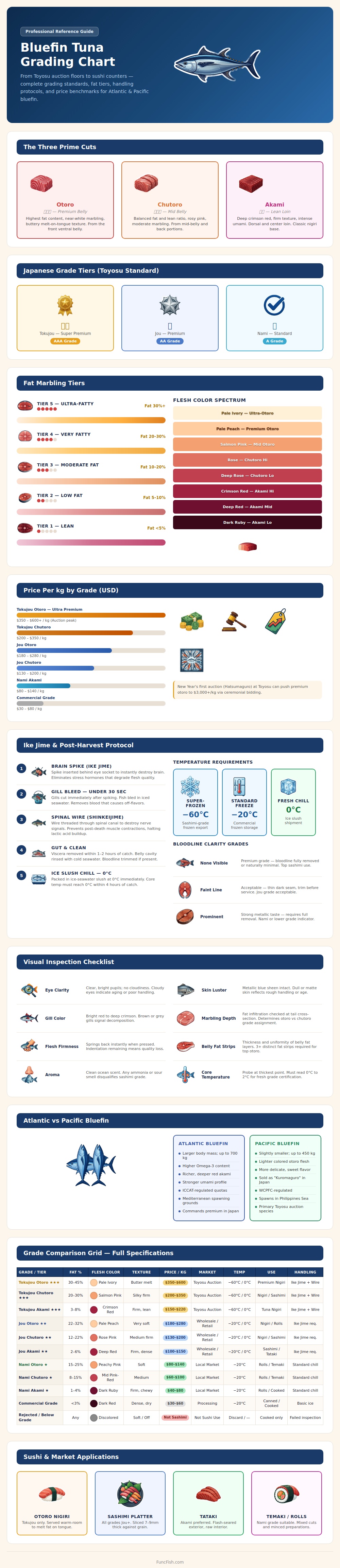
What determines pricing, texture and everything else, even how it’s broken down visually? The fish is separated into three major area. The belly (otoro) has so much fat that it becomes almost see-through and turns the meat a pale ivory. The midsection (chutoro) has a good blend of marbling and lean muscle. Finally, the loin (akami) is the leanest section; it is deep crimson and firm, providing maximum umami without any fat covering up the flavor.
Although most folks think the deeper red equates to more freshness, in this case it simply denotes leanness. Grade is determined by fat content, not by how intensely red the fish is.
Then there’s Japanese grading standards. They throw a curveball that confuses many western buyers. The system divide the fish into three categories: Tokujou (super premium), Jou (premium) and Nami (standard). At an auction such as Toyosu you’ll notice these designations on the fish. Each one are carefully inspected by bidders, who look for tiny imperfections in the gill color or eye clarity.
Dull skin or a cloudy eye mean the fish is old or wasn’t handled well which instantly reduces its value. This is the reason. It means it wasn’t stunned properly and put in cold storage right away. Even a small increase in temperature in transit cause enzymes to break down the flesh. That rich marbling becomes mush.
The highest quality requires no compromise when it comes to post-harvest methods. For proper Ike Jime, spinal cord must be severed and brain spiked within seconds of capture. That’s how you remove stress hormones that will ruin the fish’s meat by breaking down its muscle fibers and creating an environment that promotes bacteria growth.
Immediately after bleeding and gutting, the fish should quickly chill to near freezing temps. Most often this means packing it in ice slush but not yet freezing solid. Better yet, super-freeze it at minus sixty degrees Celsius which keeps cell structure intact compared to regular moddern commercial freezers. When thawed out, tiny ice crystals won’t tear up the delicate fat deposits.
Even though they have the same name, there is a difference between Atlantic and Pacific bluefin. The former tend to have a stronger savory taste and deeper red-colored akami (also called fatty belly) while being on average larger. Because of regulation quotas and a certain scarcity, they’re also priced accordingly at times in Japan where they’re in demand.
The Pacific bluefin has a more delicate flavor profile, slightly sweeter, and a lighter color of flesh. For those more subtle dishes such as sashimi platters, this might just be preferred by some diners. One isn’t necessarily better than the other, but they play different role on the plate. Knowing this will help you talk to a knowledgeable sushi chef and make the best choices when ordering.
When grading tuna, there’s a certain physics of preservation and respect for life of an animal at play. Otoro is worth paying for because of its fat. Chutoro is balanced by its fat content and price. Akami is intense. But all that counts as quality depends on how fast and cold the chain of custody is.
The next time you fork over big bucks for some pricey nigiri, consider how far it came to be pristine. That buttery melt in your mouth is owed to proper treatment, careful temperature controls, and exact timing, from the boat to the bowl. You should of looked at the fish first.