🐟 Carp Out-of-Water Survival Time Calculator
Calculate safe air exposure time for carp based on water temperature, fish size, stress level & handling conditions
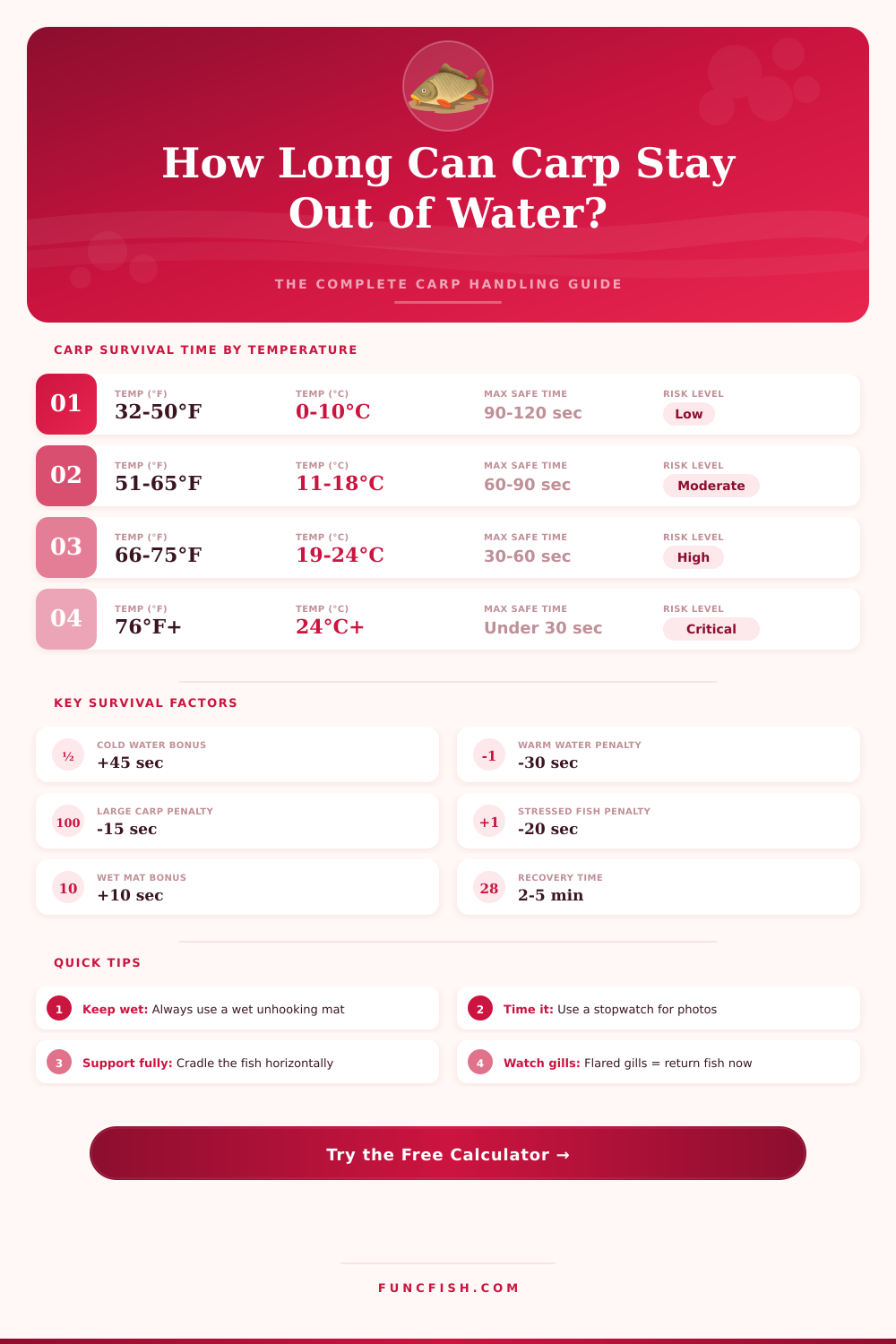
| Water Temp (°F) | Water Temp (°C) | Base Max Time | Dissolved O₂ Level | Risk Level |
|---|---|---|---|---|
| 32–50°F | 0–10°C | 90–120 seconds | Very High (12+ mg/L) | Low |
| 51–59°F | 11–15°C | 75–90 seconds | High (10–12 mg/L) | Low–Moderate |
| 60–65°F | 16–18°C | 60–75 seconds | Good (9–10 mg/L) | Moderate |
| 66–72°F | 19–22°C | 45–60 seconds | Adequate (8–9 mg/L) | High |
| 73–79°F | 23–26°C | 25–45 seconds | Low (7–8 mg/L) | Very High |
| 80°F+ | 27°C+ | Under 25 seconds | Very Low (<7 mg/L) | Critical |
| Species | Typical Weight | O₂ Sensitivity | Stress Resilience | Handling Note |
|---|---|---|---|---|
| Common Carp | 2–40 lb (1–18 kg) | Moderate | High | Robust, recovers well |
| Mirror Carp | 2–50 lb (1–23 kg) | Moderate–High | Moderate | Scaleless areas dry quickly |
| Grass Carp | 5–80 lb (2–36 kg) | High | Low | Very active, handle swiftly |
| Koi Carp | 1–30 lb (0.5–14 kg) | High | Moderate | Pond-bred, less hardy |
| Leather Carp | 3–45 lb (1.4–20 kg) | High | Low–Moderate | Minimal scales, skin dries fast |
| Crucian Carp | 0.25–4 lb (0.1–1.8 kg) | Low | Very High | Extremely tolerant of low O₂ |
| Surface Type | Time Adjustment | Moisture Retention | Recommended Use |
|---|---|---|---|
| Padded Wet Unhooking Mat | +10 to +15 sec | Excellent | First choice always |
| Weigh Cradle (Wet) | +5 to +10 sec | Good | Weighing + unhooking |
| Wet Grass / Bank Carpet | 0 to +5 sec | Moderate | Acceptable if wet |
| Held Partially in Water | +20 to +30 sec | Excellent | Best for trophy photos |
| Dry Bank / Ground | -15 to -25 sec | Poor | Avoid — harmful |
Mirror carp and other carp species requires specific environmental conditions to allow for their survival when a person removes the carp from the water. Carp use it gills to breathe, but carp are not capable of effective breathing air. If the carp’s gills becomes dry, the gills will clot, and if the carp’s gills clot will lead to the development of an oxygen debt in the body of the carp.
An oxygen debt develop when the body cannot provide enough oxygen to the body to perform the necessary task to survive. If a carp is without access to water for too long, the oxygen debt can become irreversible. The survival window of a carp depend on several variables.
How to Keep Carp Alive Out of Water
These variables includes the species of carp, the size of the carp, the temperature of the water, and the weather condition. Some species of carp is more resilient than others. Common carp are more resilient than grass carp or silver carp.
The size of the carp may also influence the survival of the carp. For example, carp with larger gill may be able to breathe different than smaller carp. The temperature of the water in which the carp live dictates the metabolic rate of the carp.
If the temperature of the water is between eleven and eighteen degrees Celsius, the carp will survive. However, if the temperature is above twenty-five degrees, the heat will stress the carp internaly. Weather is another variable that dictate the survival of a carp.
For example, dry weather will cause the gills of the carp to dry out quick. Additionally, high humidity levels will keep the gills moist, but if there is wind, the wind will remove the moisture in the gills. Sunlight will also lead to rapid evaporation of the water in the carp’s gills.
To extend the survival window of a carp, a person can place a carp on a wet cradle or a soaked mat. This will preserve the slime and the gills of the carp. A person should always aim to use only seventy percent of the survival window that is calculated for the carp.
Using only seventy percent of the survival window are a conservative way of calculating the survival of the carp. Using this conservative method of calculating survival provide time for unexpected delays in the process. For instance, if it is necessary to take a photograph of the carp or remove the hook from the carp’s mouth, the carp will have time to adjust.
By conserving the survival window for the carp, the carp has a more better chance of recovering from the process of removing it from the water. The way that a person handles the carp is important for the survival of the carp. If the carp is a common carp, a person should use knotless net to extract the carp from the water.
Grass carp should be handled with deep rubber cradle. A person should ensure that all the equipment are wet to preserve the slime coat of the carp. The slime coat protect the carp from infection, and it is important to keep this layer of the carp intact to ensure that the carp remains healthy.
Finally, a person should always attempt to work over the water to avoid raising the carp to a high height. By following these step, carp will have a higher probability of surviving being handled by a person.