
It begins with one clear-as-glass shrimp to mildly disappoint you. In all her small glory, that’s the wild type Neocaridina davidi. You can get a few for almost no money and they hides so well among the substrate that unless she starts nibbling algae, you’ll forget she even exists.
And then along comes cherry shrimp. The internet is suddenly full of images of bright, red creatures that seem to have been dipped in liquid velvet. What makes the plain little critter that came with your initial tank different than an entire colony of ruby-red shrimp? It is not magic. It comes down to genetics, time, and a will to keep them from breeding with any other creature that happens to swim by.
How to Keep Colorful Shrimp Happy
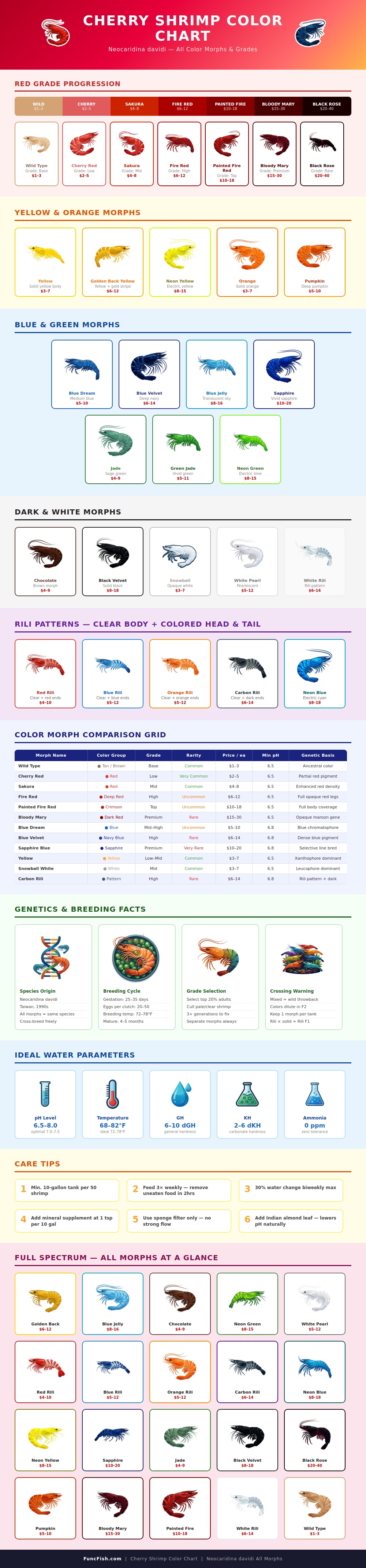
When it comes to these little critters, few folks know there are more colors available then they think. It is not just red, right? Well most think that and then everything else. There are valid and separate varieties of each: yellow, orange, green, blue, black, white, and patterned rili morphs. And then there is the well-known route of upgrading your red grade. It starts at the low end with the wild or cherry grades where they has very slight coloration. It moves upward on the scale from Sakura to Fire Red as the color becomes darker and denser. A key tell for genetics is when the Fire Red shrimp have fully opaque red legs. And Painted Fire goes even farther to being fully covered in color. The black rose, which is so rarely seen in America that it costs extra because of its deep maroon color, and the bloody mary are at the very top of the list.
And these aren’t just nice-sounding names. They’re also descriptors of the type of breeding goal: fixing the dominant red gene by culling out all the paler shrimp over multiple generations. Maintaining those colors means keeping it isolated, strictly. And here’s where most hobbyist stumble. Don’t put a Yellow tank next to a Fire Red tank and expect those colors to remain separated. Share a net? Have one escapee? Suddenly there’s some wild-type genes again in your pure line. What happens? Dilution. The F1 generation may appear decent, but the F2 generation will frequently revert to original tan color. That’s the cruel joke of Neocaridina breeding. Technically, all these colorful morphs are the same species and they’ll happily breed together. Want solid red shrimp? Then you has to maintain them in a tank by themselves, free from any other Neocaridina. Even mixing the solid colors with rili patterns typically leads to a messy mix where the distinct pattern eventually gets lost over time.
Supporting but very important, the water parameters has their part as well. The shrimp like pH from 6.5 to 8.0 and slightly soft water. A stable environment helps them molt successfuly. They outgrow themselves by molting so each unsuccessful molt is a dead shrimp. Temperature-wise, a good range would of about 72-78 degrees Fahrenheit. Maintain a general hardness that help with shell formation. It should not be too hard or too soft, as both extremes can make it difficult for shells to form. While higher levels of tannins won’t kill your shrimps if you use Indian almond leaves (IADs) to drop pH a little lower, do so deliberately. Do not use IADs to reduce pH otherwise.
Food is easy. Variety is good. Remove leftovers after two hours. Why? Leftover food breaks down into ammonia, and shrimp cannot tolerate it in their tank. Gentle flow is best supplied by a small sponge filter. Stronger current is always a risk for sucking up baby shrimp.
Why do I love keeping cherry shrimp? Because it’s a slow reveal. There are no overnight dramatic color shifts. To really get a high grade, it takes multiple generations of selective breeding to lock-in that color. Cull out the pale ones. Keep only the top twenty percent. Harsh? Yes. But it keeps the hobby going. The payoff is a tank full of what looks like living jewelry. Start small, with a manageable budget and clearly defined goal. Want a crazy red color like the Neon Blue or even a Bloody Mary? That will teach you patience. Eventually, after months or years, you’ll have a clutch of bright red babies hatching from the substrate and that feels like hitting a tiny private lottery.
Only one warning: keep the tank closed. That’s your best friend if you want to maintain a clean color line.