
In Corpus Christi, surf fishing combines challenge with reward. Here along miles of coast, sandy bottomed waters meets gently rolling waves and provide an unexpected variety in species. Reds, specks, sharks, you never know what will be there until you cast out and go for it.
But fishing the surf isn’t as simple as tossing your bait into the waves. It means knowing when to change lure and adapting to shifting conditions. It also means being patient.
If there’s one thing many angler do wrong as they’re starting out in surf fishing, it’s that they’ll approach it similarly to dock fishing. You’ll launch a few cast, sit down for an hour, and if you don’t get anything, you’ll pack up and go home empty-handed. Surf fishing is different.
It’s dynamic. Bait will move. The current will change.
Fish will roam around depending on the tide and water temperatures. Every day on this piece of coastline can be a puzzle. The pieces include your equipment, the time of day, where you go and how adaptable you are.
So there you have it: Seven keys for catching more fish when you’re fishing Corpus Christi’s waves. It’s all stuff proven to work here; no more fluff than necessary to fill a novice angler’s fishing tip page. Use ‘em well; heed their lessons carefully and you’ll have fewer empty basket and more lines in the water.
Seven Tips For Better Surf Fishing In Corpus Christi
1. Check Tides Before You Fish
Before you ever set foot onto the beach, pay close attention to the tides. The rise and fall of the water directly relates to the amount of food available to fish in the surf zone. Generally speaking, baitfish move into shallow waters during incoming tide which triggers predators to feed on them.
During an outgoing tide, the fish will move further out over deep holes, becoming more difficult to access. Therefore, the transitional periods when the water is actively moving tend to be the best times to make cast. The motion stirs the sediment, breaks off nutrients and draws small fish and shrimp closer.
Your odds increase if you show up during high slack tide but it could mean waiting a couple hours before anything happen. Look for a nearby tide chart each day and position yourself based of incoming flow. Make sure you target areas with visible structure.
2. Find Structure to Locate Fish
Fishing on an open stretch of beach can pay off but you need to cover lots of water and hit areas where fish might be active. Where’s the structure? Structure will hold bait.
Bait will hold predators. Jetties. Whether concrete or rock…
Make great spots. Sand bars with channels cutting through them can also holds fish. Look for area where seaweed lines the shore.
At Padre Island National Seashore near Corpus Christi, north jetty is known for keeping bigger fish due to the current break it forms. The south jetty near the harbor entrance give anglers easy access to deeper water closer to shore. Even naturaly occurring depressions in the beach profile can form temporary channels that’ll concentrate fish on specific tides.
Take a walk down the beach. When you see darker patches of sand, or even notice deeper water, those are what you’re targeting.
3. Use Live Shrimp Bait
Your first choice for bait should always be live shrimp unless there’s some other reason.
The Texas Gulf surf operates on the currency of shrimp. It smells right, it moves naturaly with the current, and just about any bottom feeding critter will consider eating it. Your best bet is live bait, because its scent spreads better than frozen and move better.
Most local bait stores sells their shrimp either off the hook or on the hook. If they are off the hook, you can thread several shrimp on one rig to give you more size for larger fish like red drum. If possible keep your bait bucket aerated and shaded.
When dead, shrimp don’t smell as good and move stiffly in the water, making them less appealing to any wary predator.
4. Rig Simple Carolina Rigs
A drop shot or a simple Carolina rig are both good ways to rig your line. For the beginner, simple is best.
Too many complex rig cause confusion, and they get tangled up in the surf. With a Carolina rig, you can keep the line off the bottom so it doesn’t get tangled. This still allows the bait to bounce around on the bottom.
You can also play with weight according to how strong the current is. Start with a pyramid sinker that matches the flow. Then if the bait just lays there, then the sinker is too heavy.
If the sinker keeps washing out each cast, then it’s too light. You want the bait to naturaly walk across the bottom. For better abrasion and invisibility use fluorocarbon leaders especially when fishing near shells or rock.
This basic rigging minimize snags and increases time in the strike zone.
5. Cast Beyond Breaking Waves
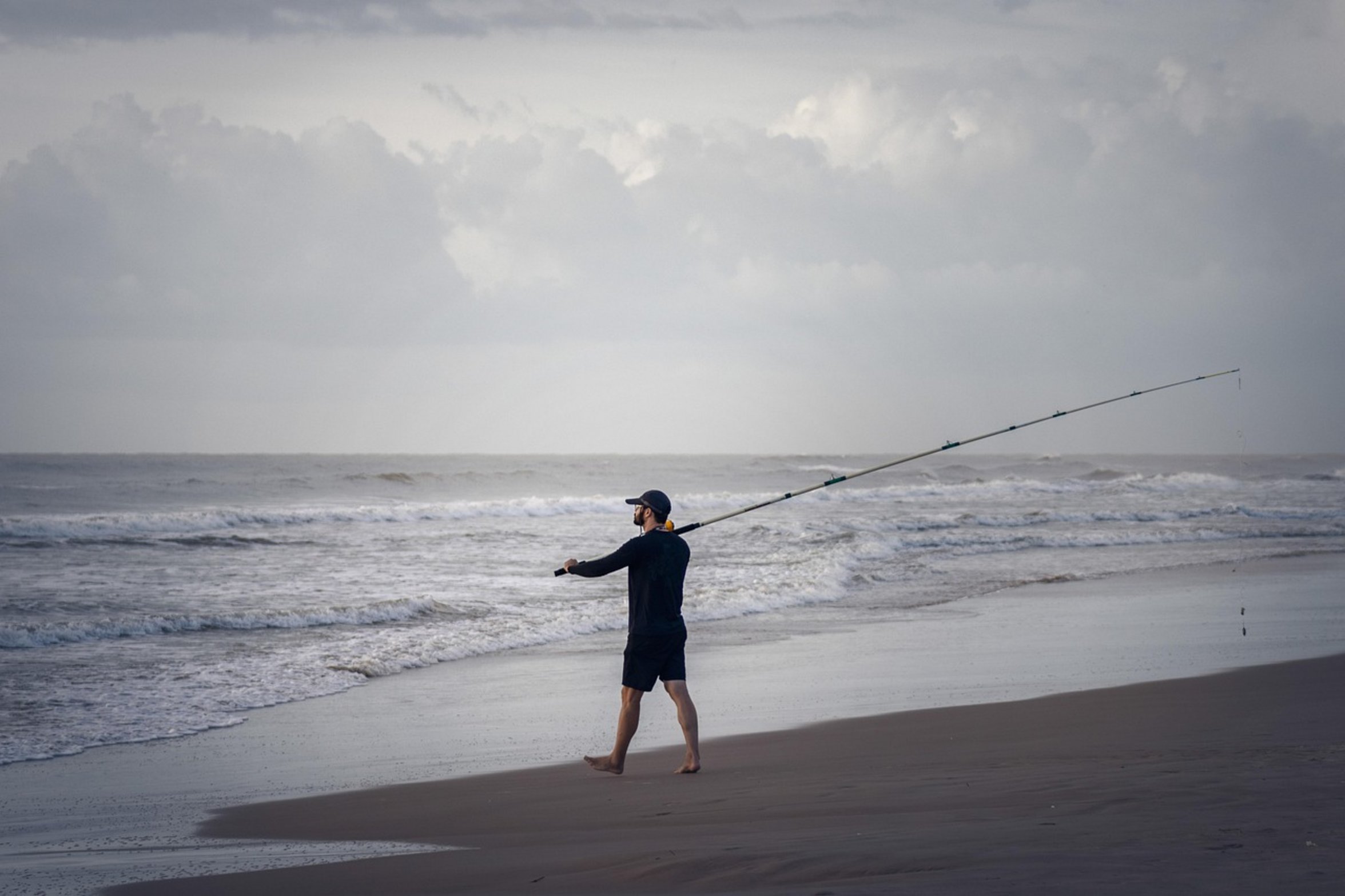
Keep a consistent cast beyond the breaking wave. To fish deeper, you need to cast further beyond initial breaking waves.
Your bait should land in the channel beyond the first set of breaking waves. To do this properly you’ll need some appropriate gear, including longer rods, heavier line, and good casting ability. Seven to 12-foot surf rods provides the power to sling heavy weights great distances.
Work on perfecting your sidearm or backhand cast until it’s second nature to you. Being able to hit the exact same deep spot over and over will allow you to develop a rhythm. Constantly re-casting while trying to hit the correct depth waste precious time.
Power isn’t as important as accuracy with these casts.
6. Work The Bait Naturally
You must work the bait based off the conditions and the mood of the fish. Sometimes it’s best to set it down and let it sit on the bottom and wait for them to eat.
But more times than not, a little action and work get a reaction strike. Drag the sinker gently across the bottom and pause occasionally. Then pull up just enough to allow the sinker to fall back to the bottom.
This will mimic a small fish being washed around by current, or an injured shrimp. If it’s a calm day, they’re less aggressive so go slow. On windy days with some chop, you can really pick up speed and use that to your advantage as it cuts through the noise and stands out to the eye.
Feel your line. If it goes slack, sometimes you’ve got a bite, other times you’re on something on the bottom. Practice until you know the feeling of each one.
7. Be Patient And Respect The Beach
“Manage your expectations, but most importantly be patient. Surf fishing isn’t a sprint, it’s a marathon. It is a marathon that tests your resolve against wind, sun, and boredom.
Three hours can go by without any bites or even a single fish jumping. Thirty minutes later, and boom… a trophy redfish is on the other end of your rod. Normal stuff.
Don’t bail out after twenty minutes when nothing has happened so far. Let each spot have at least an hour within the best tide windows.
Take only what you need and leave the rest.
Clean up all of your old line ends and garbage. That beach doesn’t just belong to us; the fishermen. It also belongs to the wildlife who feed there.
And we all should of remember to leave it better than how we found it. If we do, the fish will continue to return for years to come.