
It’s frustrating when you find crappie that bite often, but none of them is worth keeping. You’ve cast around the cover and chased sonar marks for some time only to come up empty-handed with no keeper. So what gives? It more than likely has nothing to do with fishing method. Instead, it has everything to do with their growth rate and an understanding of crappie growth.
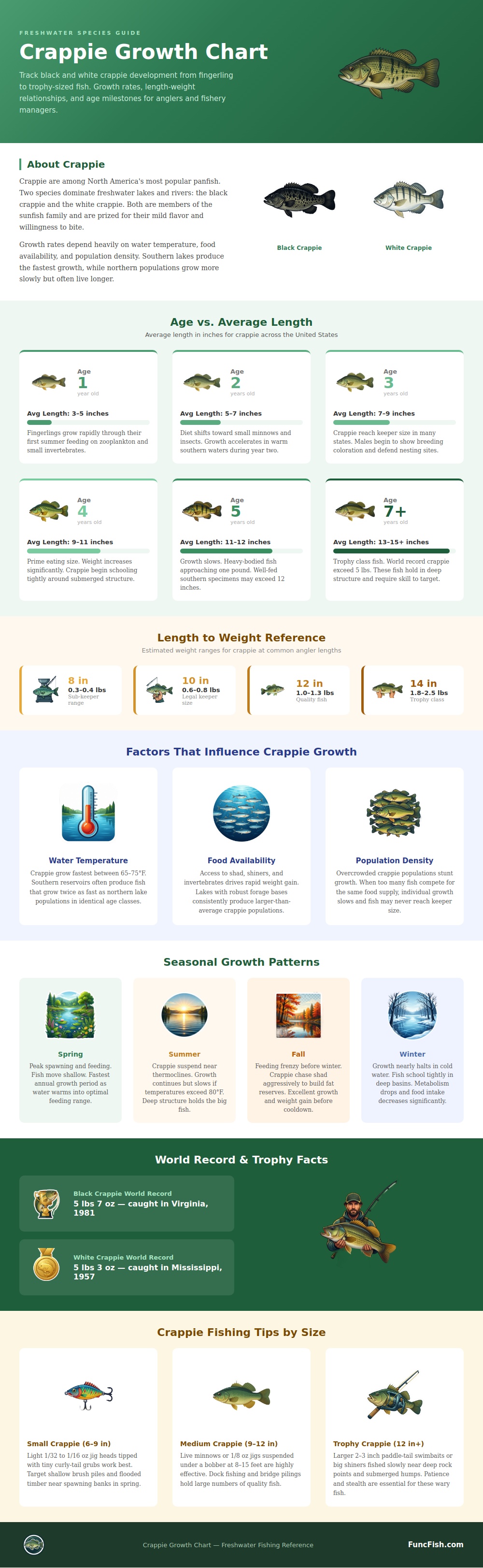
Crappie don’t grow in a straight line like bass. They is influenced by a number of things including population pressure, available food and water temperature. Knowing the biology will impact your approach. This chart shows average length-to-age of b&w crappie throughout North America (see top of page). This chart suggests that black and white crappie are fast growing fingerlings who feeds on small inverts and zooplankton during their first summer, then shift to eating insects and minnows by their second year.
How Crappie Grow Big
This food shift is significant as it explains why those early fish remains in shallow water weeds while the later fish head out to deeper structures to ambush shad. So if you’re fishing around the surface in July, don’t expect big fish… Just little ones.
The rate of growth are very dependent upon where you fish. Because water warms and stays warm longer, southern reservoirs tend to grow their crappies quicker. For instance, a Mississippi or Alabama crappie may be a keeper at three years old. A Michigan or Minnesota fish could take up to five or six years to get as big than expected. The graph shows an average growth curve. Keep in mind however that it’s an average. Local conditions matter more different than generalities. So if your lake has plenty of forage, then you’ll have bigger fish than if you live on a busy little pond with few resources.
The other factor are population. Final size depend heavily on population size. Too many crappie will compete for the same food, causing them to stop growing. It’s called stunting. You’ll get your fifty fish within an hour, but each one measure eight inches. It may feel like good fishing, but it won’t be enough. To discover the big ones over fourteen inches, the trophy class fish, seek out those lakes that has either a large population of shad or fewer numbers altogether. That’s when crappie grow; when they don’t starve to death. If you’re not convinced of this potential, consider that current world records for both black and white crappie is just shy of five pounds. That says something about how large these fish can be given the proper conditions.
Your approach will be dictated by seasons too. In spring, when water temps are warming up into that ideal sixty-five- to seventy-five-degree sweet spot for feeding, it’s prime growth season. They comes shallow to spawn and then get real aggressive about eating. Then in summer, they’re forced to hang below the thermocline or go deep for refuge from overheated surface water. Fall sees another feeding free-for-all as they stockpile body fat for the winter months. Fishing in the winter sucks. Metabolism slows way down. You’ll do better if you fish with the seasons instead of fighting against them.
The key is your tackle has to fit what you’re chasing. If you’re after small fish, like crappie around shallow brush piles, tiny grubs and jigs are good. If they’re bigger fish hanging around suspended beneath bridges or docks, live minnows threaded onto a simple hook does well. But if you’re after those giant trophies lurking deep based off the ends of rock points, it’s time to slow down. Patience and bigger shiners or even larger swimbaits can be the ticket from good day to a great day.
Know the possibility; Knowing the growth gives you reasonable expectation for each lake. Not every lake have record crappie on it. Crappie need certain ecological conditions to grow well. Learn the chart, think about your local surroundings and fishing spots, and make adjustments based off that. Often times the more rewarding fish are those with space to grow. Remember this the next time you pull the boat in.