Euro Nymphing Sighter Length Calculator
Size the colored contact section for tight-line nymphing by balancing water depth, tippet drop, rod reach, current speed, fly anchor, visibility, and sag control.
📌Scenario presets
⚙Sighter inputs
Sighter length forecast
Full breakdown
📋Sighter material reference
Thin Micro
Bi-Color Mono
Tri-Color Mono
Amnesia
📐Sighter length reference tables
| Water type | Depth window | Typical sighter | Tippet below sighter | Best material | Adjustment note |
|---|---|---|---|---|---|
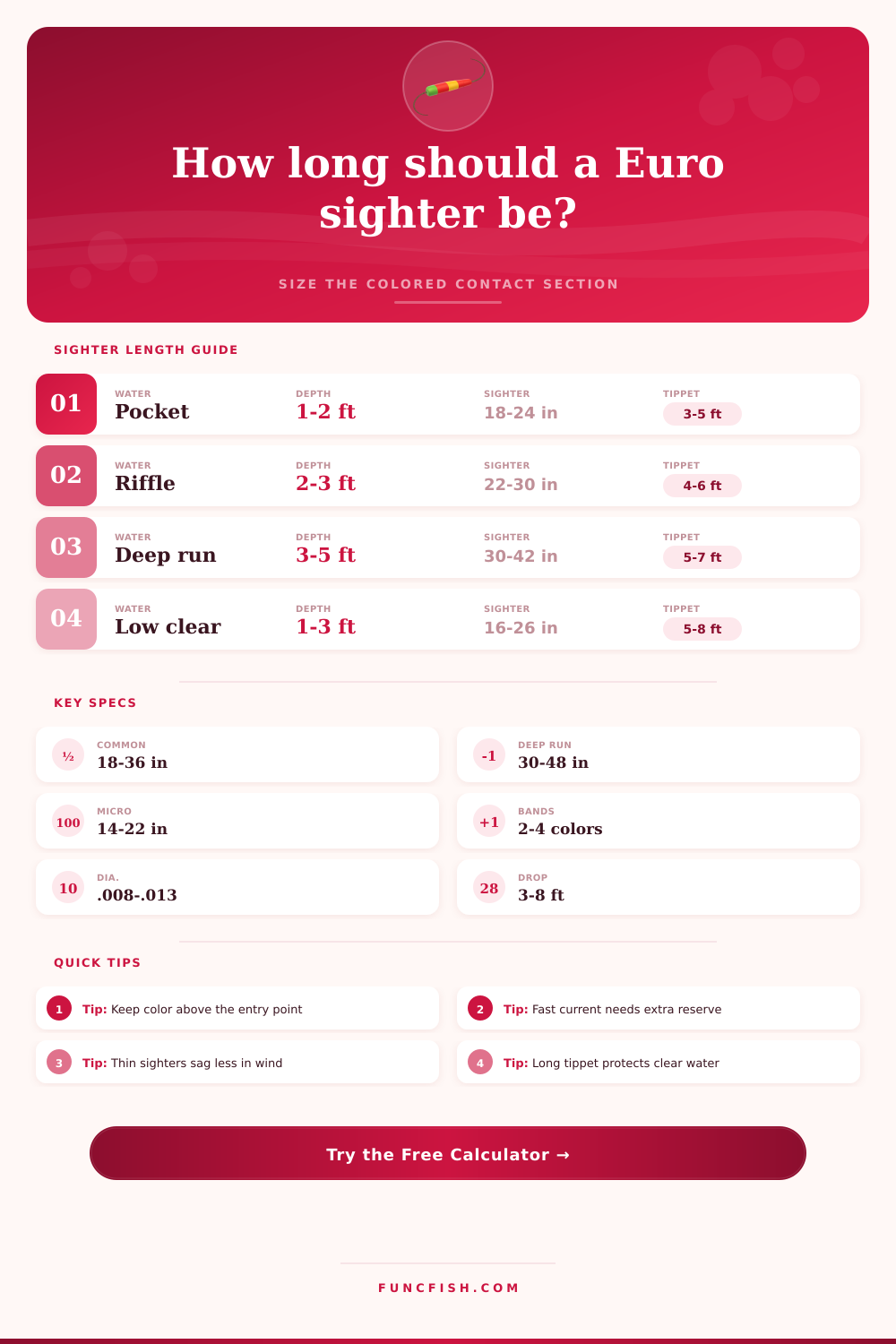
| Shallow pocket water | 1-2 ft / 0.3-0.6 m | 16-24 in / 41-61 cm | 3-5 ft / 0.9-1.5 m | Thin micro or bi-color mono | Keep the colored section short so it does not slap the pocket. |
| Broken riffle | 2-3 ft / 0.6-0.9 m | 22-32 in / 56-81 cm | 4-6 ft / 1.2-1.8 m | Bi-color or tri-color mono | Add reserve for chop, glare, and quick depth changes. |
| Deep slot | 3-5 ft / 0.9-1.5 m | 30-48 in / 76-122 cm | 5-8 ft / 1.5-2.4 m | Tri-color mono | Longer color helps track when the flies climb or stall. |
| Low clear glide | 1-3 ft / 0.3-0.9 m | 14-26 in / 36-66 cm | 5-8 ft / 1.5-2.4 m | Thin micro or fluoro-vis | Reduce flash and extend tippet before adding sighter length. |
| Windy canyon reach | 2-4 ft / 0.6-1.2 m | 24-38 in / 61-97 cm | 4-7 ft / 1.2-2.1 m | Stiffer mono or Amnesia | Use less overall leader sag and a slightly stiffer marker. |
| Rod length | Close lane | Normal lane | Long reach | Usual exposure | Contact comment |
|---|---|---|---|---|---|
| 9-10 ft / 2.7-3.0 m | 16-24 in | 20-30 in | 26-36 in | 8-12 in | Shorter rods benefit from cleaner, shorter color sections. |
| 10-10.5 ft / 3.0-3.2 m | 18-26 in | 24-36 in | 30-42 in | 10-16 in | The common all-around Euro nymphing range. |
| 10.6-11.3 ft / 3.2-3.4 m | 22-30 in | 28-42 in | 36-50 in | 12-18 in | Long rods can carry more colored reference without losing reach. |
| Micro leader | 14-20 in | 18-26 in | 22-32 in | 6-12 in | Fine sighters read tiny ticks but should stay controlled. |
| Heavy anchor | 20-28 in | 26-38 in | 34-48 in | 12-20 in | Heavy flies can support more color before sag becomes obvious. |
| Diameter | Common use | Visibility | Sag tendency | Length comfort | Match note |
|---|---|---|---|---|---|
| .008 in / 0.20 mm | Micro nymphs, clear water | Moderate | Low | 14-28 in | Best when every bit of contact matters. |
| .010 in / 0.25 mm | General bi-color sighter | Good | Low-medium | 18-36 in | A balanced starting point for most trout rigs. |
| .011 in / 0.28 mm | Tri-color depth reference | High | Medium | 22-44 in | More colors help read deep slots and micro pauses. |
| .012-.013 in / 0.30-0.33 mm | Glare, wind, heavy anchor rigs | Very high | Medium-high | 20-40 in | Useful when visibility beats ultra-fine sensitivity. |
| Waxed marker | Temporary short color window | Variable | Low | 4-16 in | Add it above a thin leader when only a small mark is needed. |
💡Practical notes
Entry point: The calculator treats the sighter as a visual window above the water entry point. If colored mono is regularly under the surface, shorten the colored section or increase tippet below the sighter.
Sag control: Extra sighter length helps visibility, but it also adds mass and wind drag. If the contact score falls, use thinner material before simply cutting the rig shorter.
There you are standing on the bank with a ten-foot rod looking at a pocket of water that looks like it should be fishable. The clear current lets you see the trout but the nymph won’t sink. You make a shorter drift, change the angle but still the fly refuses to get to the bottom.
It makes you frustrated because most folks think sighter is a mere indicator and not a vital piece of hydrodynamic system used in euro nymphing. That colored portion of the leader isn’t just for show. It determines amount of tension, manages sag and tells you how quick the fly will enter into strike zone.
How to Choose Your Sighter Size
If it is too long, it becomes an anchor on its own. Too short and you lose sight of it before it gets into feeding lane. To do that, the calculator balance reach with depth while accounting for weight of your material.
The calculator ask for your rod length and details about your tip height, because the angle where your leader hits the water change based off how high or low your tip is above surface. A lower, more sweeping mend require a longer sighter to stay in contact with line than a steeper angle do. And many folks never consider the angle and just guess based on their estimation of fish depth. Wrong move.
Current speed also come into play since it increases drag on the leader and sucks it under the surface sooner. If you have a surge instead of a slow tailout, you need more reserved color just to make sure line stays up off surface when you’re mending.
If you want to learn more, go watch the video: Half the battle is picking out proper material. That flashy tri-color sighter may be sexy when sun is high and glare gets your eyes all jacked up, but it add a bunch of mass to end of that leader. More mass mean more drag slowing those sink rates and more sag in wind. But thinner mono sinks less by itself so lighter nymphs get deeper faster. The problem is you lose visibility if you’re trying to fish from far away or if the water are choppy.
This balance is what the calculator take into account when making recommendations. It recommends shortening length on thin micro sighters because they don’t have enough stiffness to maintain their shape over a long stretch and bend out of way around rock or debris. With heavy rigs with tungsten beads, it lets you go further because the anchor fly pulls line straight no matter how much bulk there is at end of the leader. It’s all laid out nicely in reference tables on the page.
Use a short sighter in shallow pockets to keep a low profile and avoid spooking fish. In deep runs, longer lengths will help track depth changes as fly swings through various contours. But again, it starts with numbers. Then you read the water.
Notice when you make that cast, the color dips a little? Your line is weighted down with debris or sagging. Add a little more tippet below sighter. This will move weight forward and allow the color to sit up higher in drift.
The other factor is visibility conditions. On bright sunny days, even subtle colors will stand out. You can get away with using more subtle markers that are less likely to spook wary trout. While on overcast days or when glare becomes an issue you’ll want to use thicker materials with higher contrast bands. The calculator will adjust the target of what you need to see out of the water.
It will tell you where that top level of color should be, so it registers as just a slight tick before you pull it all the way through your fingers. Sometimes that’s all the difference between feeling a bite instead of a big jump and knowing you actualy felt something.
So how do you size your sighter? In the end it’s about connecting what’s happening at the end of your rod to what’s happening under surface. It’s less about seeing the color, but more about the feel through that window of color. When conditions match up with the math, there is no longer any need for guesswork as to where the fly sits below. You know exactly what happens when it reaches depth, or when something hit it. This level of confidence turns an afternoon of missed opportunity into a steady rhythm of hooksets.
Get the fly down, keep it tight and let ’em make the mistake. And once you master this connection, the rest of the technique will fall into place naturaly. You should of used this sooner.