
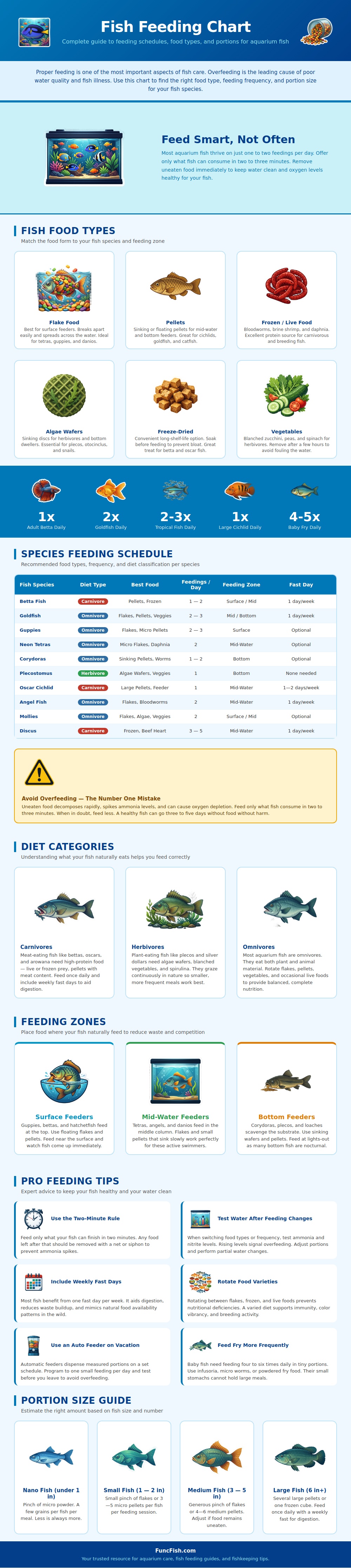
Adding more food decreases water quality Many first-time aquarists believe the more they feed their pets, the better care they are providing. That’s not true in the world of aquatic life.
The excess food falls to the bottom where it decomposes and raise ammonia concentrations beyond what even your best filtration can handle. To avoid this issue, just guess, match the food with how active your fish are. Feeding smart (not frequently) is basic approach. Adult tropical fish is generally happy with just one or two small meals daily. Rather than looking into bowl, look at the clock. Leftover food is nothing more than chemical pollution.
How to Feed Fish Correctly
When you see that your fish havent consumed all of their meal after two minutes, then youve fed them too much. Taking away surplus will ensure clean water and healthy livestock. It’s also a form of discipline that promotes long-term tank stability.
Portion size is key, but also consider the type of food offered. Because they’re adapted for it, each species have an ideal zone where it eats. Shortened digestive systems are found on surface dwelling species (e.g., bettas), which explains why those fish enjoys floating pellets and flakes. Sinking wafers that will dissolve before reaching the substrate is needed for bottom feeders, e.g., corydoras. Offer a mix and all your fish will have something to snack on rather than fighting over whatever happens to float to the top.
Every species has its own natural behaviors that will influence dietary requirements. Oscars, for example, are carnivorous and will thrive on a diet rich in protein (meat-based pellets or frozen bloodworms). If you have herbivores, they should of be fed something with plant matter (blanched vegetables and/or algae wafers). If you have omnivore, rotate between some kind of veggie fare, flake food, and perhaps a few frozen treats. Not only do colors stay vibrant this way but there’s less risk of nutrition deficiency.
For growing fish, you’ll want to change water more frequent than for adults. Why? Baby fry has very small stomachs and rely on frequent yet small meals to sustain their rapid growth rate. Adult fish can store energy efficienty. Feeding multiple times daily wont cause them to grow larger. It will merely degrade water quality. A single fast day per week will actualy help the digestive system by allowing waste to fully clear.
One tough part about portion control? There isn’t a scoop designed to match each tank size. How do you know how much to feed? Your best guess will come based off fish size. For example, a pinch of powder feeds nano fish, while large cichlids needs multiple pellets. Remember: You can’t un-feed your fish. Use caution, begin with half of a guessed amount. By doing so you protect water parameters and avoid overwhelming the filtration system.
More importantly, watching their behavior at mealtime tells you more then any chart. If certain fish hide while others gorge, you can adjust by changing where and when you feed. A healthy tank is a calm tank. Mastering the above will help all its inhabitants thrive.