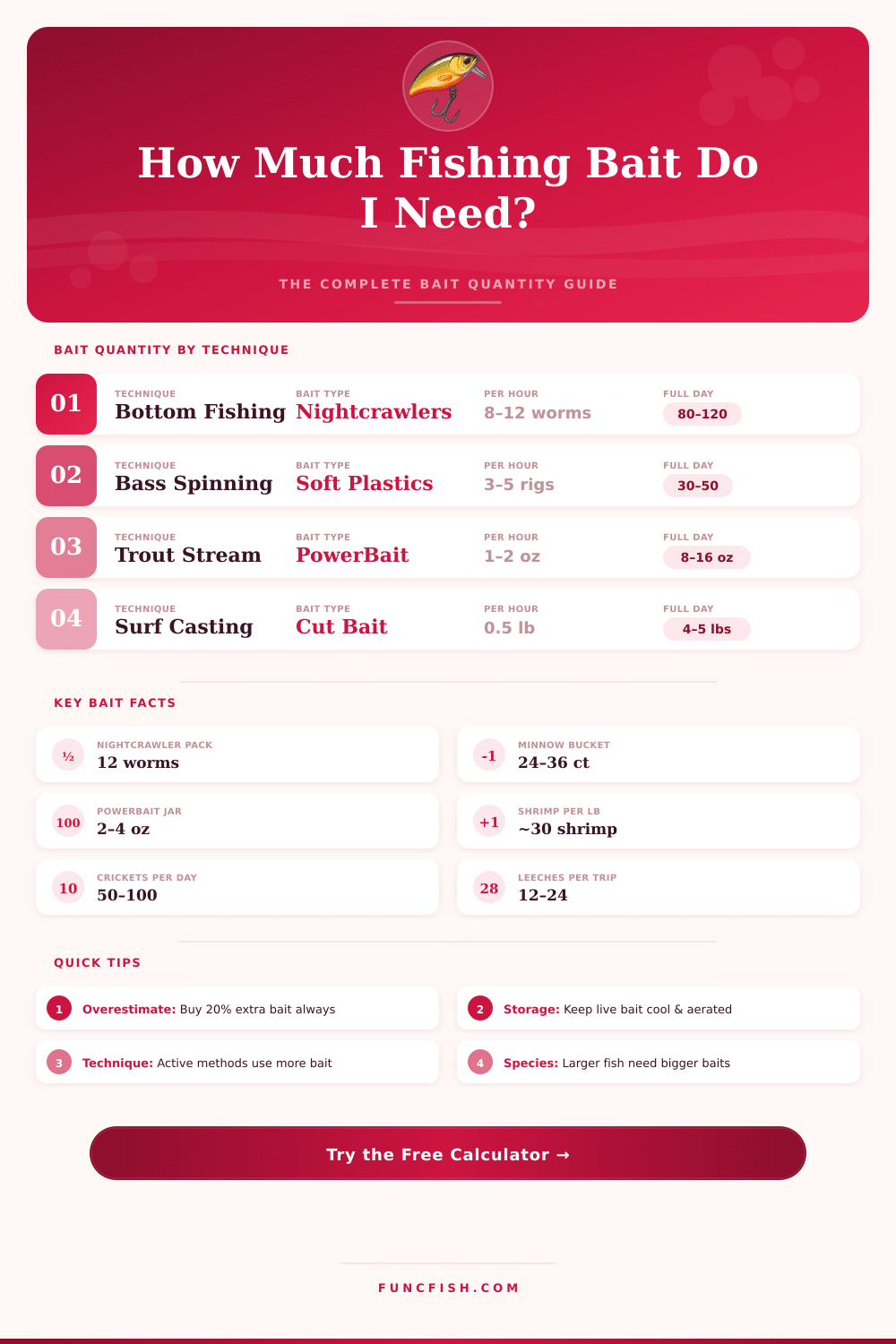
🐟 Fishing Bait Quantity Calculator
Calculate exactly how much bait you need for any fishing trip — by technique, species, and duration
| Bait Type | Std. Package | Metric Equiv. | Hook Size Match | Best Technique |
|---|---|---|---|---|
| Nightcrawlers | 12 / flat (18 jumbo) | ~150 g / flat | #4 – #1/0 | Bottom, float |
| Minnows (small) | 24–36 / bucket | ~200 g | #4 – #6 | Jigging, crappie |
| Minnows (large) | 12–18 / bucket | ~350 g | #2 – #1/0 | Pike, walleye |
| Soft Plastics (4") | 10–20 / pack | ~60–80 g | #1/0 – #3/0 | Bass, jigging |
| PowerBait | 2 oz / jar (57 g) | 57 g / 113 g | #10 – #14 treble | Trout, still water |
| Cut Bait (chunks) | 1 lb / pkg | 454 g | #2/0 – #5/0 | Catfish, carp |
| Live Shrimp | ~30 / lb | 454 g = ~30 ct | #1 – #2/0 | Inshore, flounder |
| Squid (offshore) | 1–2 lb / pkg | 454–900 g | #3/0 – #6/0 | Trolling, deep drop |
| Live Crickets | 50–100 / bag | ~30 g / bag | #8 – #12 | Bream, panfish |
| Artificial Flies | 1 / fly (avg) | N/A | #10 – #20 | Fly fishing, stream |
| Species | Typical Weight | Top Bait Types | Bait Size | Avg. Qty / Angler / Day |
|---|---|---|---|---|
| Largemouth Bass | 2–8 lb (0.9–3.6 kg) | Soft plastics, shiners | 3–7 inch | 20–40 plastics |
| Rainbow Trout | 0.5–3 lb (0.2–1.4 kg) | PowerBait, worms, flies | Small (pea-sized) | 1–2 oz / 12–18 worms |
| Channel Catfish | 2–15 lb (0.9–6.8 kg) | Cut bait, stink bait | 2–3 inch chunks | 1–2 lb cut bait |
| Bluegill / Panfish | 0.25–1 lb (113–453 g) | Worms, crickets | Small (1/2 worm) | 24–48 crickets / worms |
| Walleye | 1–5 lb (0.5–2.3 kg) | Minnows, leeches | 2–4 inch | 24–48 minnows |
| Northern Pike | 3–20 lb (1.4–9 kg) | Large live bait | 4–8 inch | 12–24 large baits |
| Striped Bass | 5–30 lb (2.3–13.6 kg) | Live bunker, eels | 6–12 inch | 6–18 large baits |
| Redfish / Red Drum | 3–20 lb (1.4–9 kg) | Live shrimp, crabs | Medium | 30–60 shrimp |
| Offshore Tuna/Mahi | 5–50+ lb | Squid, ballyhoo | 6–12 inch | 2–4 lb squid |
| Activity Level | Casts / Hr (approx) | Bait Use Rate | Multiplier | Best For |
|---|---|---|---|---|
| Light / Casual | 10–20 | Low | 0.75x | Still water, soaking |
| Moderate / Steady | 20–40 | Medium | 1.0x | General fishing |
| Heavy / Tournament | 40–80+ | High | 1.4x | Bass tournament, active |
All fishers struggle with the same doubt: how many bait genuinely requires to go in the bucket? For alive bait, the simple math implies one portion for every folk. Come four people?
So that does four portions. The difficult moment is ensure that your tank for bait does not adjust in too much chaos. If the baits are smaller, one can stuff more of them in one same tin, without that they stick outside.
How Much Bait to Bring for a Fishing Trip
The most many baits for fishing sit roughly between quarter of ounce at the little end and almost three ounces. The five-eighth ounces of bait commonly use the pitchers. I observed, that the ideal spots sit between half and three-quarters of ounce for the most many times.
One can use them whole or cut them in bits according to that, what one intends.
Fishing Bait usually depend on counting of bits instead of weight. For instance, shrimps sell according to dozens in types as medium, big or jumbo. While eight-hour run, I succeeded with around 250 grams of crushed worms.
Add two packages of frozen squid, that reaches around 700 grams jointly (and two whole fish), and you are ready. For shorter trips of two until four hours clearly needs less, even so it pays too plan that before.
Fishing of snappers seem to go well with one box of bait for folk during normal trip. Genuinely, always stay a bit of bait above. Limit for four folks of snappers usually reach itself quite a lot soon the most many times.
Ground bait operate according to entirely other idea. One casts them in the water apart from the hook, for attract fishes to a certain area. They spread on the bottom before one even cast the line.
During fishing below, the method of feeder can keep ground bait and release it slowly through the time. For places full of scattered grasses, of six until ten portions usually wake attention.
Using bigger bait bring real trade off with fewer bites. Bigger bits cause, that fewer bites happen. The gain is, that such baits refuse the little fishes, so one chooses between amount and size.
Hence some anglers switch to fake types, they would like to have top quality instead of plenty.
Space for alive bait in your boat creates big difference also. Some folks insist, that does not exist something as too much alive bait, but the space of your boat stays what it is. I reached good results by means of homemade setup, simply fresh with pump operate well for stop alive shrimp or minnows breathing.
Even simple bucket with air pump keep everything in movement and reduce loss. The main goal are keep the bait fresh and lively during the whole time, as far as you stayhere.
During fishing of lighter even so, little bait sometimes beats the clear favorite. Chip in the size of your pinky finger can genuinely seize more than half of fish or whole squid. A bit sometimes is more.