
The shark is on the line. You’re standing on a Florida dock with a chum line in the water and don’t know whether youve caught food or trouble. While plenty of sharks swim through the waters off the peninsula, most aren’t human threats; they just look scary to anglers unfamiliar with their identities. Knowing which one you’re hooked up to won’t only keep your digits intact; it’ll also help you avoid breaking the law.
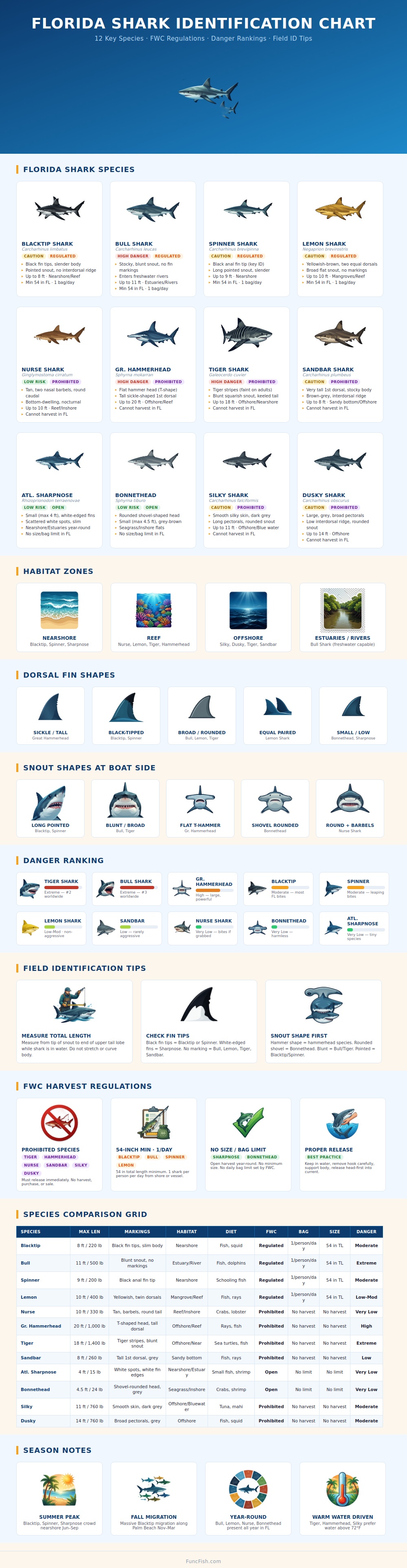
Pressure’s high, so here is a chart that sorts fish into three groups based off regulation: You can’t keep prohibited species. Dusky sharks, silky sharks, sandbar sharks, nurse sharks, great hammerheads and tiger sharks (with vertical stripes) all receives protection. These species are stressed worldwide, so this regulation is strictley enforced: If you’re fishing and happen to hook a prohibited species, like a tiger shark, cut your line or get the hook out and release it right away. No bag limit on prohibited species because you aren’t even allowed to have one.
How to Identify Sharks by Fins and Shape
A few species that many anglers fish for (including blacktip), bull, lemon and spinner sharks; has more strict regulations as well because they are regulated species. To keep these species, each shark must be at least 54 inches long, and you may keep no more than one per angler per day. This regulation protects juvenile sharks before they reaches reproductive maturity, which ensures these species continue to reproduce. You also need to use a measuring tape instead of just guessing from boat. To properly measure a blacktip shark (or any other species), stretch the fish out and measure from the snout to the top of its tail lobe.
There are no bag or size limits on these open species (Atlantic sharpnose and bonnethead sharks). These is small sharks that are common in our local estuaries and do not pose much threat to human life. They’re perfect for kids just learning how to reel in a shark. And the bonnethead is interesting. It’s part of the hammerhead line, but it doesn’t have its bigger cousins’ intimidating look. Its rounded, shovel-like head also make it easy to recognize without needing to look at its fins.
Since color is not always reliable for visual identification because water conditions can wash out natural pigment, pay attention to structure and silhouette. When a shark is swimming alongside the boat, it’s typically easiest to spot its dorsal fin, which in the case of great hammerheads (and occasionally sandbar sharks) are tall and has a sickle shape. If you see dark tips on its fins, you’re looking at a blacktip or spinner shark, but a spinner has a black tip on its anal fin too. Another clue: Snout shape tells you something, and if it’s squared off and pretty much blunt, then you have a tiger shark or a bull shark on your hands, both dangerous fish that need to be respected for their power and tendency for aggression in shallow water.
Headline stats like these can mislead. If all you know is which sharks pose the greatest danger to humans, the rankings may not mean much. However, bull and tiger sharks tops the list because both species frequent recreational areas along the coast and in rivers; bull sharks even venture into fresh water (they’re the “river shark”). Despite their toothy look and massive size, nurse sharks comes dead last on the danger scale. They don’t actively hunt anything. Instead, they use suction to feed as bottom dwellers who rarely move around. The majority of bites happen when a diver accidentally steps on one or touches it while resting inside a cave.
All of this helps the fisherman read the water and recognize the shape of fins early. It allows him to make fast decisions based off biology rather than fear when it come time to measure a blacktip for the cooler or release a hammerhead because it is illegal to keep. The more we pay attention to the details, the more the ocean will reward us with knowledge. This knowledge should of been the best tool in your tackle box.