
When you stand along California’s waterways, all seems well: The water shines in the sunlight; fish swim beneath its surface; and wildlife abounds. But what lies beneath the surface are an unspoken environmental problem that has changed the landscape throughout California’s waters. Over several decades, both by accident and design, nonnative animals (specifically fish) has entered into California’s ecosystems, causing devastating effects to its natural inhabitants.
Invasive species don’t only competes for food and habitat. They change the shape of lakes and rivers. They prey on young native fish.
They also introduce diseases that native fish can catch. These action is wiping out native species. It’s a very high cost to both our economy and ecology.
Control measures is deployed year after year at great expense with little or no success. And it doesn’t help that the pet trade, aquarium dumping and even angler release practices compound the issue. You see the tip of the iceberg every time you remove an odd-looking fish from the water.
Knowing which species are the most problematic can go a long way toward explaining why conservation efforts seem so futile. But it also sheds light as to where intervention may be effective. Below are the most impactful invasive fish in California waters along with what they’re doing to the ecosystems in which they’ve invaded.
The Most Impactful Invasive Fish Species
1. Northern Pike
Northern Pike These is largemouth bass. This big predatory perch is perhaps the most dreaded invasive fish for native fish populations. It can grows quickly and reach a size that lets it eat nearly every other creature in the water except itself, including young salmonids essential to the food chain.
Introduced as a sport fish but failed to remain confined in multiple lakes and reservoir, northern pike love weedy habitat and explode on unsuspecting prey. Because they destroys smaller fish species, the predator-prey balance is upset and water bodies end up looking like ghost towns. For instance, there’s no place more at risk than the Central Valley where drought and rising temperatures has already put stress on remaining native trout populations.
A single pike will eat so many small fish that they would of otherwise be available for birds and other wildlife relying on similar resources. And control measures include using rotenone, which kills off all the fish in a body of water so managers can then stock them with only the species they want. It’s a nuke’em approach that shows just how serious the infestation has become.
Once they take hold, they are almost impossible to remove selectively because they live in much of the same habitat as native species.
2. Blue Catfish
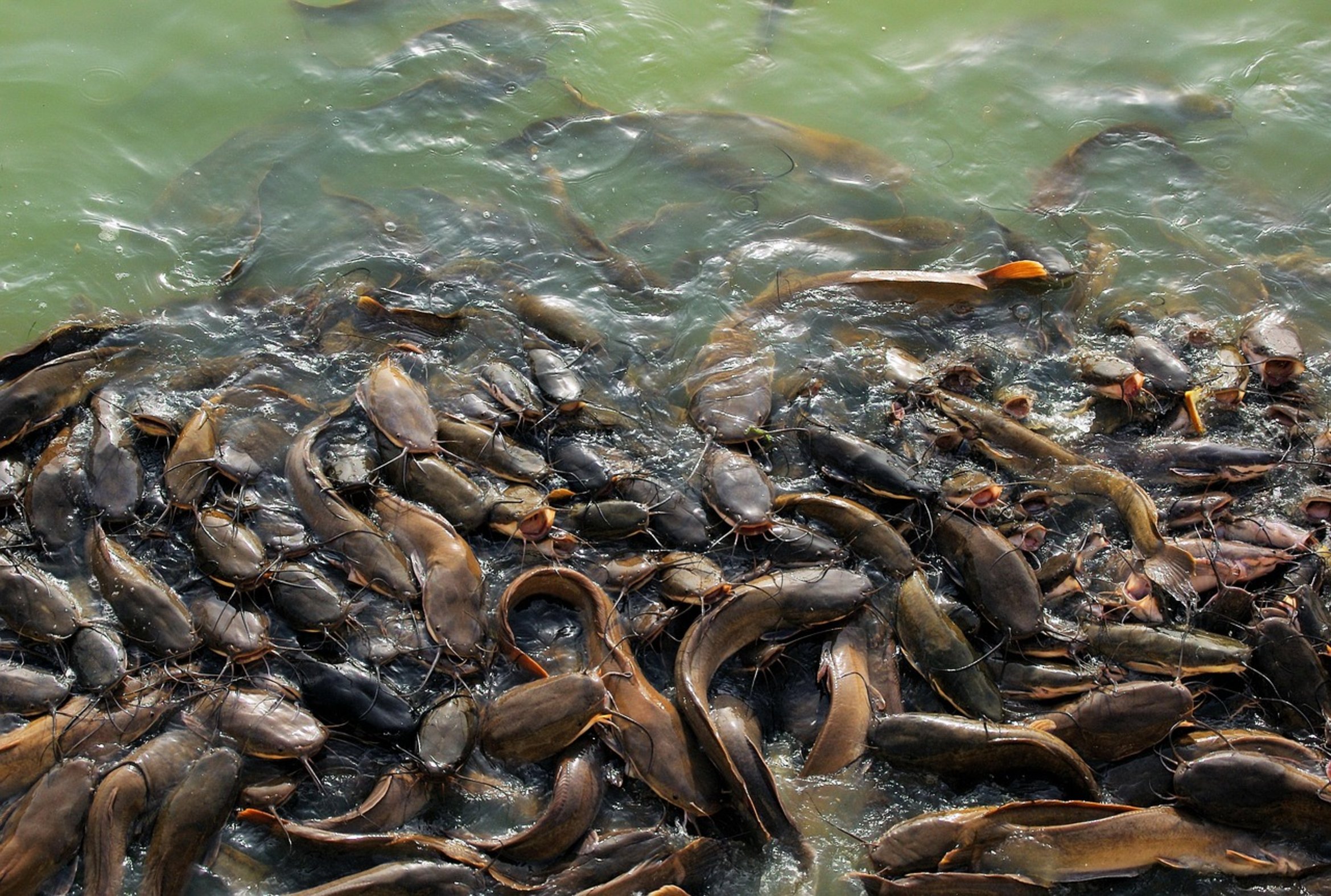
Blue Catfish This giant is native to the Mississippi River basin but has made itself at home in the slow moving reservoirs and rivers of California. Reaching lengths of more than six feet long and weighing several hundred pounds, blue catfish are top predators and at the top of the food chain.
They will consume smaller fish, crayfish, as well as carrion, aiding their survival in low oxygen conditions when other species has difficulty. Because they can also do quite well in cloudy water, they out-compete native carnivores that depend on visibility for finding prey. Blue catfish were introduced into rivers such as the Sacramento and Feather.
These non-native fish competes with native species such as channel catfish and striped bass for resources; they have displaced both. Because of size restrictions and lack of angler interest in smaller individuals, many anglers release small fish. This unintentionaly perpetuates the problem.
Their enormous amount of living matter alters water column nutrient cycling. In order to control these fish, managers must use targeted removal strategies using large tackle that can manage their extreme strength. They will be part of the riverine ecosystem forever; it is now time for management agencies to recognize this instead of trying to undo what was done.
3. Goldfish and Common Carp
Blue Catfish Many people consider them pond ornaments, but the way these omnivores eat and how many there are wreaks havoc. By stirring up bottom sediment and clouding the water, goldfish (especially feral goldfish originating from pet releases) dig out plant root systems and devour benthic invertebrates. The sediment-filled water prevents light from reaching the plants underwater.
As a result, these plants dies and cause algae blooms. Similarly, common carp churn up mud until it’s suspended in the water. Known as carp plowing.
Often enough to make the water cloudy. Loss of plant life eliminates fish larval & insect habitat. They reduce water quality by releasing trapped nutrients back into the water column.
They are extremely resilient. Quick reproducer. Dense population that degrades wetland health.
A common goal for restoration projects is removal. This allows native plants to return and re-establish. RACE!
Each spawn expands their genetic footprint further. One of the major ways isolated lakes get infested is the careless release of pet goldfish from home ponds.
4. Round Goby
Round Goby The round goby is tiny…
Only a few inches long, but it’s a big problem. It has already spread through the Delta and coastal lagoons at an alarming rate. It devours the eggs of native fish, including threatened species like steelhead trout and the Delta smelt.
It also attaches its own egg sacs to any nearby hard surface, such as a concrete structure or boat hull, which protects them from predators. Finally, it takes over territory that once belonged to native gobies and other bottom-dwelling animals, forcing them out with aggressive behavior. Round gobies are also known as biological vacuum cleaners when it comes to the reproductive success of native species.
They consume eggs before they even hatch, which effectively ruins parts of the spawning areas without an adult ever being seen. This direct form of predation is devastating, and this time it’s aimed at the next generation. Because they like to hide in complex habitat, beyond the reach of bigger predators, they are hard to control due to their small size and location.
Researchers is studying their mobility so we can better understand how boaters help them disperse. Remember that not all invasions involve big monster fish; some are tiny reproduction parasites. Round goby Because they like to hide in complex habitat, beyond the reach of bigger predators, they are hard to control due to their small size and location.
Researchers is studying their mobility so we can better understand how boaters help them disperse. A reminder that not all invasions are big monster fish; some are tiny reproduction parasites.
5. Red Tilapia
Red tilapia are native to warmer parts of the world, but with climate change driving higher water temperatures, they represent an increasing risk.
Red tilapia can survive in polluted waters more easily than most native California fish, and are tolerant of higher levels of salinity. In estuarine settings like brackish lagoons, enough fresh water flows in to support their fast reproduction, allowing tilapia to outcompete native killifish and grass carp for resources. Tilapia feed on detritus and algae.
They reduce the amount of detritus and other organic matter that would otherwise be available for other organisms to eat, which changes the base of the food web. They’re spreading further north, a concern for Delta habitats where they have the possibility to take advantage of changing salinity gradients. Their hardiness allows them to tolerate higher temperatures than native minnows, and in dry summer conditions, that gives them an unfair competitive advantage.
Harder strains from aquaculture escapes has also invaded the wild. Management includes controlling warm water releases which may create warm areas where they can breed. This shows how biological invasions are linked with climate change.
Not only is it a problem now, but it’s also one that will grow as waters become warmer. These species cause ecological disruption in many ways, from bottom-up habitat changes to top-down predation. Each one has unique behaviors and biology that need to be addressed through targeted management.
Invasives vary as do the solutions. One size does not fit all when it comes to managing invasive fish in California. Closely tracking population changes and water quality remains a task for conservationists who still seek to restore balance to ecosystems pushed far out of their natural ranges.
Anglers and residents can empower themselves with knowledge of these threats and help remove them by reporting sightings. All actions to safeguard native waters help preserve a bit more of California’s aquatic heritage. The battle continues, but knowledge of the threat is the first step on the road back to recovery.