

Jon boats are those that are used frequent for work in shallow waters. Jon boats can be used to go into quiet coves to fish for bass at the dawn of the day, or to haul decoys across flooded timber flats during hunting season. Jon boats has aluminum hulls that are feature flat-bottomed hulls, and those aluminum hulls allow jon boats to easily get to there destination without causing any problems for the boats that travel on the waterways.
However, jon boats can experience problems in spite of they’re strengths. Most jon boat problems are easily predictable, usually preventable, and usually fixable if the boat owner know what problems to look for. Catching jon boat problems before they begin to strand the boats or soak the gear in the jon boats is the best defense against problems.
Jon boat owners often run their jon boats in a variety of locations. Despite the variety of locations in which they might travel, there are some problem with jon boats that tend to come up again and again. Some jon boat problems are the result of the design of the jon boats, while other problems are the result of the ways in which jon boat owners utilize the boats.
The following list details the most common problems with jon boats, listed in the order that most jon boat owners tend to experience those problems with their jon boats. The list begins with the least common jon boat problems and continues to those that has the potential to ruin the fishing season of jon boat owners if those problems are not recognized and fixed. One of the first problems that jon boat owners will encounter after using their jon boats for a few growing seasons is the loosening of the transom of the jon boat.
Common Problems That Jon Boat Owners Face
1. Loosening Transom
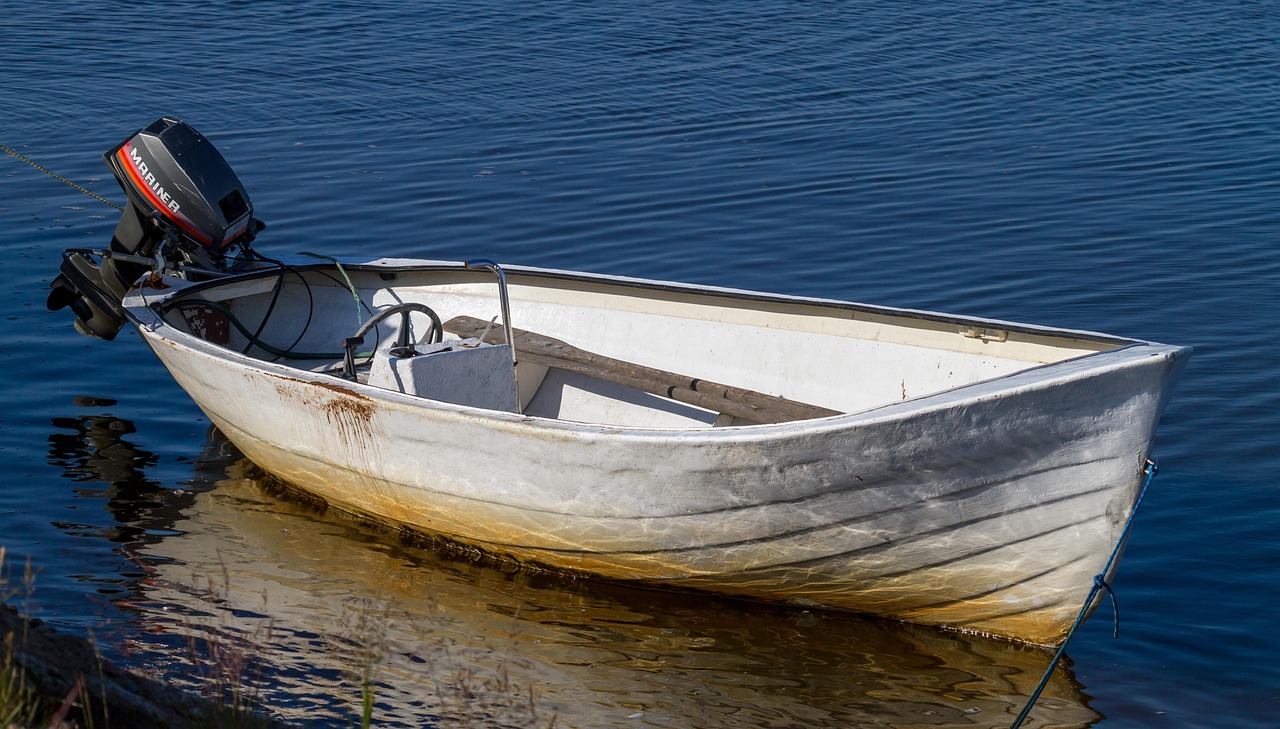
Jon boats often utilize an outboard motor to power the jon boats forward, and the two-stroke motors that are often utilized create vibrations that work at the boat owner’s transom bolts and loosen them over time. Initially, the boat owner may feel a subtle rattle in the jon boat’s transom when the jon boat is being operated; however, eventually, the jon boat will emit loud thunk whenever the jon boat is operated with the throttle. If the transom is not fixed, the wood within the jon boat’s transom will begin to crush, causing the motor of the jon boat to sit in odd angle relative to the jon boat itself.
The fix for a jon boat whose transom is becoming loosely mounted is to pull the bolts from the transom; inspecting the plywood core of the jon boat will reveal whether rot has set in; and replacing that plywood with pressure-treated lumber or another marine-composite material. The entire transom should be treated with marine sealant before the bolts are replaced into its proper specifications. Performing this inspection every few years will ensure the jon boat and its transom remain rigid even after the jon boat’s hull begins to show wear and tear.
2. Leaking Seams
Another of the most common problems with jon boats are the leaking seam between the aluminum sides of the jon boat and its floor. Jon boats that utilize rivets to join the aluminum sides to the floor of the jon boat usually experience these water leaks after the factory sealant that is utilized to join the sides wears down over time. Jon boat owners may spot a puddle of water within the jon boat after it rains.
Furthermore, the jon boat may sit lower in the water than those jon boats that the owner has operated in the past. Such issues may begin as a small amount of water; however, over time, those jon boats can fill with gallons of water that impact the balance of the jon boat and the performance of the jon boat itself. The solution to these leaking jon boats is to utilize a caulk gun to place polyurethane sealant into the holes made by drilling out the rivets of the jon boat’s sides; the polyurethane will replace the factory sealant that the jon boat manufacturer used.
While not the most glamorous of fix, the replacement of the factory sealant will eliminate the water leaks from the jon boat. Jon boat owners might have to spend a few hour on the trailer instead of on the water; however, the peace of mind that comes with a jon boat that does not leak water is well worth the time that jon boat owners invest in fixing the problem. Third most common problems for jon boat owners are the development of the so-called “electrical gremlins” within their jon boats.
3. Electrical Gremlins
Jon boats are often stored outdoors for extended periods; the wiring within jon boats is simple, and moisture gets to the wiring while the jon boats are stored outdoors. The result of moisture getting into jon boats wiring is the corrosion of the electrical connections of jon boats; especially the grounds of jon boats. The corrosion can make jon boat lights flicker, and if severe enough, cause jon boats to lose their bilge pump that are necessary to remove water from jon boats.
These problems are made worse by jon boat owners that add accessories to jon boats without upgrading the gauge of the wiring of the jon boats. Jon boat owners should redo the wiring harness of their jon boats the first time that they have to take the jon boat’s console apart. Jon boat owners should label each wire as they redo the wiring.
Jon boat owners will be glad that they labeled the wires of jon boats when they have to locate a short circuit in their jon boats after dark, when there are mosquitoes biting at jon boat owners! Another problem of jon boats is the issue of aluminum oxidation.
4. Aluminum Oxidation
Aluminum oxidation might seem like a cosmetic problem for jon boat owners; however, it is a problem that jon boat owners and fishermen should care for more than they do.
Aluminum oxidation forms a white powdery coating on jon boat owners’ untreated aluminum jon boats. The white powder is protective to jon boats; however, it also acts to trap moisture against the jon boat. Oxidation of aluminum jon boats is seen on jon boats in the older generation as it occur along the chines or splash wells of jon boats.
The solution is to use a mild detergent to wash the jon boat; use aluminum brightener to even out the aluminum; and finish with a quality marine wax. Furthermore, jon boat owners can spray two-part epoxy paint into the inside of the jon boat. The epoxy paint will protect the jon boat’s interior from oxidation.
While this will add to the weight of the jon boat, jon boat owners will save money on having to repair jon boats that develop oxidation problems. A fifth most common problem of jon boats is the incorrect mounting height of the outboard motor of jon boats. Jon boat owners sometimes just accept that if they mount the motor too low, or too high, it will impact the jon boat’s performance, and they accept that problem as a normal part of jon boat ownership.
5. Incorrect Outboard Motor Mounting Height
If the motor is mounted too low, jon boats will drag through the water; they will lose speed; and they will burn fuel at an increased rate. However, if jon boat owners mount their outboard motor too high, jon boats may porpoise when turning; the boats will not come onto the plane of jon boats; and jon boat owners will experience difficulties getting their jon boats onto the water. Because jon boats have flat bottoms and shallow drafts, jon boat owners must take extra care in mounting their jon boat motors.
The rule of thumb for jon boat owners is to ensure that the cavitation plate of the outboard motor is even with the bottom of the jon boat hull; or the cavitation plate should be no more than an inch below the jon boat hull when at rest. Jon boat owners should make sure that when the jon boat is mounted onto the trailer, and when when the jon boat is on the water, the outboard motor is at the proper mounting height; otherwise, jon boat owners may experience dramatic differences in the ride of the jon boat and the fuel economy with which jon boats travel on the water. Another most common problem of jon boats is the failure of the jon boat’s livewell system.
6. Livewell System Failure
Such a system allows jon boat owners to transport live bait and fish into jon boats. The problems with livewells include the potential for clogs in check valves, the pump in the livewell can lose its prime, and the hoses that connect jon boats to the livewells can crack from exposure to the ultraviolet radiation of the sun. Jon boat owners may ruin a fishing trip if the livewells of jon boats are filled with dead fish, or if jon boat owners’ livewells fill with water.
The solution is to have a spare pump and hose clamps for the jon boat’s livewell system. Furthermore, in the spring, flushing of the livewell and its components will help to prevent the livewell from becoming clogged. During such a spring cleaning, jon boat owners should replace any hoses that become stiff with age, or that begin to crack along the connections of jon boats’ livewells.
7. Trailer Problems
Another most common problem jon boats have are the trailers upon which jon boats are transported. Jon boat trailers can experience problems in that jon boats are easily launched and retrieved from the water; jon boat owners can unknowingly damage the trailers. For instance, jon boat trailers can develop bent fenders if jon boats back into tree stumps; jon boat trailer bearings can become seized if jon boats are launched or retrieved into water; and jon boat trailer lights can become filled with water.
Jon boat owners should repack the trailer bearings each year; install bearing buddies or place a spare tire onto the trailer with a different bolt pattern; and replace the trailer lights with LED lights that are resistant to water intrusion. Finally, the last problem for jon boats, though it is one of the most harmful problems for jon boats, is hull fatigue. Jon boat hulls can experience fatigue after years of jon boats dragging across gravel ramps, bouncing off logs in the water, and transporting numerous hunters and their gear.
8. Hull Fatigue
Along these jon boats hulls, there will typically be stress cracks in the aluminum of jon boat hulls. Despite stress cracks in jon boat hulls, however, the problems can be avoided if jon boat owners perform a regular inspection for stress cracks. While stress cracks cannot be easily repaired with the same products that repair small gaps in jon boat hulls, the small cracks can be repaired.
In the case of larger damage to jon boat hulls, jon boat owners will need to take jon boats to a professional welder to repair the damage. If jon boat owners can perform regular inspections to catch the stress cracks in jon boat hulls before they travel to the size of a rivet on the jon boat hull, jon boat owners will save themselves the trouble of having to completely replace their jon boat hulls in the future. While jon boat problems can seem challenging and difficult to fix, most jon boat problems are relatively easy to diagnose and repair.
While jon boat owners may tend to ignore jon boat maintenance due to the simplicity of jon boats, jon boat owners will appreciate jon boats that provide years of reliable service to jon boat owners. By providing jon boats with the attention that they deserve, jon boat owners will have calm waters and good fishing opportunities long after the sun comes up in the mornings.