
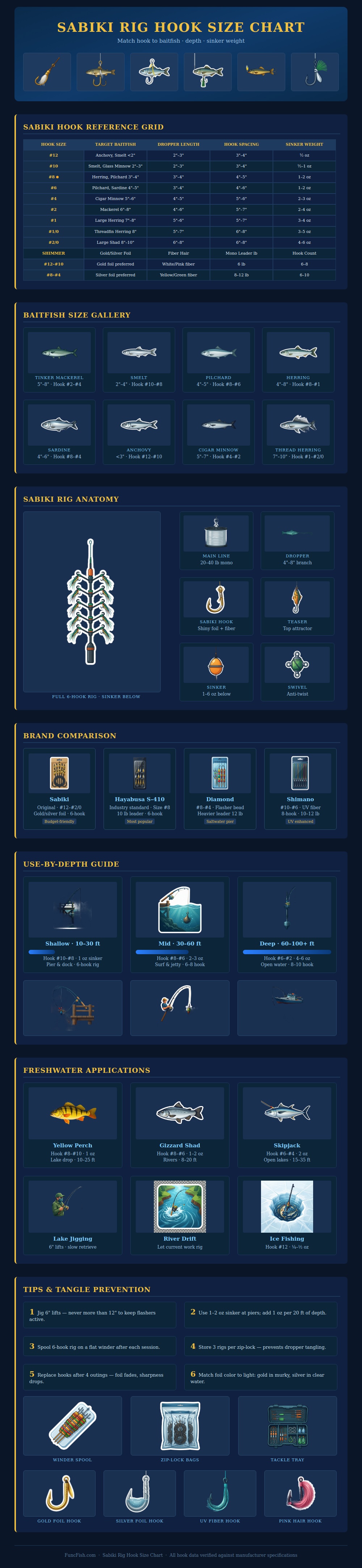
And there’s no coincidence either about how the hook size matches up with approximate length of most popular types of baitfish; that’s broken down in the chart above. As you scroll down the chart, you’ll notice a #12 hook is tiny. It’s just slightly bigger than a pin head and is meant for the super small smelt or anchovies that inhabits the top of water column. Those smaller forage fish are fast and skittish. They dart for cover at any perceived threat. You don’t want a large hook, the shape won’t look right so they will see a predator trap instead of food item.
On the other end of the spectrum, if you’re fishing around big predators feeding on shad or herring, you want something stronger with more gape strength. The picture guide shows how distance between your droppers should adjust to size of your hook. Because you’re mimicking schools of baitfish swimming in close formation, smaller hooks can has closer spacing. When you get to the larger bait species, their school spread out further, so the rig must have wider spacing to appear natural and not tangle.
Small Details Matter in Fishing
The next piece of the puzzle most anglers don’t consider is correct amount of weight. The chart advises to go heavier for deeper water drops and light on the weight for shallow spots. Why? Because how fast you work the bait influence its flash. “If you put too much weight on your rig, then all it does is pull the rig down straight. That’s going to kill your action. It’s going to take life out of your teaser beads and fiber hair attachments. You’re looking for the rig to fall and flutter along like a wounded or fleeing baitfish. To do that, the picture says add weight gradually according to depth, a good rule of thumb. If you’re fishing off a boat in 60-foot water, you may need a four-ounce sinker to reach bottom. Just make sure you have enough line strength to avoid snapping off leader when fighting fish.
Surprisingly, it’s not just the color of your gear that matters; the material from which your hook is made matter quite a bit as well. Gold foil finishes are typically more effective in lowlight/ murkier conditions since gold absorbs less light and provides a warmer glow. In clearer, brighter water, silver tends to be a favorite due to its sharper reflection and ability to allow predators to get a good look at detail. Again, this is simple color theory translated into fishing. Then there’s the added element of the fiber hair on those hooks that mimic trailing fins of a baitfish. Traditional colors like pink and white are staples, but occasionally switching to something green or yellow will entice bites when fish won’t touch the norm.
Before throwing up your hands and writing off the technique as ineffective, play around with these factors. Most rigs fail over time due to maintenance. Specifically, sharpness of a sabiki hook will go down quickly with only a few uses, especially in salty water. A dull hook penetrates skin but doesn’t hold fish, resulting in lost catch right at the dock. Regularly replacing hooks mean each strike stands a chance of being a keeper. Proper storage keeps them from tangling, which ruins the carefully spaced dropper before you ever cast. Wind the rigs neatly on flat spools and store separately in small bags. Tangled rigs does not present the bait effectively and are therefore an ineffective rig.
The bottom line is that the small details makes all the difference between lucky fishing and precise fishing. The hook must be large compared to the bait, the weight must be heavy compared to the depth, and the line must be light compared to the weight. If the hook is sized to fit the bait, the weight is sized to fit the depth and the finish matches the light, then it’s not about hoping you get bit, it’s about making an offer you can’t refuse.
You should of tried starting out with lightweight hooks and light weights. Better to start out too light rather than too heavy. Listen to the line, listen to the water. Let the water speak for itself and it’ll show you what it wants.