
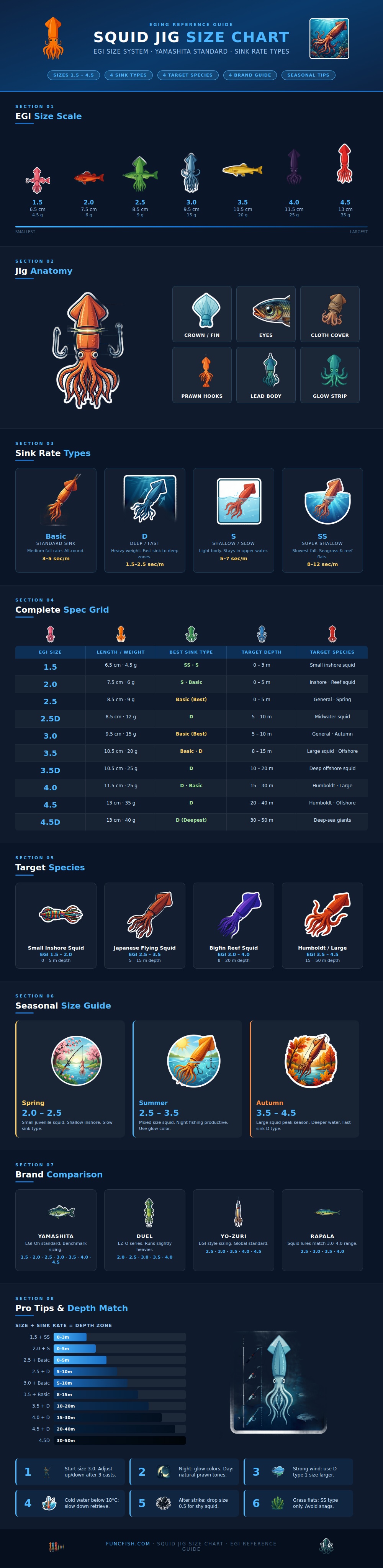
If you don’t get a hit, but your line feels super tight without a bite, then your jig size isn’t matching depth or current. That’s where your weight should be different than what it currently is. You reel slowly and your line remains taut, but you never get bit. The weight doesn’t match the conditions.
Here are some ideal jig weights to help you decide if you want one that sinks faster or one that sinks slower. The physics behind these squid jigs is fairly simple; weight equals speed. Speed equals depth zones covered. A lighter jig floats higher and stays high longer. This can be key on those calm morning days when they will feed along the shores of the bay and stay up shallower.
How to Choose the Right Jig Weight
On the other hand heavier jigs dives deep into the darkness to hit that middle section called midwater where many larger specimens suspend and wait to ambush their next meal. As the chart shows, there are small 1.5-sized jigs all the way up to big 4.5s. Each size is designed to work in a specific depth of water. That does not mean you have to own them all, just the ones suited for where you are fishing.
The biggest mistake starters make is purchasing the largest available jig to catch larger squid. This may be true for pike or bass, but it is not true for squid. Squid are sometimes wary of large offerings so smaller is better as far as triggering bites goes. The stats indicate that fishing the 2.5 jig in simple sink mode is perhaps the most useful all-round jig for general squid fishing. It works at depths from zero to five metres and imitates tiny food items without disturbing the water, allowing you to fish fast while still being appealing to timid squid.
The season makes all the difference when it comes to selecting your size. For instance, juvenile squid tend to stay near shallow areas along the shoreline in the springtime. Slower sinking models is necessary to keep the bait within their strike zone long enough to give them time to respond. Conversely, by fall, these same squid grow quite large and push out deep to feed off the banks of deeper offshore channels. This means you need heavier weights that sink faster, capable of reaching twenty meters or more by the time you begin reeling. This transition is reflected well in the seasonal guide found on the chart, recommending lightweight gear for the early months while heavier tackle are better suited for late-year trips.
The other thing that throws anglers for a loop switching brands is how each company varies their sizes. You may have used a size three all last year and found it was really light, then try the same size three on another brand and it feels like a ton compared to what you’re used to. And even though they are the same size, they can be different because of body shapes and lead densities. Some series will be a bit heavier than normal where others will be more consistent. Again just something to throw into the mix in the compare section and know you need to fish a new lure in familiar water before putting it into the deep end of the pool. But it is something that would of cost you a trip if overlooked.
From there your common sense comes into play with the last few tweaks based off wind and visibility. If it’s windy, the churning surface scares those squid out deep, so you may want to go bigger (i.e., heavier sink) to get down fast instead of having to cast way out into the chop. In the dark, no matter what weight you choose, you’re going to want something glow-in-the-dark colored because it’s all about the eyes at night. During the day, however, you’ll find natural prawn colors most convincing as they reflect sunlight filtering through the water.
Drop down a size after your hookup… Squid are communicators and they warn each other about danger. A smaller bait appears less menacing to suspicious leftovers so try dropping down a size on the follow up cast. It’s a subtle change in tactics which will often convert a bite into a fish catching flurry. There’s no need for fancy gear or elaborate techniques; just knowing how fast a bait sinks, what sizes to throw and when to use them comes from reading the water and adapting on the fly. That was the mission when you first hit the water: fill the cooler, and here is your plan to do it.