Surf Rig Snood Length Calculator
Estimate finished surf rig snood length, loop cut allowance, hook spacing, and tangle margin from rig style, bait swing, leader stiffness, surf load, sinker weight, and target species.
📌Surf snood presets
⚙Snood and surf rig settings
Measure the bait from hook bend to the tail, tag, worm end, or strip tip that can swing around the trace.
Use hook gape for small hooks, or the bait's thickest height for bulky crab and cut bait.
Center-to-center distance between droppers, or hook clip position to the nearest swivel or sinker link.
Extra clearance keeps bait, hook, and snood knots away from the main rig body during casting and wave wash.
Surf rig snood sizing results
Calculation breakdown
📊Snood material stiffness grid
Soft Mono 20 lb
Hard Mono 40 lb
Fluoro 50 lb
Stiff Body 60 lb
🐟Surf target reference table
| Target class | Typical snood | Hook spacing | Leader strength | Best rig style |
|---|---|---|---|---|
| Whiting, croaker, kingfish | 4-9 in / 10-23 cm | 10-16 in / 25-41 cm | 15-30 lb / 7-14 kg | Short high-low |
| Pompano and surf perch | 5-12 in / 13-30 cm | 12-20 in / 30-51 cm | 20-40 lb / 9-18 kg | Float or bead high-low |
| Flounder and fluke | 14-30 in / 36-76 cm | 24-42 in / 61-107 cm | 25-50 lb / 11-23 kg | Long flapper or running trace |
| School bass and sea trout | 12-24 in / 30-61 cm | 22-36 in / 56-91 cm | 30-60 lb / 14-27 kg | Clipped or pulley rig |
| Red drum and big black drum | 18-36 in / 46-91 cm | 28-48 in / 71-122 cm | 50-80 lb / 23-36 kg | Pulley, pennel, or big bait rig |
| Bluefish, tailor, mackerel | 10-22 in / 25-56 cm | 20-34 in / 51-86 cm | 30-60 lb plus bite wire | Wire bite snood or clipped rig |
📏Rig style comparison grid
| Rig style | Snood behavior | Length factor | Clip need | Tangle note |
|---|---|---|---|---|
| Two-hook high-low | Compact branch, quick bite indication | 0.85x | Low | Shorter snoods keep hooks apart |
| Short paternoster | Stiff stand-off for small baits | 0.75x | Low | Best with hard mono or booms |
| Long flapper | Natural movement in clean surf | 1.35x | Medium | Needs wide spacing in wash |
| Clipped-down rig | Long snood parks behind bait clip | 1.55x | High | Clip alignment matters most |
| Pulley rig | Single big-bait trace under load | 1.70x | Medium | Keep hook clear of sinker link |
| Pennel rig | Two hooks share one long bait | 1.85x | High | Spacing follows bait and hook spread |
🧵Bait and surf adjustment table
| Bait or condition | Length effect | Spacing add | Material match | Calculator meaning |
|---|---|---|---|---|
| Small worm or shrimp | Shorter | 1-2 in / 3-5 cm | Soft mono | More bite movement, low drag |
| Long squid strip | Longer | 5-8 in / 13-20 cm | Fluoro or hard mono | Tail swing controls spacing |
| Crab or bulky clam | Medium | 3-6 in / 8-15 cm | Hard mono | Bulk needs trace clearance |
| Whole baitfish | Longer | 7-12 in / 18-30 cm | Heavy mono or fluoro | Roll and flutter increase sweep |
| Rough surf | Shorter | 4-8 in / 10-20 cm | Stiffer trace | Wave wash raises tangle risk |
| Clipped distance cast | Longer | 6-12 in / 15-30 cm | Memory-free mono | Clip keeps snood controlled |
📝Finished snood build table
| Build method | Cut allowance | Best for | Watch point | Result card tie-in |
|---|---|---|---|---|
| Dropper loop branch | 2x finished plus 3-5 in | High-low bait rigs | Loop knots shorten finished reach | Loop cut length |
| Swivel-tied snood | Finished plus 4-7 in | Rotary clips and trapped swivels | Allow knot tags at both ends | Finished snood |
| Crimped stiff snood | Finished plus 2-4 in | Short anti-tangle stand-offs | Crimps reduce bend radius | Tangle score |
| Pennel hook trace | Finished plus hook spacing | Whole bait and big baits | Top hook sits before bait tail | Hook spacing |
| Wire bite section | Wire plus mono shock trace | Bluefish and toothy fish | Swivels add hinge points | Tangle score |
💡Snood tuning tips
Spacing tip: If two baited hooks can touch when the rig is shaken, increase hook spacing or shorten the upper snood before casting in side wash.
Clip tip: Long surf snoods behave much better when clipped for the cast; after splashdown, they release and fish at the calculated finished length.
Bait action in the water is also determined by snood length. If you use a long snood with a small worm, it loops around the main line during the cast and guarantees a tangle, And this happens a lot because their snoods is not the right size for what’s going on around them. That’s where this page’s calculator takes over for you. It figures out the variables and make accurate measurements for you so you don’t have to guess anymore.
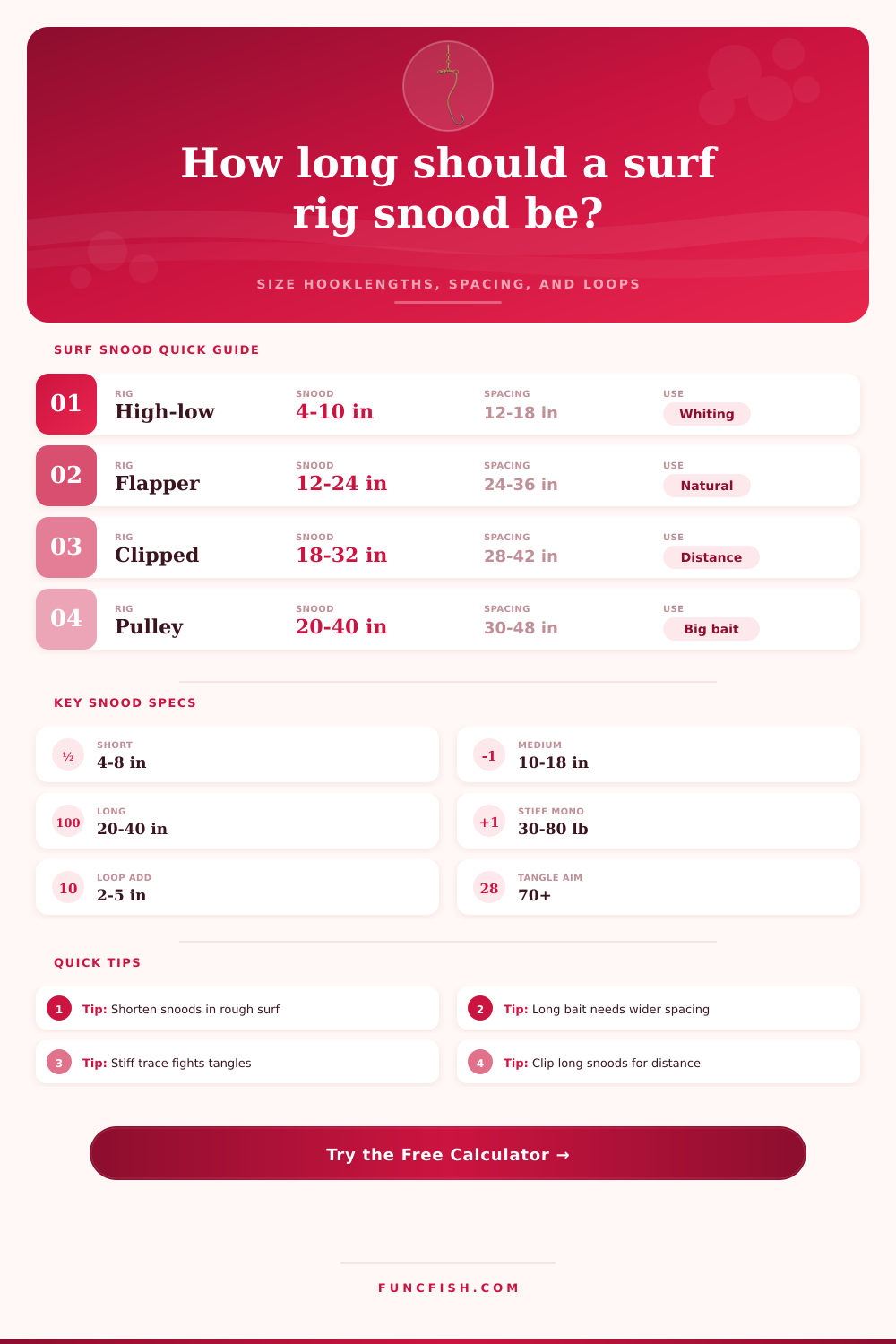
Common wisdom says most anglers buy some pre-tied leaders which don’t work well for any application. Too short and you has no slack line and your bait is restricted in its action. Too long and they wrap up on the cast. For whiting, snoods should be four to ten inches long because the fish gets down to the bottom to feed. For a natural bait such as a flapper rig, the snoods should be 12-24 inches long so the squid can flap about. If you put a big bait on a short snood the hook drags and scares them off. If you do put a small worm on a long snood, it gets wrapped up into loops and guarantees tangling.
How to Choose the Right Snood Length
Length isn’t everything; it’s also about how stiff your line is. If your line is softer (like 20 pound mono), then that will transmit more to your hand and give you a better feel for bites. But if your line is soft, it will bend in the current and wrap around the trace going to the sinker. So if you have a stiff line like 60 pound rig body line, you can make the tool recommend you go a little bit shorter and still keep clear of the cover. That’s kind of the balance between sensitivity and confidence.
You can make adjustments to your setup based off surf conditions. A longer snood allows your bait more freedom of movement in flat calm water. However, a long snood is a liability when fishing heavy-wash surf in rough water as wave action will slam it into the seabed. Shortening the snood decreases the swing radius and helps keep hook off the bottom so that you have a rig to catch fish with. These adjustments are automatically included in the calculator based on current direction and surf load.
There’s also factor of casting distance. Wind can make it hard to accurately cast past the breakers. The wind will catch a loose snood like a sail and pull the cast short. It’ll wrap the line around the sinker link as well. Keeping the snoods clipped down on the flight makes them aerodynamic and compact so they don’t catch the breeze. Then once the rig is in the air, you pop open the clip to allow the snoods to stretch out to full calculated length. This gives you best of both worlds for getting distance on the outbound cast and a right-on presentation when they hit the water.
The last tweaks come down to the profile of the bait. Live fish are bigger than chunks of cut bait, and crabs requires sufficient space between them and the sinker lead so their legs don’t brush against it, which creates drag that signals fish to shy away. To gauge swing, measure from the hook bend to the tip of the bait. That is your best indication of how far out your bait has to go. Your snood should be longer then that. Otherwise, the hook won’t sit underneath the bait but will pull up the tail instead. This alters the presentation entirely.
Common rig types and species has descriptions of typical length ranges. For example, red drum may need extra slack to get over structure; whiting like short rigs held snug to the bottom. But these are merely beginning places. The real work is adjusting these benchmarks based on the beach you’re fishing each day. Things like wind direction, water clarity, and even the sand composition will affect your rig’s behavior on the bottom.
Use a bit of naturaly presentation without getting yourself tangled up. A little goes a long way. Rig the bait so that it flows in the current. When you adjust the length, the bait will lie down and the rig would of lay flat in the current. All you has is a straight line from you to the fish. And that’s why every hookset feels solid and every bite feels like the real deal. You are no longer fighting your tackle; you can just focus on the water.